
Are Therapists to Blame for the Rise of Adults Cutting Off Their Parents?
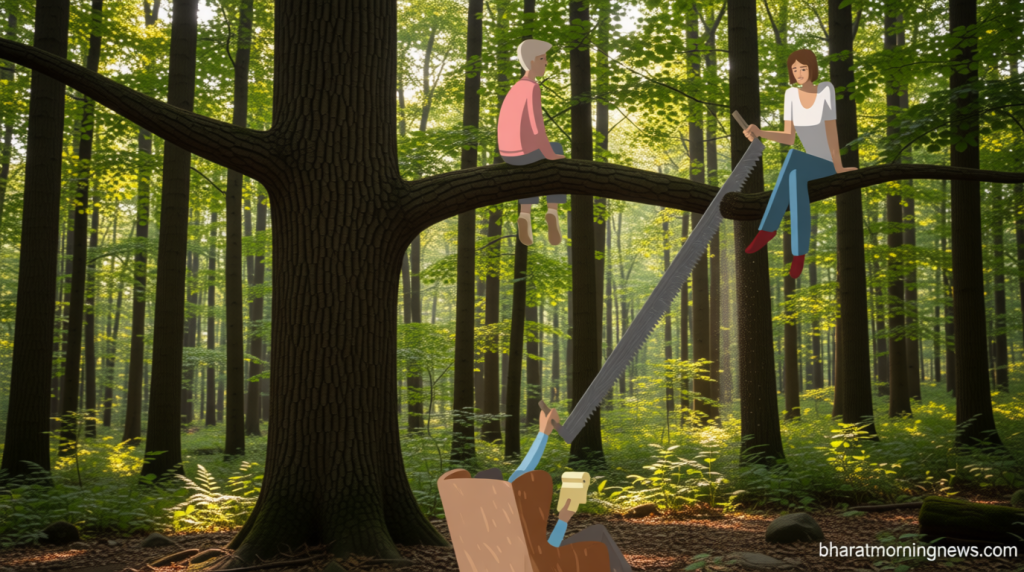
Are Therapists to Blame for the Rise: Is the Therapeutic Community Responsible for More Adults Walking Away from Family?
Is the Therapeutic Community Responsible for More Adults Walking Away from Family?
Bharatmorningnews.com – During her second appointment, Shoshana Rubli received guidance that left her stunned. Despite the surprise, she honored the counselor’s recommendation because the professional came highly recommended by an acquaintance and possessed strong credentials. “It was an argument made from authority, so I followed it,” explains the 42-year-old freelance marketer.
While many clinicians have spent years promoting open communication and joint problem-solving within families, a shift is occurring. Some practitioners now advocate for stepping back from family connections as a form of personal wellness.
Debate Over the Growing Trend
Supporters argue that suggesting patients distance themselves from relatives or partners they view as draining or harmful can safeguard psychological well-being and foster personal development. Conversely, detractors—particularly long-time relationship researchers—contend this approach promotes egocentrism and misperception while damaging family bonds.
There is general consensus among counselors that severing connections with parents or close kin is sometimes warranted, particularly in cases involving physical or emotional mistreatment.
What differs today is the threshold for what qualifies as severe enough to warrant separation. “We are in a culture where we emphasize fragility, everything becomes trauma, and the solution increasingly is to split and leave,” notes William Doherty, a therapist and professor emeritus of family social science at the University of Minnesota who has researched the ways that therapy may be harmful. “But it should be the tragic exception that you cut off a parent or loved one, not business as usual in therapy.”
Statistics and Social Media Influence
According to Karl Pillemer, a family sociologist and professor of human development at Cornell, approximately 25% of Americans are estranged from or have severed ties with a close relative at any given moment—and 10% is estranged from a parent or child. He anticipates further increases as political and social tensions mount.
Online platforms have significantly amplified both recognition of estrangement—often termed “no contact” online—and the perceived role of counselors in it. Recently, the volume of individuals posting about how distancing from family improved their mental state has surged dramatically. Concurrently, therapists and specialized coaches have released numerous resources, ranging from assessments like “The Emotionally Immature Parent Assessment” to programs such as “Navigating a Family Cut-Off” and publications including “No Contact, No Guilt.”
“People are coming into a therapist’s office and parroting what they hear on social media,” Anderson observes. “They’re looking for affirmation for a decision they’ve already made.”
Professional Perspectives Diverge
Whitney Goodman, a licensed marriage and family therapist based in Tampa, Fla., prioritizes the patient’s perspective when evaluating estrangement. She emphasizes that trauma and abuse are subjective experiences. “Why are we giving all this deference only to parents?” Goodman asked. “Why aren’t we believing the kids? They are adults.”
Through her work with over 660,000 followers across Instagram and TikTok, Goodman frequently discusses estrangement and “emotionally immature” parents. “I reject the argument that we should ignore the impact of abuse because it wasn’t considered abuse 75 years ago,” she stated in a recent publication.
In her practice, Goodman encounters individuals seeking no-contact arrangements for diverse reasons, from reckless driving around grandchildren to controlling their adult children’s romantic choices. “You have an adult population now who says: ‘I am going to stand up for myself. I am not going to do what was always done.'”
Opponents maintain that clinicians ought to challenge rather than validate their clients’ estrangement viewpoints. They caution that patients may not always provide accurate accounts, particularly when dealing with mental health challenges. Furthermore, therapists typically hear only one perspective.
This dynamic creates significant concerns, according to Jay Lebow, senior scholar and senior therapist at the Family Institute at Northwestern University, who says he often sees people in his practice who have been encouraged by previous therapists to sever ties with a loved one.
“A lot of therapists are taught to believe whatever the client is saying at face value,” says Peter Anderson, a licensed marriage and family therapist in Beverly, Mass., who helps families with estrangements and conducted the surveys. “They’re forming conclusions based on one person’s account.”
“We are in a culture where we emphasize fragility, everything becomes trauma, and the solution increasingly is to split and leave,” says William Doherty, a therapist and professor emeritus of family social science at the University of Minnesota who has researched the ways that therapy may be harmful. “But it should be the tragic exception that you cut off a parent or loved one, not business as usual in therapy.”
Related SEO Topics
- Home
- Artikel terkait Are Therapists to Blame for the Rise
- Struggling to dry clothes this monsoon? These washer dryers are worth checking out
- Ram Temple donation ‘theft’: SIT records statements of over 70 witnesses, connecting the dots
- Neurologist Dr Nitti Kapoor Kaushal shares 5 everyday changes that can signal poor brain health ahead of World Brain Day
- Can donating blood make you obese? Physician debunks the common misconception about weight gain, blood loss and recovery
Frequently Asked Questions
What is Are Therapists to Blame for the Rise?
Are Therapists to Blame for the Rise is the main topic covered in this article, with practical context to help readers understand the subject clearly.
Why does Are Therapists to Blame for the Rise matter?
Are Therapists to Blame for the Rise matters because it helps readers compare options, avoid common mistakes, and make a more informed decision.
How should readers use this Are Therapists to Blame for the Rise guide?
Use the key points, examples, and related links in this page as a starting point, then review the latest details before making a final decision.