
Row erupts as idol of goddess Vagdevi placed inside Bhojshala complex, ASI accused of removal
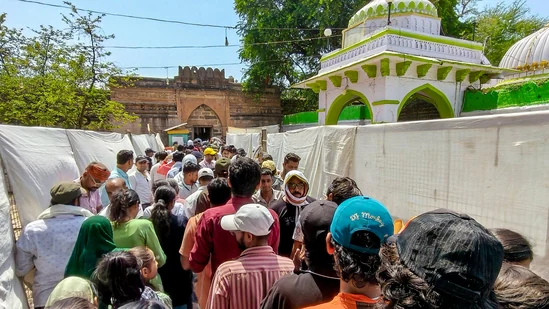
Row Erupts Over Vagdevi Idol in Bhojshala Complex
Bharatmorningnews.com – A significant row erupts as idol of goddess Vagdevi is placed inside the Bhojshala complex, reigniting a debate over its religious status and heritage management. The controversy stems from the recent installation of an ashtadhatu idol by devotees, which the Archaeological Survey of India (ASI) has allegedly removed, sparking accusations of defiance against a court order. This clash between religious communities and heritage authorities has drawn widespread attention, highlighting the cultural and legal complexities surrounding the site.
Legal Ruling and Preservation Dilemma
Three weeks prior, the Madhya Pradesh High Court classified the Bhojshala complex as a temple dedicated to Goddess Vagdevi, a decision that has now become central to the current dispute. The court’s ruling, delivered on May 15, emphasized the importance of restoring the idol to the site for proper worship, but also granted the ASI authority to manage preservation efforts. This dual mandate has left room for interpretation, with Hindu petitioners arguing that the ASI’s removal of the idol contradicts the court’s directive, while Muslim representatives assert that the installation threatens the site’s religious neutrality.
“The ASI’s removal of the ashtadhatu idol is contemptuous of the court’s order and a disservice to devotees,” said Kuldeep Tiwari, a Hindu petitioner. He noted that a replica of the idol remains at the site, as the original is currently housed in the British Museum. The ASI, however, maintains that the idol’s placement was premature and that its removal aligns with preservation protocols.
Historical Context and Cultural Significance
The Bhojshala complex, a 14th-century structure in Dhar, Madhya Pradesh, has long been a site of historical and cultural importance. Originally built by King Bhoj, it served as a royal library and a center for learning, but its religious status has been contested for years. The idol of Goddess Vagdevi, revered as a local deity, is believed to have been placed inside the complex by devotees, sparking a dispute between the Hindu and Muslim communities. The ASI’s role in this conflict has been to uphold the site’s heritage value, but its actions have been seen as prioritizing preservation over religious devotion.
Community Reactions and Legal Justifications
As the row erupts as idol of goddess Vagdevi continues, local residents have expressed strong opinions on both sides. Hindu activists argue that the idol’s placement is a symbolic gesture of cultural reclamation, while Muslim leaders like Zulfikar Pathan of the Kamal Maula Masjid Namaz Intezamia Committee stress that the site’s neutrality must be preserved. Pathan highlighted that the court’s May 15 ruling mandates the protection of Islamic inscriptions within the complex, suggesting that the idol’s installation could undermine this balance.
“The court’s directive clearly states that the site must remain a neutral space for all faiths,” Pathan said. “Placing the idol without prior legal approval disrupts this harmony and raises questions about the ASI’s adherence to the law.” His comments underscore the tension between historical preservation and contemporary religious practices, a debate that has escalated with the recent events at Bhojshala.
Impact on Heritage and Devotion
The ASI’s decision to remove the idol has drawn criticism from both devotees and legal experts. Devotees claim the ASI’s actions disregard the court’s order and the emotional significance of the idol to the community, while some scholars argue that the ASI’s intervention is necessary to prevent religious over-identification with the site. The idol, crafted from eight metals, is not only a spiritual symbol but also a historical artifact, adding layers to the controversy.
Meanwhile, the court’s ruling has also had broader implications. It reversed the ASI’s 2003 order that allowed Friday prayers for Muslims, a move that was previously seen as a concession to Islamic practices. Now, with the temple status confirmed, Hindus have resumed their rituals without interruption. This shift has intensified the debate over whether the ASI’s role is to protect heritage or to mediate between religious communities, a question that remains unresolved as the row erupts as idol of goddess Vagdevi continues to dominate headlines.