
PM Modi receives traditional Maori powhiri welcome at Government House in Auckland
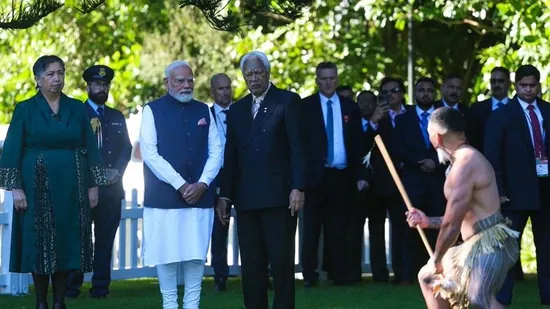
PM Modi Receives Traditional Maori Welcome in Auckland
Bharatmorningnews.com – Prime Minister Narendra Modi was greeted with a ceremonial Maori powhiri welcome at Auckland’s Government House on Saturday, marking the beginning of his historic visit to New Zealand. The traditional Maori powhiri, a vibrant display of indigenous culture, highlighted the deep respect New Zealand holds for its Māori heritage. This moment underscored the growing importance of cultural diplomacy in Indo-Pacific relations, as Modi’s presence aimed to strengthen ties with the Pacific nation.
The Significance of the Traditional Maori Powhiri
The powhiri, a formal Māori welcoming ceremony, is rooted in centuries-old traditions that involve song, dance, and symbolic gestures to honor guests. During the event, participants performed the hongi, a traditional greeting where hands are pressed together, signifying the exchange of life forces and shared values. This traditional Maori powhiri not only celebrated New Zealand’s cultural identity but also symbolized the mutual respect between India and the Māori people. Modi’s participation in the ritual reflected his commitment to fostering closer connections with indigenous communities across the globe.
“Reaching Auckland a short while ago. Grateful to Prime Minister Luxon for the traditional Maori welcome at the Government House. This visit is a milestone, being the first Prime Ministerial trip to New Zealand in over four decades,” Modi shared in a social media post.
The ceremony served as a powerful reminder of the enduring cultural ties between India and New Zealand, even as the two nations navigate modern diplomatic and economic landscapes. It was a poignant moment that resonated with both the Indian and Māori communities, emphasizing the value of tradition in forging new relationships.
Strengthening Indo-Pacific Ties Through Cultural and Economic Engagement
Modi’s visit to New Zealand comes at a critical juncture in Indo-Pacific diplomacy, as both countries seek to expand collaboration across multiple sectors. The traditional Maori powhiri was not just a symbolic gesture—it was an intentional effort to align cultural values with diplomatic goals. During his time in Auckland, Modi is expected to engage with New Zealand’s business leaders, entrepreneurs, and cultural representatives, highlighting opportunities for innovation and investment.
Earlier this year, Modi and New Zealand’s Prime Minister Chris Luxon had already laid the groundwork for this visit through discussions on trade and strategic partnerships. The Free Trade Agreement signed in April 2025 is a testament to the growing economic interdependence between the two nations. Modi’s presence in Auckland signals a renewed focus on deepening these ties, with the traditional Maori powhiri serving as a fitting prelude to a week of high-level engagements.
Additionally, Modi’s itinerary includes meetings with Māori leaders and members of the Indian diaspora, underscoring the importance of people-to-people connections. The Indian community in New Zealand, which has grown significantly over the past decade, plays a vital role in bridging cultural and economic bridges. By engaging with this community, Modi aims to reinforce India’s commitment to supporting its expatriates while fostering greater understanding between the two countries.
Historical Context and Future Prospects
India and New Zealand have a long-standing relationship, but the traditional Maori powhiri during Modi’s visit marked a renewed emphasis on cultural diplomacy. The last Prime Ministerial visit to New Zealand by an Indian leader was in 1984, making this event a milestone in diplomatic history. The ceremony at Government House in Auckland was a deliberate nod to the rich cultural tapestry of the region and the shared aspirations of nations in the Indo-Pacific.
Modi’s trip is part of a broader effort to solidify India’s position as a key player in the Pacific, particularly as the region becomes increasingly important for trade and security. The traditional Maori powhiri, a symbol of respect and unity, sets the tone for a visit that promises to advance cooperation in areas such as climate change, technology, and education. With New Zealand’s strategic location, the visit also aims to strengthen India’s influence in the broader Pacific region, creating new opportunities for collaboration with neighboring countries.
As the traditional Maori powhiri concludes, Modi’s journey through Auckland and beyond is expected to leave a lasting impact on Indo-New Zealand relations. The ceremony, while rooted in history, serves as a bridge to the future, where cultural exchange and economic partnership will continue to shape the partnership between the two nations. This visit is a testament to the power of tradition in modern diplomacy, and its legacy will be felt for years to come.