
Why Old Master paintings are back in vogue
Why Old Master Paintings Are Back in Vogue
Bharatmorningnews.com – In recent years, a quiet revolution has taken place in the art world, reviving appreciation for works created centuries ago. A striking example emerged at Christie’s London auction on June 30th, where a 17th-century Dutch painting—a modest depiction of two skulls and a cryptic note—commanded £431,000 ($575,000), far exceeding its expected value. Andrew Fletcher, head of Christie’s Old Masters department, notes that the growing appeal lies in the “yearning for the unusual,” with demand soaring for pieces that defy conventional expectations.
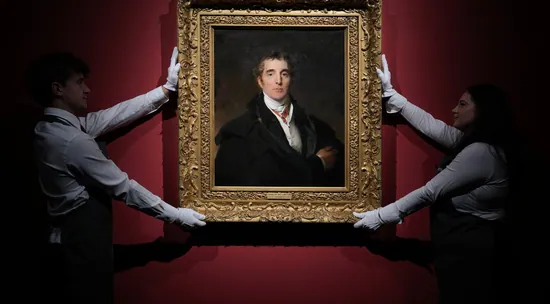
Old Masters, a broad category encompassing art from the Renaissance to the 19th century, have experienced renewed interest. At the same auction, Sir Thomas Lawrence’s portrait of the Duke of Wellington shattered records, selling for £9.7m. “It’s the most optimistic moment I can remember in the Old Masters market for some years,” Fletcher remarked, highlighting a shift in collector sentiment.
Global sales of Old Master works reached $1.2bn in 2025, marking a 30% increase from the previous year. However, Patrick Williams, a New York-based gallerist, argues that data alone doesn’t explain the trend. Private transactions and younger buyers have played a critical role, with 16% of bidders at Sotheby’s Old Masters auctions now under 40—a figure nearly three times higher than five years ago.
A Shift in Collector Priorities
Until the 1980s, Old Master paintings dominated high-end art markets. But as tastes evolved, collectors turned toward Impressionist and contemporary pieces, viewing them as more modern. A recent turnaround has seen a reevaluation of older works. The stability and affordability of Old Masters have made them attractive again, especially as contemporary markets showed signs of fluctuation.
“For $250,000, you could own a masterpiece that might one day be in the Louvre,” says Williams, contrasting that with the risk of investing in a flawed Picasso for $10m. Scarcity also contributes to the revival, as museums acquire more Old Master pieces annually, reducing their availability in private collections.
Redefining Artistic Value
Collectors’ preferences have broadened, favoring eclectic and diverse acquisitions over strict period specialization. Sylvie Winckler, a Belgian art enthusiast, identifies 2017 as a turning point: that year, Leonardo da Vinci’s “Salvator Mundi”—a heavily restored work—was sold for $450m at Christie’s, setting a benchmark for older art in a market traditionally dominated by post-war and contemporary pieces.
Valentina Castellani, author of “Trading Beauty,” explains that modern collectors prioritize visual impact and image over traditional connoisseurship. This shift has fueled demand for portraits and figurative works, which align with the aesthetic of social media. “People are drawn to the elegance of old-fashioned attire and the nostalgic appeal of simpler times,” she observes, even as they overlook the historical challenges of past eras.
Charles Stewart, Sotheby’s executive, ties the trend to an “AI effect,” suggesting that older art feels more human and artisanal in an era of digital saturation. Dealers have adapted, emphasizing secular themes and intriguing narratives to engage new audiences. At TEFAF Maastricht, for instance, Paul Smeets rebranded a 17th-century Italian painting by Guido Cagnacci. Originally titled “Virgin Reading,” the work was reimagined as “Possibly a portrait of Maddalena Fontanafredda as the Virgin Reading,” blending historical intrigue with dramatic flair. The piece sold swiftly, showcasing the enduring allure of Old Masters.