
Infrastructure, alternative assets, technology draw India’s real estate growth map
Infrastructure, Alternative Assets, and Technology Reshape India’s Real Estate Outlook
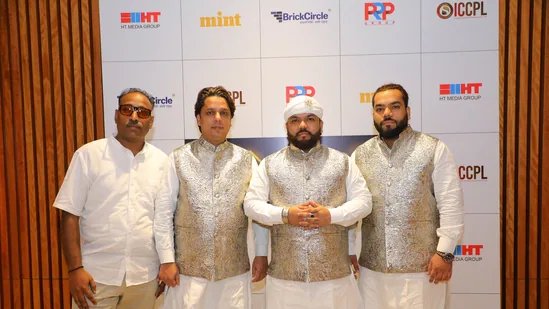
Bharatmorningnews.com – The Indian real estate sector is undergoing a transformation, fueled by evolving population trends, the integration of transit networks, and the digital revolution. At the India Next Real Estate Summit 2026, hosted by Hindustan Times and Brickcircle at Bharat Mandapam, industry visionaries, policy-makers, and institutional investors gathered to explore the sector’s evolving landscape. The event moved beyond conventional debates, emphasizing the importance of crafting unified economic frameworks for sustainable urban development.
Summit Opens with Visionary Perspective
Nisheeth Upadhyay, Editor and Chief Operating Officer of HT Media Digital, kicked off the summit by outlining the sector’s broader implications. He argued that real estate is no longer just about physical structures but has become a central component of national infrastructure and urban evolution. Upadhyay stressed that the summit serves as a critical space for identifying new investment opportunities, harmonizing regulations, and leveraging technology to tackle persistent challenges in the industry.
“Real estate is evolving beyond its traditional confines. It now plays a pivotal role in shaping India’s infrastructure and urban future.”
Regional Mobility Redefines Land Value Dynamics
The summit’s formal sessions began with a panel addressing how regional connectivity is altering land valuations. Kankana Mukherjee, Executive Editor of HT Media, introduced the event’s core themes alongside BrickCircle’s co-founders, Dr. Satya N Gupta and Dr. Anil Mundhe, who represented the partner organization. The discussion highlighted the growing influence of transportation networks in driving urban growth.
Master-Planned Urban Hubs Take Center Stage
Gaurav Gupta, CREDAI National’s Secretary, outlined how initiatives like the Namo Bharat Regional Rapid Transit System (RRTS) and multimodal corridors are decentralizing economic expansion. He noted that the National Capital Region’s population has grown from 3.7 crore in 2000 to over 7.8 crore, underscoring the need for coordinated planning. Gupta proposed that the Centre’s Namo Cities vision aims to establish purpose-built urban centers along the Eastern and Western Peripheral Expressways, rather than overextending existing metropolitan areas.
“Will the NCR’s expansion follow a chaotic, fragmented path, or will it be guided by strategic planning and inclusive growth?”
To address environmental goals under the CREDAI Bharat Mission, Gupta introduced a reforestation initiative where 30 trees are planted for every residential unit sold by participating developers. This effort reflects a commitment to balancing development with ecological preservation.
Luxury and Affordability in the Delhi-NCR Market
The Delhi-NCR region exemplifies the tension between high-end investments and affordable housing, driven by structural changes rather than mere price increases. In a session led by Vandana Ramnani Mitra, Editor – Real Estate at Hindustan Times Digital, panelists examined how capital is allocated in premium markets. Aakash Ohri, Managing Director of DLF Home Developers, explained that₹100-crore apartments in Gurugram are the result of long-term ecosystem development. He cited DLF Camellias in Sector 42 as a flagship example of this approach.
“DLF has created what could be seen as India’s version of Beverley Hills. It’s a fully Indian-made model, with Camellias embodying that vision.”
Ohri predicted that as domestic projects adopt global standards, the market could eventually support valuations exceeding₹500 crore. “Luxury today is defined by convenience, privacy, wellness, and community—not just location or scale,” he added, highlighting how integrated amenities and sustainability justify such high prices.
Micro-Environments Foster Innovation
Ohri further noted that these developed micro-areas support distinct entrepreneurial and corporate networks. “You might be running on a treadmill in the complex’s gym, while the person beside you is a startup founder with a multimillion-valuation,” he illustrated, emphasizing the convergence of lifestyle and business opportunities.
Chetan Chichra, Partner at Grant Thornton Bharat, echoed this sentiment, stating, “Ultra-luxury is defined by the comprehensive value it delivers. A project may have everything, but its success hinges on how well it meets buyer expectations.”