
The new heat threat: Why India’s cities are feeling hotter even after monsoon arrives
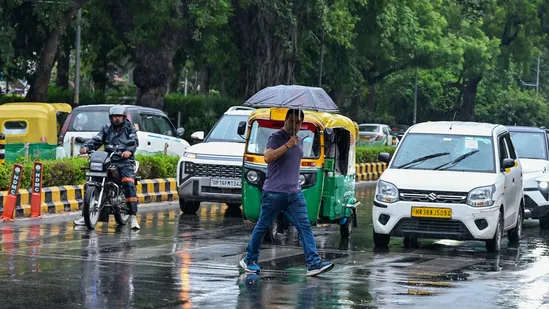
The New Heat Threat: Why India’s Cities Are Feeling Hotter Even After Monsoon Arrives
Bharatmorningnews.com – On a sweltering June day, Delhi’s bustling cooling zone near Jama Masjid metro station was teeming with activity. Crowds gathered around fans and coolers, while others waited for relief from cold water. Among them, an autorickshaw driver named RK Shukla hesitantly asked if the air cooler could be adjusted:
“It’s the same problem at home. When it gets humid, my desert cooler throws warm air.”
Though the monsoon had begun to arrive in northern India, rainfall alone wasn’t enough to ease the oppressive heat. Data from 2021 to 2025 shows Delhi often felt hotter than its air temperature due to high humidity. During July and August, heat index readings frequently surpassed 46-50°C, intensifying discomfort. This led to prolonged and heightened electricity usage as cooling systems, primarily air conditioners, worked harder to combat the effects, according to a September 2024 policy brief by the Centre for Science and Environment.
The Delhi administration has implemented temporary cooling zones, mobile cooling units, and cool wards in hospitals as part of its heat action plan. However, experts caution that these emergency measures are seasonal and insufficient for long-term resilience. With heat patterns shifting, cities like Delhi, Mumbai, Ahmedabad, Hyderabad, Bhopal, and Bhubaneswar face rising risks of persistent heat exposure, compounded by increased relative humidity in the Indo-Gangetic Plain and warm nights.
A March 2025 study in the journal Physics and Chemistry of the Earth revealed that 15 smart cities, including Delhi, Agra, Kanpur, and Kochi, experienced prolonged nighttime heat waves. The research analyzed March-June data from 2001 to 2024 across all 100 smart cities and found 16 additional urban areas, such as Nagpur and Warangal, enduring continuous high heat both day and night.
Over the past five decades, Delhi has seen a rise in dangerously humid heat days, increasing from 96 to 135 annually. Similar trends were observed in Ghaziabad (99 to 137), Nagpur (44 to 119), and Ahmedabad (137 to 162). A June 24, 2025 report by US-based Climate Central noted that India’s count of such days grew from 101 to 141 per year since the 1970s, while globally, the number rose from 10 to 23. These events are measured by wet-bulb temperature, which reflects the cooling potential through evaporation.
Scientists attribute these changes to ocean warming, as the Arabian Sea and Bay of Bengal push moisture inland. However, urbanization and high mean temperatures create a dominance of the Urban Heat Island effect over the Urban Dry Island effect, trapping humidity and preventing natural nighttime cooling. Prolonged periods of high humidity without rain can keep daytime temperatures elevated, even after the monsoon arrives.
Kashif Imdad, an associate professor at CSJM University in Kanpur and co-author of the study, emphasized that current heat action plans often overlook the full diurnal cycle of heat risks. While initiatives like providing drinking water and adjusting work hours address surface-level concerns, they fail to account for persistent heat in urban areas. Imdad advocates for year-round strategies, including cool roofs, green spaces, and 24-hour response systems, to mitigate intense heat.
Rajan Rawal, a specialist in urban climate at CEPT University in Ahmedabad, underscores the need for context-specific solutions. He highlights that while cool roofs are frequently proposed, their effectiveness depends on local conditions, urging cities to prioritize practical, tailored approaches to combat rising temperatures.
Also Read: Delhi set to see rain from July 6 to 11; IMD warns of heavy showers as monsoon finally takes effect