
DU History graduate scores 84%, hears this from placement cell: ‘No companies for humanities students’
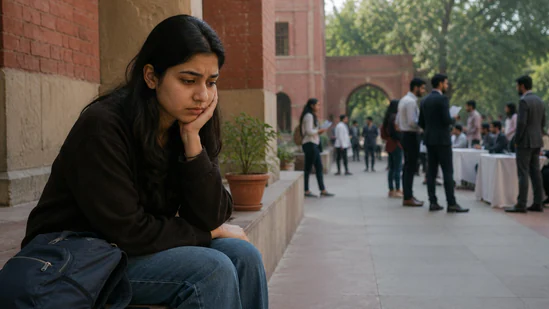
DU History Graduate Scores 84% Yet Faced Placement Struggles
Bharatmorningnews.com – A recent post by Harshit Khare, founder of a startup, has reignited discussions about the challenges humanities graduates face in the job market. The story centers on a Delhi University (DU) History (Hons) graduate who achieved an 84% score and made the Dean’s List, yet was told by the placement cell, “No companies for humanities students.” This experience underscores a growing concern about the disparity in opportunities between technical and humanities streams in India’s competitive employment landscape.
The Placement Cell Dilemma
Khare shared the narrative of a close friend, a History graduate with a strong academic record, who found herself navigating a starkly different career path than her peers in engineering or commerce. Despite her ability to analyze complex historical contexts and articulate ideas with clarity, the placement cell’s lack of interest in her field left her without immediate job prospects. This highlights a systemic issue in how universities allocate resources for placements, often favoring STEM disciplines over arts and humanities.
“A friend of mine graduated with a History (Hons) degree last year. 84%. Dean’s List. She could debate colonial economics for hours and write better than most people I know,” Khare wrote.
The student’s experience wasn’t unique. Many humanities graduates, even with impressive grades, find themselves sidelined during campus recruitment. The placement cell’s limited outreach to non-technical fields raises questions about the adaptability of the current system. While engineering students are often prioritized, humanities graduates bring skills like critical thinking, communication, and cultural awareness that are increasingly valuable in today’s workforce.
The Skills-Based Hiring Shift
Khare challenged the notion that technical skills are the only pathway to success, asking why companies that tout “soft skills” and “critical thinking” ignore the expertise cultivated by humanities students. “We’ve built a placement infrastructure that serves engineers and quietly abandons everyone else,” he remarked, emphasizing the need for employers to recognize the versatility of a liberal arts education.
The post sparked a vibrant debate in the comments. Some users praised the graduate’s abilities, noting that her analytical skills could be assets in marketing, content creation, or even tech roles requiring nuanced problem-solving. Others highlighted biases in hiring criteria, with one commenter stating, “A company I applied to changed the qualification criteria to only BSc, BCom, and BBA after I submitted my application.”
“Now that AI can handle basic technical tasks, you’d think companies would value people who understand human behavior and communication,” another user added, echoing the argument that humanities graduates are better equipped to navigate the evolving needs of the job market.
While some defended the placement cell’s approach, others pointed out the growing demand for interdisciplinary talents. The discussion revealed a paradox: as industries adopt technology, they increasingly seek individuals with the soft skills that humanities education emphasizes, yet these candidates often face hurdles in accessing opportunities.
The graduate’s eventual success came through a small startup, where she secured a content role with a monthly salary of ₹12,000. This outcome, though modest, demonstrates the resilience of humanities students in carving out careers despite systemic barriers. Her story resonates with many who face similar challenges, prompting a reevaluation of how the education system and employers perceive the value of a liberal arts background.
“Humanities changes perspectives and encourages inclusivity,” remarked one commenter, adding that post-graduation opportunities for such students remain limited. This sentiment reflects a broader need for the Indian education system to align with global trends that prioritize skills over rigid degree classifications.