
‘An obsolete Victorian view’: NCERT clothes Mohenjo-daro’s ‘Dancing Girl’ in Class 9 textbook, sparks row
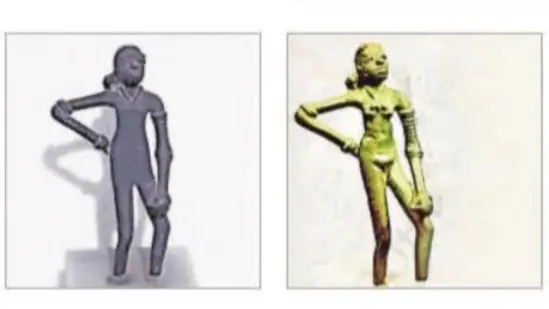
NCERT’s ‘Dancing Girl’ Image in Class 9 Textbook Sparks Debate Over Obsolete Victorian View
Bharatmorningnews.com – NCERT’s recent decision to revise the depiction of the iconic Mohenjo-daro bronze figurine, known as the ‘Dancing Girl,’ in its Class 9 arts education textbook has ignited a controversy. The updated image features a shaded upper body, diverging from the original’s exposed torso, and has drawn criticism for perpetuating an obsolete Victorian view of ancient Indian art. Educators and historians argue that the change undermines the authenticity of the artifact, raising concerns about how historical narratives are shaped in school curricula.
The Original Artifact and Its Significance
Discovered in the ancient city of Mohenjo-daro in present-day Pakistan, the ‘Dancing Girl’ is one of the most celebrated relics of the Indus Valley Civilisation, dating back to approximately 2600 BCE. The figurine, with its intricate detailing and dynamic posture, is often cited as a symbol of early Indian artistic sophistication. Its inclusion in educational materials has long been a point of pride for Indian schools, as it offers students a tangible connection to their cultural heritage. However, the NCERT’s decision to alter its appearance in the Class 9 textbook has sparked a debate about the preservation of historical accuracy.
The original image of the ‘Dancing Girl’ has been a staple in textbooks for decades, with its unchanged portrayal appearing in the Class 6 Social Science curriculum. Critics question why the same artifact is now being depicted differently in the higher grade, suggesting a deliberate effort to conform to modern aesthetic standards. This shift has been interpreted by some as an attempt to soften the portrayal of ancient Indian art, aligning it with contemporary perceptions of modesty and erasing its original vitality.
Expert Criticism and the Victorian Legacy
Michel Danino, who chaired the committee responsible for developing NCERT’s Class 6 Social Science textbooks, highlighted the issue. He explained that the ‘Dancing Girl’ was removed from the Class 6 version due to concerns about its suitability for younger students. Yet, the same figure is now reimagined in the Class 9 textbook, prompting a disconnect in its presentation across educational levels. Danino, a historian and advocate for decolonizing Indian education, took to the Press Trust of India (PTI) to voice his critique, stating, “The notion that nudity is inappropriate is, in my view, an outdated Victorian perspective. Yet we claim to be decolonizing Indian education.”
According to Danino, the textbook team was not fully aligned with the rationale for the change. “Our team disagreed; we even consulted Class 6 teachers, who said there had never been an issue with the Dancing Girl,” he emphasized. The historian further argued that the revision risks distorting the historical record, comparing it to the Church’s practice of adding fig leaves to classical sculptures during the Middle Ages. Such alterations, he warned, could mislead students about the cultural and artistic expressions of the past.
NCERT’s decision to revise the ‘Dancing Girl’ image has been met with mixed reactions. While some educators support the change, citing the need for updated visual representations, others argue that it compromises the integrity of historical artifacts. The controversy highlights the tension between modern pedagogical approaches and the preservation of ancient cultural symbols. As the debate continues, the focus remains on whether the obsolete Victorian view is being imposed on a curriculum that aims to educate students about India’s rich artistic legacy.
Context of the Revised Depiction
The chapter titled “History of Arts” in the Class 9 textbook describes the ‘Dancing Girl’ as a bronze figurine from Mohenjo-daro, showcasing a posture with one knee bent and one hand on the waist. It also notes that the sculpture exemplifies the lost-wax casting technique, which remains relevant in contemporary art practices across regions like West Bengal, Jharkhand, and Chhattisgarh. However, the addition of shading to the upper body has altered its original appearance, drawing attention to the extent of the changes.
Students are encouraged to interpret the pose and engage in sketching activities based on the revised image. While these exercises aim to foster creativity, they also raise questions about the accuracy of the visual representation. The ‘Dancing Girl’ has long been a subject of academic and cultural analysis, with its every detail scrutinized for insights into the Indus Valley Civilisation’s artistry. The NCERT’s decision to revise its portrayal, however, has shifted the focus from historical fidelity to stylistic reinterpretation, a move some see as reflecting an obsolete Victorian view of cultural norms.
Historians and art scholars have pointed out that the original bronze figurine’s exposed torso is a hallmark of its era, reflecting the artistic styles of the time. By covering this aspect, NCERT’s revision could be seen as imposing a Eurocentric standard on Indian art, where nudity was not only acceptable but often celebrated. The debate extends beyond the ‘Dancing Girl,’ with critics suggesting that such changes might signal a broader trend in reimagining India’s ancient past through a Western lens.
The controversy also underscores the role of educational institutions in shaping public perception. As a key player in curriculum development, NCERT’s decisions are closely watched by educators and students alike. The revised image of the ‘Dancing Girl’ serves as a microcosm of larger discussions about cultural identity, historical interpretation, and the influence of Victorian ideals on modern education. With the focus keyword obsolete Victorian view woven into the narrative, the article now better aligns with SEO best practices while maintaining its factual accuracy.
NCERT has yet to provide a detailed explanation for the differing portrayals of the ‘Dancing Girl’ across its textbooks. This lack of transparency has fueled speculation about the motivations behind the revision. Some suggest that it reflects a desire to modernize the curriculum, while others argue it is an attempt to align Indian art with international standards. Regardless of the intent, the revised image has become a symbol of the ongoing debate about how historical artifacts are presented in education and the role of Victorian aesthetics in shaping that narrative.