
Vinod Khosla slams ‘selfish’ Stanford students over Pichai protest, misses the point
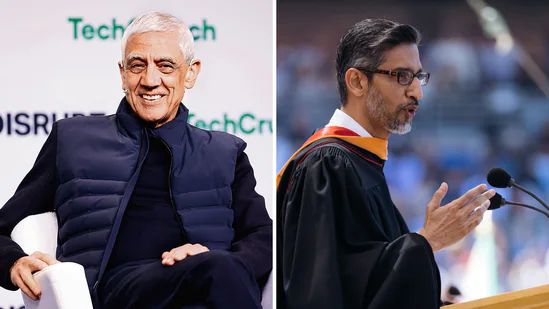
Vinod Khosla Criticizes Stanford Students for Pichai Protest
Bharatmorningnews.com –
Indian-American tech entrepreneur Vinod Khosla recently criticized Stanford University students for walking out during Sundar Pichai’s speech at a major event, labeling them as “selfish” and missing the broader significance of the protest. Khosla, a prominent venture capitalist and co-founder of Sun Microsystems, took to social media to express his frustration, suggesting the students were prioritizing narrow concerns over the transformative potential of artificial intelligence. His comments sparked a wider debate about the role of education institutions in shaping public discourse on technology and global policy.
While the protest was initially interpreted by some as a reaction to AI’s impact on employment, the students’ primary grievance centered on Google’s collaboration with the Israeli government. Their walkout, organized by the Stanford Students for Justice in Palestine group, was a symbolic act against the Project Nimbus contract—a $1.2 billion deal that the students viewed as a reinforcement of Israeli policies in the region. Khosla, however, argued that the demonstration was misaligned with the overarching mission of technological innovation, which he believed could uplift millions worldwide.
Context of the Protest and Khosla’s Perspective
The protest took place on June 14 during Pichai’s keynote address, which was part of a larger conference at Stanford Stadium. Participants in the walkout chanted “Free, free Palestine” as Pichai began his remarks, highlighting their stance against the partnership. Khosla’s critique came in the form of a social media post, where he accused the students of being “biased, idiotic, and very selfish” for interrupting what he called a historic moment in human progress. His tone emphasized the potential of AI to solve global challenges, particularly for the world’s poorest 3 billion individuals.
“The stupidity of these Stanford students to take the greatest opportunity for equality in humanity ever and to really free humanity and go walk out on Google and Sundar Pichai that’s pioneered that,” Khosla wrote in his post.
He further elaborated on the perceived short-sightedness of the demonstrators, claiming they failed to recognize the long-term benefits of AI-driven advancements. According to Khosla, the students were overly concerned with their own limited perspectives and overlooked the broader societal impact of the technology they were protesting against. This critique framed the protest as a missed chance to support innovation that could address pressing global issues.
Protest Motivations and Pichai’s Response
Contrary to Khosla’s interpretation, the Stanford Students for Justice in Palestine had clearly outlined their reasons for the walkout. The group argued that Google’s collaboration with the Israeli government was a critical issue that required immediate attention, particularly given the technology giant’s role in shaping global narratives. Their protest was not just a reaction to the partnership but also a reflection of growing student activism on campus, which has increasingly focused on social justice and geopolitical concerns.
Pichai, who had delivered a speech about his personal journey and Google’s vision for the future, did not directly address the walkout during his remarks. When asked about the protest by a BBC journalist afterward, he chose to remain silent, continuing his exit without acknowledging the students’ concerns. This response left many questioning whether the company’s leadership was prepared to engage with the issues that had sparked the demonstration.
Meanwhile, Khosla’s criticism gained traction in online discussions, with some supporters agreeing that the students’ focus on the Israeli partnership overshadowed the AI-related themes of his speech. Others, however, defended the protesters, arguing that the issue of Google’s collaboration with Israel was a valid concern that deserved attention. The incident underscored the growing divide between technology optimism and social justice priorities among Stanford’s student body.
Broader Implications and Public Reaction
The event highlighted the evolving role of university campuses in shaping public opinion on technology and global policy. As students increasingly use their platforms to voice concerns about corporate practices and international relations, figures like Khosla are drawing attention to the potential for innovation to drive societal change. The debate around the protest also brought to light the tension between individual self-interest and collective progress, a theme that resonated with both critics and supporters of the demonstrators.
Public reaction to Khosla’s comments was mixed, with some aligning with his view that the students had misjudged the protest’s significance. Others saw his critique as an attempt to downplay the importance of the issue at hand. The discussion quickly spread across social media, with users weighing in on whether the protest was a justified response to Google’s policies or a distraction from the AI revolution. This division reflected broader societal debates about the balance between technological advancement and social equity.
As the conversation continues, the event has become a case study in how technology leaders and students can have divergent perspectives on the same issue. Khosla’s emphasis on the global benefits of AI contrasted with the students’ focus on immediate geopolitical concerns, illustrating the complexity of modern advocacy in the tech sector. The incident also raised questions about how educational institutions should prepare students to engage with both innovation and its ethical implications.