
Karmelo Anthony case: Howard professor slammed for telling Austin Metcalf’s father ‘You failed your son’
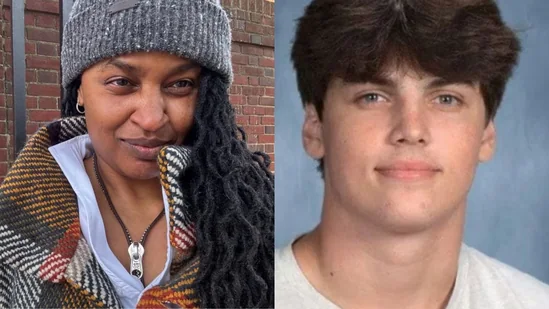
Karmelo Anthony Case: Howard Professor Accuses Austin Metcalf’s Father of Failing His Son
Bharatmorningnews.com – In the Karmelo Anthony case, a viral essay by a Howard University professor has sparked a heated public discussion. The piece, authored by Dr. Stacey Patton and published on Substack, criticizes Jeff Metcalf, the father of Texas teenager Austin Metcalf, for his comments during a courtroom statement following the fatal shooting. The article’s bold assertion that Metcalf “failed his son” has drawn both strong backlash and support, highlighting the complex interplay of race, culture, and parental responsibility in the case.
Context and Core Argument
Patton’s essay, titled “Dear Jeff Metcalf: Your Son Is Dead Because You Failed to Teach Him That Black Boys Have Boundaries,” delves into the systemic racial patterns surrounding the death of Austin Metcalf. The professor argues that Metcalf’s remarks during the trial—where he expressed regret over his son’s death—revealed deep-seated biases, particularly against Black boys and their autonomy. Patton emphasizes the idea that the shooting was not merely an isolated incident but part of a broader narrative of racial injustice, where Black children are often seen as having fewer rights than white individuals.
“You failed your son,” Patton wrote, directly addressing Jeff Metcalf, and pointing to his failure to instill the belief that Black boys deserve respect and have the right to assert themselves in society. The professor’s words have been interpreted as a call to examine how cultural expectations shape the behavior and perceptions of Black parents and children alike, even in moments of crisis.
The Karmelo Anthony case has been compared to other high-profile tragedies involving Black victims, such as Trayvon Martin and Michael Brown, where systemic racism and racial profiling played a central role. Patton suggests that Austin’s death was influenced by the same dynamics, with his father’s comments seen as a reflection of the internalized beliefs that often lead to devaluing Black lives. This critique underscores the tension between personal accountability and structural inequities in the legal and social systems.
Public Reaction and Debate
The essay has ignited a polarized response on social media, with critics accusing Patton of shifting focus from the shooter to the victim’s family. Some argue that the professor’s analysis politicizes the tragedy, framing it as a cultural issue rather than a straightforward legal case. Others, however, praise the piece for exposing the racial power dynamics that contribute to such incidents. The Karmelo Anthony case, they say, serves as a microcosm of larger societal struggles, where Black boys are often judged by different standards than their white counterparts.
Meanwhile, the Metcalf family has been at the center of the controversy, with some supporters of the professor acknowledging their grief. Patton herself admits that the tragedy is “an unimaginable rupture no parent should ever have to survive,” but she maintains that the father’s words provide insight into the cultural forces at play. This duality—recognizing both the family’s pain and the broader systemic issues—has kept the debate alive and relevant in the Karmelo Anthony case.
Additionally, the article has been linked to other discussions in the Karmelo Anthony case, including the role of Austin’s girlfriend and the potential influence of Jasmine Crockett, a figure involved in the incident. These connections have further complicated the narrative, adding layers to the analysis of how personal relationships and external influences shape the perception of the case.
Broader Implications of the Case
The Karmelo Anthony case has become a focal point for conversations about race, parenting, and the criminal justice system. Patton’s essay challenges the notion that a Black child’s behavior is always a result of external factors, arguing instead that their upbringing is often shaped by societal expectations. This perspective has been both praised and criticized, with some viewing it as a necessary critique and others as an overreach into personal responsibility.
As the case continues to evolve, the debate over how to interpret Austin Metcalf’s death remains unresolved. The professor’s words, while controversial, have prompted a deeper examination of the cultural narratives that underpin such incidents. In doing so, the Karmelo Anthony case has become a touchstone for understanding the intersection of race, identity, and the legal system’s role in shaping public opinion.