
Owaisi demands EC accept PAN card, driving licence for voter verification in SIR
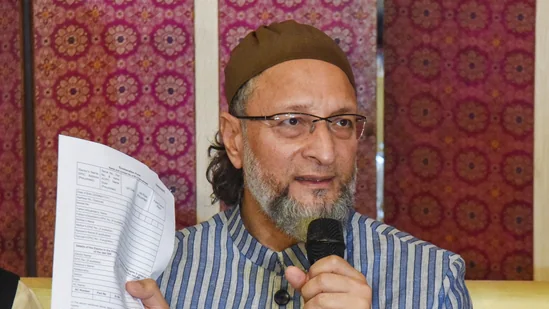
Owaisi Calls for EC to Recognize PAN Card as Voter ID Proof in SIR
Bharatmorningnews.com – Asaduddin Owaisi, leader of the All India Majlis-e-Mushawarat (AIMIM) party, has urged the Election Commission (EC) to include PAN cards and driving licenses as valid voter identity documents during the Special Intensive Revision (SIR) in Telangana. This demand comes amid growing concerns about the inclusivity of the voter verification process, which currently relies on a limited set of documents. Owaisi emphasized that the EC’s existing framework excludes several critical proofs, potentially disenfranchising a significant portion of the state’s population.
Owaisi highlighted that the EC’s approved list of 12 identity documents is incomplete for Telangana. State-specific proofs like PAN cards, driving licenses, and PDS ration cards are often overlooked, creating barriers for voters who rely on these documents. He argued that the EC must acknowledge the regional disparities in document availability and adapt its criteria to ensure no citizen is left without a valid ID for voting purposes. This call for flexibility underscores the importance of integrating local identity systems into national electoral processes.
“The EC has acknowledged that the 12-document list is not complete. It’s essential they adopt PAN cards, driving licenses, and PDS ration cards as valid proofs,” Owaisi stated during a recent press conference. His remarks reflect a broader push for inclusivity, as the SIR process threatens to marginalize voters lacking access to the EC’s preferred documents.
The SIR in Telangana, scheduled to begin on June 15, has raised alarms among political leaders and civil society groups. Owaisi directed his concerns to Chief Minister K. T. S. Ravindra, urging the state government to work with the EC to incorporate its issued documents into the verification framework. He pointed out that Telangana lacks Permanent Residence Certificates and Family Registers, and the National Register of Citizens (NRC) process remains unresolved in the state. These gaps, Owaisi warned, could lead to the exclusion of genuine voters from electoral rolls.
His argument extends to the national level, where Owaisi drew parallels with Assam’s NRC exercise, which faced similar challenges in identifying citizens. He noted that the Supreme Court’s oversight of Assam’s process highlighted the need for a more comprehensive approach. Similarly, in West Bengal, the BJP government is considering removing voters from PDS beneficiary lists if they are excluded from SIR, further emphasizing the stakes of the current debate. Owaisi stressed that the EC’s reliance on an outdated 2002 list of documents has caused inconsistencies, particularly in areas with diverse demographic profiles.
SIR Timeline and Voter Disenfranchisement Risks
The SIR process in Telangana is divided into three phases: initial roll preparation (June 15–24), house-to-house verification (June 25–July 24), and finalization. Owaisi warned that without alternative ID options, voters in regions with limited access to the EC’s approved documents could face disenfranchisement. He argued that the current system risks excluding millions who rely on PAN cards and driving licenses as primary proofs of identity. This concern is especially pressing in a state where administrative hurdles have already complicated voter participation.
Political Context and Regional Implications
Owaisi framed the SIR as a strategic move to target specific communities, citing Bihar’s case where 57 “infiltrators” were identified. While only a few were Muslims, he questioned the EC’s role in such exclusions, calling for transparency in the process. The inclusion of PAN cards and driving licenses, he said, would not only make verification more accessible but also prevent the perception of bias. His focus on regional disparities underscores a growing demand for the EC to adapt its policies to local contexts, ensuring equitable representation in democratic processes.