
Ludhiana: Buddha Nullah clean-up : Team effort yielding improvement in water quality, says Seechewal
Ludhiana: Buddha Nullah Clean-Up Success Attributed to Community and Government Collaboration
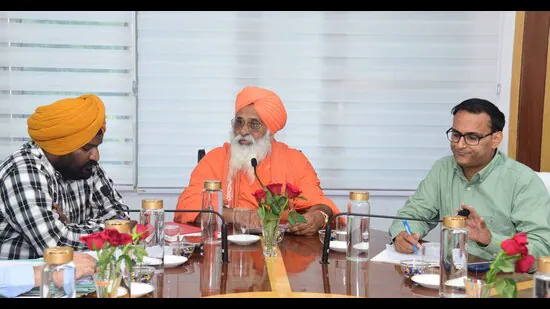
Bharatmorningnews.com – Ludhiana’s recent efforts to restore the health of Buddha Nullah have yielded measurable progress, as highlighted by Rajya Sabha member Balbir Singh Seechewal during a meeting at the municipal corporation’s Zone D office. The initiative, driven by a unified approach between local authorities, environmental agencies, and community members, has significantly improved the water quality in this vital water body. Seechewal praised the sustained efforts, emphasizing that Ludhiana’s collective commitment has transformed the Nullah into a cleaner and safer resource.
Collaborative Clean-Up Efforts Span Multiple Agencies
The meeting brought together key stakeholders, including Additional Deputy Commissioner Amit Bamby, MC Joint Commissioner Amanpreet Singh, senior police personnel, and representatives from the Punjab Water Supply and Sewerage Board. Ludhiana’s pollution control board, the Punjab Pollution Control Board (PPCB), also shared its findings on the project’s impact. These combined efforts have addressed longstanding issues, such as industrial discharge and domestic waste accumulation, which have plagued the Nullah for years.
Seechewal noted that the success of the clean-up campaign is a result of Ludhiana’s diverse groups working in tandem. “The collaboration between the municipal corporation, Punjab Pollution Control Board, and local communities has led to a significant turnaround in the Nullah’s water quality,” he said. This synergy has not only improved the river’s condition but also fostered a sense of shared responsibility among residents, who now actively participate in maintaining its cleanliness.
Targeted Waste Removal and Technological Interventions
As part of the initiative, Ludhiana’s municipal corporation focused on removing organic waste, particularly cow dung, from key areas like Tajpur and Haibowal. Between April 12 and June 8, 3,500 tonnes of cow dung were extracted from Tajpur, while 2,500 tonnes were collected from Haibowal dairies. Additional 1,500 tonnes were gathered by the MC during the same period, totaling 7,500 tonnes. These efforts were supported by the establishment of compressed bio gas (CBG) facilities at the dairy complexes, providing incentives to dairy owners for waste collection.
Despite the progress, challenges remain. The MC Joint Commissioner mentioned that dairy owners in Ludhiana initially resisted installing flow meters to monitor water usage, even after repeated requests. However, the collaboration with the Punjab Water Supply and Sewerage Board has helped implement alternative measures to ensure compliance. These actions reflect Ludhiana’s commitment to balancing agricultural needs with environmental protection, a critical aspect of its ongoing clean-up strategy.
Environmental Metrics Demonstrate Tangible Improvements
Recent data from the Punjab Pollution Control Board (PPCB) shows Ludhiana’s Buddha Nullah is on the path to recovery. Key water quality parameters, such as total dissolved solids (TDS), biochemical oxygen demand (BOD), and chemical oxygen demand (COD), have seen dramatic declines. TDS levels, which were once 918 in January, have dropped to 366 in April. BOD, previously at 93, has now fallen to just 7, while COD has decreased from 312 to 32. These figures underscore the effectiveness of Ludhiana’s clean-up measures.
Microbial indicators have also improved. E. coli levels in samples from Bhammia Wali Puli, a section of the Nullah, plummeted from 210,000 in January to 3,200 in April. Similarly, F. coli counts dropped from 94,000 to 1,100. These reductions indicate that Ludhiana’s interventions have successfully curbed contamination, making the Nullah safer for both ecological and human use. The municipal corporation has reiterated its dedication to maintaining this progress, with plans for continuous monitoring and maintenance.
Local residents in Ludhiana have also contributed to the initiative, with many taking part in cleanliness drives and reporting instances of pollution. The clean-up effort has not only enhanced the Nullah’s water quality but also raised environmental awareness across the city. As Ludhiana continues to prioritize sustainability, its success in Buddha Nullah serves as a model for other urban areas facing similar challenges. The combined impact of government action, community engagement, and technological innovation has proven that long-term environmental improvement is achievable through persistent teamwork.