
It’s upon us, the world’s Cup
It’s Upon Us, the World’s Cup
Bharatmorningnews.com – The 2026 World Cup marks another chapter in a tournament that has grown from its initial 13 teams in 1930 to 48 nations today. Over decades, it has weathered global conflicts, from World War II to the pandemic, and witnessed historical shifts like the fall of the Berlin Wall. The event has also been a stage for political messaging, such as the 1934 use of sports washing. Now, as it returns to the field, the competition promises new dimensions.
The tournament’s latest iteration is set against a backdrop of geopolitical tensions, with the United States hosting 78 matches. This comes as the nation grapples with travel constraints and the actions of its Immigration and Customs Enforcement (ICE) agency. The Guardian reported that 32 people died under U.S. administration last year, the highest number since 2004. Yet, the World Cup’s presence remains a unifying force, even as debates about costs intensify—highlighted by the $1600 price tag for the 2022 final, now surpassed by $32,970 for 2026.
A Global Stage, New Challenges
With 48 teams competing, the event has expanded significantly. The number of players has surged from 736 in 2022 to 1,248, representing 449 clubs across 71 countries. This edition will feature 40 additional matches, doubling the number of venues and extending the tournament’s schedule. The total prize money, $655 million, sets a new record, ensuring even the 48th team receives $10.5 million—compared to the $50 million for the champions.
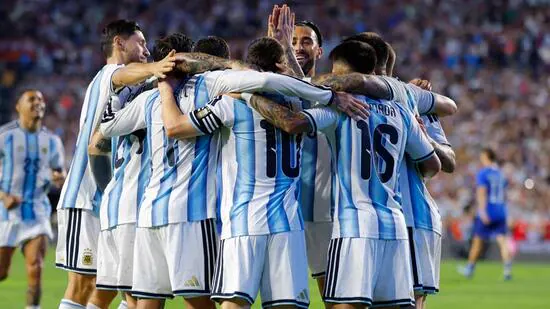
Among the standout names is Argentina, returning to the World Cup with 17 players from their 2022 squad. The team aims to achieve what only two others have done: retain the title. Lionel Messi, fit and eager for his sixth tournament, has expressed his commitment to the game. “I love playing football and I am going to do it until I can’t anymore,” he stated, a sentiment that resonates with Argentina coach Lionel Scaloni, who hopes Messi’s resilience mirrors that of Diego Maradona in past eras.
Meanwhile, European champions Spain enter as favorites, though their success may hinge on the form of young talents like Lamine Yamal. The 18-year-old, alongside Nico Williams, was pivotal in Spain’s continental triumph and is expected to play a similar role in the North American stage. Brazil, however, faces uncertainty as Neymar Jr. could be playing his final World Cup, a decision that has sparked speculation.
Unexpected Twists and Talented Roster
The tournament also sees the return of Manuel Neuer to international football, with his comeback drawing comparisons to legendary comebacks like Roger Milla’s in 1990 or the resurgence of Zinedine Zidane, Lilian Thuram, and Claude Makelele in 2006. Ghana’s Thomas Partey, meanwhile, will face legal scrutiny as he stands trial for rape and sexual assault, but remains in the squad under Carlos Queiroz’s belief in his innocence.
Portugal, champions of the Nations League, boasts a deep talent pool but will need to manage Cristiano Ronaldo’s minutes effectively. In England, Harry Maguire’s absence has raised questions, but the team’s reliance on Harry Kane and exclusion of Phil Foden and Cole Palmer may still inspire dreams of glory. Norway, with a balanced squad and the presence of Erling Haaland, also emerges as a contender.
France, led by head coach Didier Deschamps, faces the challenge of integrating young stars like Michael Olise, Kylian Mbappé, Bradley Barcola, Ousmane Dembélé, and Rayan Cherki into their attacking lineup. As the event kicks off, it will be the first World Cup for players such as Yamal, Yan Diomande, Arda Güler, and Diomande, while marking the potential farewell for icons like Neymar Jr. and Deschamps himself. The stage is set for a new era of competition.