
Why the new US-Saudi nuclear deal could trigger a global nuclear chain reaction
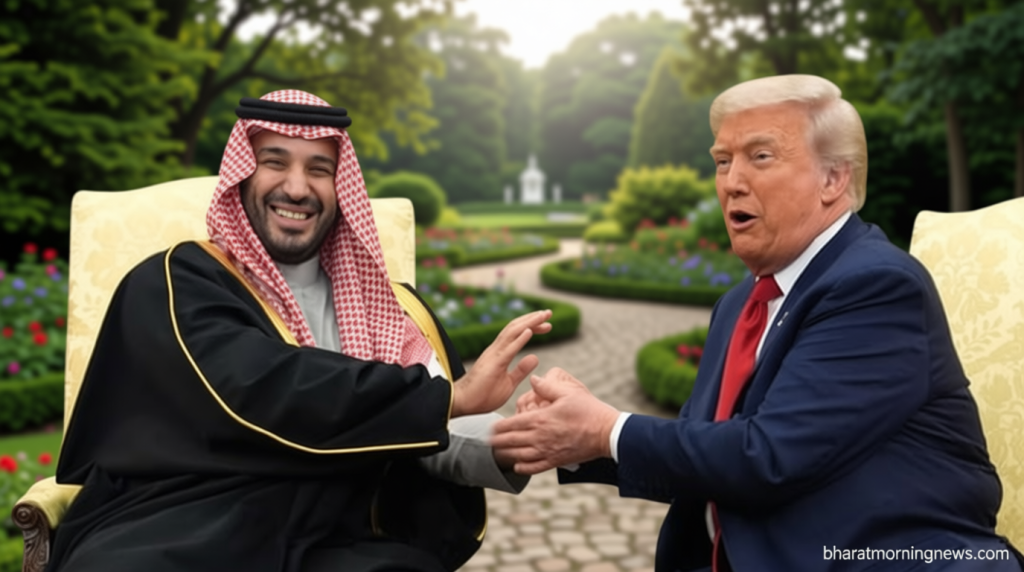
Bharatmorningnews.com – “`html
Why the New US Saudi Nuclear Deal Sparks Global Concern
Why the new US Saudi nuclear agreement has captured worldwide attention lies in its potential to reshape global atomic politics. Under President Donald Trump’s administration, Washington finalized a civilian nuclear pact with Riyadh that allows the Kingdom to advance peaceful energy initiatives. While officially designated for non-military applications, analysts warn the accord might eventually pave the way for Saudi Arabia to construct atomic arms.
Observers note parallels with the “Atoms for Peace” initiative launched by President Dwight D. Eisenhower during 1953. That framework allowed America to transfer nuclear technology to nations pledging exclusively peaceful utilization, as reported by The New York Times. Today’s experts characterize the current moment as a transition into “nuclear hedging”—a strategy where states build foundational capabilities to maintain the flexibility of weaponization should geopolitical circumstances deteriorate.
Unprecedented Concessions in the Agreement
Riyadh’s agreement arrives amid growing anxiety among American partners regarding regional conflicts, energy stability, and whether they can continue trusting American military assurances. The terms permit Saudi Arabia to potentially enrich uranium for reactor operations. This capability matters significantly since the enrichment process serves dual purposes: producing fuel for power generation and creating material suitable for weapons if development continues.
According to The New York Times, the agreement potentially restricts how many nuclear facilities international monitors may inspect. These two provisions represent notable departures from contemporary American nuclear arrangements and have amplified worries about future armament possibilities. Crown Prince Mohammed bin Salman has publicly connected Saudi nuclear ambitions to developments in Iran, previously stating that Tehran’s pursuit of atomic weapons would prompt Riyadh to follow suit.
Expert Perspectives on the Nuclear Shift
“We’re back in an era of nuclear hedging,” remarked Vipin Narang, who holds positions in nuclear security and political science at MIT.
Narang elaborated that numerous anxious nations confront worsening security conditions while questioning whether their formal or informal protectors remain dependable, according to The New York Times. He cautioned that states seeking military program capacity—capable of yielding atomic weapons—will likely multiply in coming years.
“It’s very connected to the damage Trump has done to credibility of the US as a guarantor of security,” Gary Samore observed.
Samore, a Brandeis University academic, noted that such nations occasionally earn the designation “friendly proliferators,” per The New York Times. Specialists emphasize that civilian nuclear development does not automatically translate into weapons production. Nevertheless, they anticipate a more permissive global nuclear marketplace where nations demand greater flexibility in upcoming arrangements.
Regional Responses and Alliance Reassessment
Nations without existing atomic arsenals are actively debating whether to acquire nuclear capabilities. Among those considering this path are Japan, South Korea, Germany, and Poland. Seoul has initiated construction of nuclear-powered submarines with American assistance, responding to threats from North Korea. Tokyo is also reevaluating nuclear weapons’ place in its defense strategy, despite its historical experience with Hiroshima and Nagasaki.
Poland’s President Karol Nawrocki has advocated for his nation to develop a nuclear program. Meanwhile, Germany participates in an elevated nuclear steering committee alongside France and additional European partners. Paris has committed to enhancing its nuclear deterrent and extending protective coverage to European partners, citing doubts about American security commitments.
“The next half-century will be an age of nuclear weapons,” declared President Emmanuel Macron.
Matthew Fuhrmann, a security studies professor at the University of Texas, highlighted that America’s strongest nonproliferation mechanism has historically been its military partnerships. He suggested that without extending nuclear protection to as many countries as it did, the global landscape would look considerably different.
Some analysts caution that powers such as China and Russia might cite the Saudi arrangement as precedent when offering comparable deals to other nations. Experts believe robust military alliances remain among the primary factors preventing widespread nuclear proliferation, according to The New York Times.
“`