
US-Iran war LIVE: Iran ‘hits’ two US military assets in Kuwait, uncertainty looms over peace deal as attacks escalate
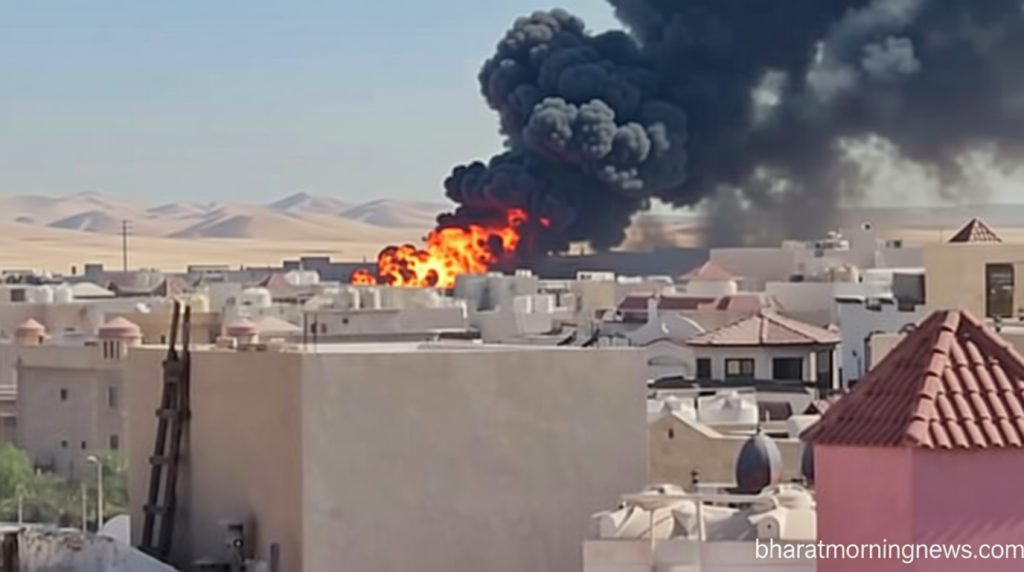
US-Iran War LIVE: Escalating Tensions and Strategic Strikes in Hormuz
Bharatmorningnews.com – As the US-Iran war LIVE intensifies, Iran’s military actions in Kuwait and the Strait of Hormuz have raised alarms about the fragile peace deal. On Saturday, Iranian forces reportedly launched attacks on two U.S. military assets in Kuwait, underscoring the growing conflict between the two nations. These strikes come amid heightened tensions following a Jordan-based attack earlier this week that killed two American soldiers and wounded four, though the exact identities of the casualties remain undisclosed. The U.S. military has responded swiftly, conducting airstrikes against Iran’s Revolutionary Guard to demonstrate its readiness to retaliate.
Strategic Impact on Oil Trade Routes
The Pentagon has confirmed that the recent strikes were designed to disrupt Iran’s ability to monitor and control maritime traffic through the Strait of Hormuz, a critical chokepoint for global oil shipments. This waterway, which handles approximately 20% of the world’s oil exports, has become a focal point of the US-Iran war LIVE as both sides seek to assert dominance over its strategic significance. Since the conflict escalated, 16 U.S. service members have been killed, and over 430 have sustained injuries, highlighting the scale of the ongoing hostilities.
“Iran has withdrawn from the interim agreement with the United States,” said an Iranian official, citing the Associated Press. This declaration signals a major blow to recent ceasefire talks, as tensions show no sign of easing. The US-Iran war LIVE now threatens to disrupt global energy markets, with fears of further attacks on key infrastructure in the region.
Explosions Near Qeshm Island and Bandar Abbas
On the early hours of Saturday, Iranian state media reported attacks on three locations near the Strait of Hormuz. These included areas close to Sirik and Hajiabad in Hormozgan province, as well as a site near Qeshm Island, which is a major hub for oil refining and storage. Explosions were also heard in Bandar Abbas, a key port city in southern Iran, raising concerns about the broader scope of the conflict. The timing of these strikes, just days after U.S. Secretary of State Mike Pompeo warned of potential military action, has further fueled speculation about the war’s trajectory.
While no group has officially claimed responsibility for the attacks, analysts suggest that Iran’s Revolutionary Guard, along with its allied militias, is likely behind the coordinated strikes. These actions are believed to be part of a broader strategy to challenge U.S. influence in the region and send a message to Washington. The US-Iran war LIVE has seen a pattern of rapid retaliation, with both sides using the Strait of Hormuz as a flashpoint for their escalating rivalry.
Drone Strikes Target Kurdish Bases in Irbil
On Sunday, a drone attack hit a facility associated with the Kurdistan Freedom Party, an Iranian-backed Kurdish separatist group, near Irbil in Iraq. The strike wounded eight individuals, according to Rebaz Sharifi, a military official with the group. Irbil, the capital of Iraq’s semi-autonomous Kurdish region, experienced air defense explosions during the same period, indicating the city is a key target in the US-Iran war LIVE. Over the past four days, Irbil has faced multiple drone strikes, coinciding with the recent visit of Iraqi Prime Minister Ali al-Zaidi to Washington and the rising stakes of the conflict.
The attacks on Kurdish bases in Irbil highlight the complex web of alliances and conflicts in the region. U.S. troops and Kurdish factions with ties to Tehran have long been stationed in the area, creating a battleground for competing interests. With the US-Iran war LIVE continuing to unfold, these strikes reinforce the idea that the conflict is not only between the two major powers but also has regional spillover effects, impacting Iraq’s stability and its relationship with both the U.S. and Iran.
The rising toll of casualties and the frequency of attacks suggest that the conflict may soon enter a new phase. Analysts warn that the US-Iran war LIVE could have far-reaching consequences for global energy markets, as disruptions to oil supply could drive up prices. The recent strikes on the Strait of Hormuz have already sent ripples through the international community, with the Brent crude price fluctuating in response to the heightened risk of supply chain interruptions. Meanwhile, the uncertainty surrounding the peace deal continues to cast a shadow over the potential for de-escalation, as both sides prepare for further confrontations.