
US attacks Iran: Explosions reported in Sirik area near Strait of Hormuz after Apache helicopter downed
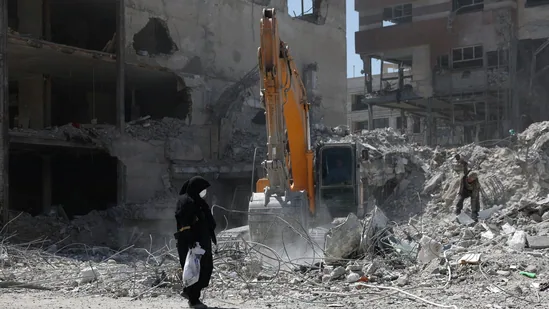
US Launches Airstrikes Against Iran Amid Apache Helicopter Incident
Bharatmorningnews.com – The United States carried out targeted airstrikes in southern Iran on Tuesday, marking a significant escalation in the ongoing tensions between the two nations. This decision followed the downing of an Army AH-64 Apache helicopter by Iranian forces the previous day, an event that triggered a swift and decisive response from Washington. Reports from local sources indicated multiple explosions in the Sirik region, near the strategically vital Strait of Hormuz, as part of the U.S. military operation. The strikes were aimed at disrupting Iranian capabilities and retaliating for the loss of the Apache, which was reportedly shot down during a patrol in the area.
Strategic Context and Military Actions
The Strait of Hormuz, a narrow waterway through which a significant portion of the world’s oil supply passes, has long been a flashpoint for regional conflict. The U.S. decision to strike Iran in this area underscores the importance of maintaining control over critical maritime routes. According to U.S. Central Command (CENTCOM), the airstrikes were executed in self-defense, targeting Iranian assets believed to be involved in the attack on the Apache helicopter. The operation, conducted at 5 p.m. ET on Tuesday, was described as a proportional response to Iran’s actions, with the goal of deterring further aggression and safeguarding U.S. interests in the region.
“Our forces initiated self-defense strikes against Iran at 5 p.m. ET today, in response to the downing of a U.S. Army Apache helicopter. This mission represents a measured and necessary action to counter Iranian aggression,” CENTCOM stated in a release.
President Donald Trump, speaking on Truth Social, quickly affirmed Iran’s responsibility for the incident, highlighting the pilots’ survival as a key point. He noted that the Apache was shot down overnight off Oman’s coast, emphasizing the strategic location of the attack. “Iranian forces downed one of our advanced Apache Helicopters while operating near the Strait of Hormuz,” Trump wrote, adding that the U.S. response was both timely and decisive. The president’s comments reinforced the administration’s stance that the strikes were a direct consequence of Iran’s actions.
Iranian Reactions and Regional Implications
Iranian officials swiftly responded to the U.S. airstrikes, with Foreign Minister Seyed Abbas Araghchi asserting that the attacks were an overreaction. In a tweet, he claimed that the Strait of Hormuz is “thousands of miles away from U.S. shores,” arguing that the U.S. should have taken more precautions to avoid such incidents. Araghchi also suggested that the presence of foreign forces in the region increases the risk of accidental clashes, urging their withdrawal to reduce tensions.
“Foreign forces near our territory are exposed to risks due to human error, accidents, or crossfire. To minimize these threats, the best course of action is for them to leave,” Araghchi added, emphasizing the need for a more balanced approach to military presence.
The airstrikes have raised concerns about the potential for a broader conflict in the Persian Gulf. Analysts note that the area around Sirik and Bandar Abbas is a hub for Iranian military activity, making it a strategic target. The U.S. military’s focus on this location highlights the region’s importance in regional security and its role as a frontline for counterterrorism efforts. While the immediate goal of the strikes was to retaliate for the Apache incident, the long-term impact could involve further military engagement or diplomatic negotiations to de-escalate the situation.
Following the attacks, there were initial reports of damaged infrastructure and military installations in the Sirik area. However, Iranian officials have not yet confirmed casualties or the extent of the damage. The strikes also prompted a rapid response from the Iranian military, with sources indicating that the country is reviewing its operations to prevent similar incidents in the future. The U.S. military, in turn, has emphasized the precision of its strikes, asserting that they were targeted to minimize civilian impact while achieving strategic objectives.
“The strikes were carefully planned to neutralize threats without causing unnecessary harm. Our focus remains on protecting U.S. assets and ensuring regional stability,” a Pentagon spokesperson said in a statement.
As the situation unfolds, the broader implications of the U.S. attacks on Iran remain a subject of debate. While some view the airstrikes as a necessary show of force, others warn of the potential for escalation. The incident has reignited discussions about the U.S.-Iran standoff, particularly in the context of ongoing negotiations over Iran’s nuclear program. With the global energy supply at risk, the response from both nations could have far-reaching consequences for international relations and geopolitical stability in the region.