
‘Hit them hard’: Trump warns of fresh US attacks on Iran as tensions escalate
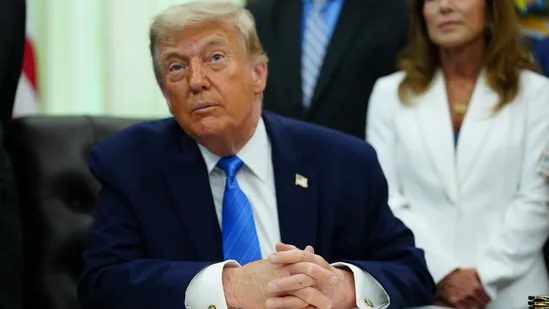
Trump’s ‘Hit Them Hard’ Threat: US-Iran Tensions Escalate Amid Escalating Conflict
Bharatmorningnews.com – President Donald Trump issued a stark warning on Wednesday, declaring, “Hit them hard” as he prepared to escalate military action against Iran. The threat came after a series of recent confrontations, including the downing of an Apache helicopter by Iranian forces, which had already heightened tensions between the two nations. Trump emphasized that the United States would not hesitate to launch additional strikes unless diplomatic efforts bore fruit, signaling a shift toward more aggressive measures in the ongoing standoff.
The Context of Escalating US-Iran Hostilities
Trump’s remarks followed a series of targeted attacks by Iran on US assets in the Persian Gulf, including missile strikes and drone operations. The President has long criticized Iran’s nuclear program and its support for militant groups, and this latest escalation underscores his commitment to a hardline approach. “We’re going to hit them again hard today,” he stated during a press briefing, highlighting his resolve to counter Iran’s provocations with force. The strikes, he claimed, would focus on critical infrastructure, aiming to cripple Iran’s military and economic capabilities.
Trump argued that Iran had been deliberately obstructing peace talks, using its military actions to pressure the United States. “They keep tapping us along,” he said, expressing frustration over what he called Iran’s lack of cooperation. The President’s comments were met with mixed reactions from allies, with some fearing further destabilization in the region while others supported the tough stance as a necessary response to Iran’s aggression.
Iran’s Retaliatory Actions and Regional Impact
Iran’s retaliation had already begun, with missile strikes targeting US military bases in Kuwait, Jordan, and Bahrain—key locations hosting American troops. These attacks marked the second round of violence in a week, testing the fragile ceasefire that had briefly eased tensions. Analysts warned that such strikes could disrupt regional stability, particularly as the US and Iran continue to maneuver in the Strait of Hormuz, a critical artery for global oil shipments.
The US military’s Central Command confirmed that recent operations had focused on Iran’s air defense systems and radar installations, aiming to degrade its ability to detect and respond to future threats. While Iran acknowledged the attacks near Bandar Abbas and Qeshm Island, it remained silent on the scale of damage, leaving questions about its military readiness and strategic goals. Trump, however, remained confident, asserting that the strikes would send a clear message of American resolve.
Trump’s Allegations and Economic Motives
Trump also tied the conflict to economic interests, claiming that Iran’s actions were driving up oil prices. “Instead of $250 a barrel, we’re at $85-90,” he said, citing Reuters. The President suggested that the US had been quietly extracting oil from Iran, implying that the country’s defiance was undermining global markets. This economic angle reinforced his narrative that military strikes were not only a strategic necessity but also a means to pressure Iran into a more favorable deal.
Iran, in turn, accused the US of hypocrisy, arguing that Washington had long supported Israel’s attacks on Iranian targets in the region. “The United States has consistently backed Israel’s aggressive policies,” a spokesperson said, highlighting the perceived double standard. The tension between the two nations, however, was not just about oil prices or military posturing—it was also about control over the Middle East’s geopolitical landscape, with Trump vowing to “hit them hard” to reassert American dominance.
Global Reactions and Diplomatic Concerns
International observers expressed concern over the potential for a broader conflict. European allies, including Germany and France, urged restraint, warning that further escalation could draw other nations into the fray. “We need to ensure that the United States doesn’t take the wrong step,” said a senior EU diplomat, emphasizing the importance of diplomatic channels. Meanwhile, regional powers like Saudi Arabia and the United Arab Emirates cautiously monitored the situation, balancing their alliance with the US against their concerns about Iran’s growing influence.
Trump’s focus on a “Hit them hard” strategy also raised questions about the long-term consequences of the conflict. While he framed the strikes as a necessary deterrent, critics warned of the risk of collateral damage and unintended consequences. “This could lead to a full-scale war,” said a Middle East analyst, noting that the region’s delicate balance could be disrupted by continued military confrontations. Despite these concerns, Trump remained steadfast, insisting that the US would not back down from its campaign to weaken Iran’s military and economic standing.
Strategic Implications and the Path Forward
The current phase of the conflict has forced both nations to reassess their strategies. For the US, the “Hit them hard” approach reflects a broader policy of using military force to achieve political goals, a tactic that has been central to Trump’s foreign policy. By targeting Iran’s infrastructure, the administration aims to cripple its ability to sustain the war effort and compel concessions in negotiations. “This is not just about retaliation—it’s about forcing them to the table,” Trump reiterated, as he outlined his plan for a decisive military response.
Iran, on the other hand, appears to be leveraging its military actions to test the limits of US resolve. The country’s leadership has emphasized its commitment to resisting foreign pressure, even as it seeks to negotiate terms that would limit its nuclear ambitions. The “Hit them hard” strategy, however, has left Iran in a precarious position, as it must now prepare for potential strikes while maintaining its stance in the ongoing talks. “The deal is still viable,” a senior Iranian official said, “but we need to see tangible results from the United States.”
Conclusion: A Continuing Clash of Wills
As tensions reach a boiling point, the “Hit them hard” mantra has become a defining element of Trump’s approach to the Iran conflict. The President’s insistence on aggressive action has not only shaped military operations but also influenced the tone of international diplomacy. While the immediate focus remains on Iran’s infrastructure, the long-term implications of the strikes could reshape the regional power dynamics, with the US and Iran locked in a cycle of retaliation.
With the conflict showing no signs of abating, the world watches as both nations prepare for the next phase of hostilities. Trump’s commitment to a “Hit them hard” strategy underscores the high stakes involved, as the US seeks to assert its authority in the Middle East. Whether this approach will lead to a lasting resolution or further escalate the crisis remains to be seen, but one thing is clear: the “Hit them hard” message has become a rallying cry for a new era of confrontation between the two adversaries.