
Could Super El Niño make food more expensive worldwide? Global supply shock explained
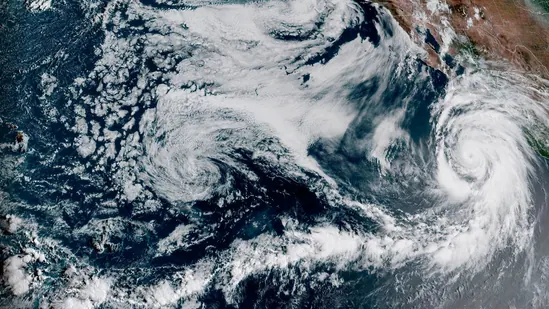
Super El Niño Could Raise Global Food Prices
Bharatmorningnews.com – As the 2026–2027 El Niño phenomenon intensifies, the question looms: Could Super El Niño make food more expensive worldwide? Experts warn that this climate event, if strong enough, may trigger significant disruptions in global food supply chains, leading to inflationary pressures that could last into 2028. With already strained markets from geopolitical conflicts, the叠加 of extreme weather conditions could amplify economic challenges, impacting households across continents.
The Science Behind Super El Niño
El Niño is a natural climate cycle characterized by the warming of ocean temperatures in the Pacific, which in turn alters weather patterns globally. This phenomenon can lead to droughts, floods, and storms, all of which disrupt agricultural production. The 2026–2027 event has been dubbed a “Super El Niño” due to its heightened intensity, drawing comparisons to past records that caused widespread climate-related shocks. According to the National Oceanic and Atmospheric Administration (NOAA), there is a 63% chance that this El Niño will surpass normal temperature levels by 2°C, potentially exacerbating existing food market instability.
Global Food Supply Chain Vulnerabilities
Could Super El Niño make food more expensive by creating a cascade of disruptions? Climate experts argue that the event could compound challenges already faced by supply chains, such as those in the Middle East, which have been impacted by conflicts. For instance, regions like southern Africa and northern South America may suffer from drier conditions, while Southeast Asia could face severe droughts affecting palm oil yields. These shifts in weather patterns, combined with rising global demand, could drive up prices for staple commodities like rice, wheat, and sugar.
Goldman Sachs analysts predict that the Super El Niño could lead to a 15.8% surge in global food prices, with the eurozone experiencing a smaller but still notable 1.3% increase. However, the timing of these effects may vary depending on regional crop cycles and the pace of weather-related disruptions. While some areas might see immediate impacts, others could take months to feel the full strain, depending on the seasonality of their agricultural production.
“El Niño’s influence on agriculture isn’t uniform. It creates regional disparities, with some areas gaining while others lose,” noted UBS analysts. The unpredictable nature of this climate event means its economic consequences could be uneven, with certain regions facing sharper price spikes than others. For example, India’s wheat and sugar cane production may already be under threat from reduced rainfall, while Brazil, Argentina, and Uruguay could struggle with flooding that damages key crops.
The potential for a global supply shock is growing as the Super El Niño’s effects extend beyond mere weather anomalies. Climate-risk analytics firm Risilience estimates that an extreme El Niño scenario could reduce global agricultural output by 14.3%, equivalent to $342 billion in losses. This decline could push prices for major food goods up by 10% to 50%, with specific crops seeing even greater volatility