
‘Blasphemous’: Candace Owens torches Kolvet for Virgin Mary-Erika Kirk comparison in vicious TPUSA showdown
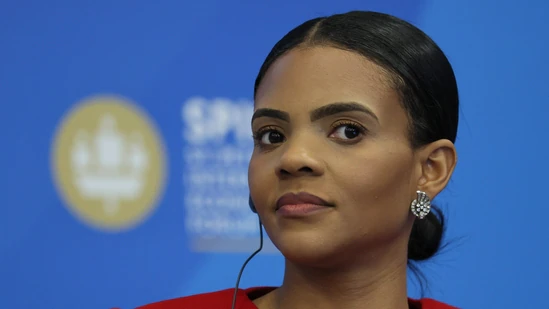
Candace Owens Brands Kolvet’s Comparison Blasphemous in Virulent TPUSA Clash
Bharatmorningnews.com – On July 10, conservative commentator Candace Owens ignited a fierce showdown with Turning Point USA (TPUSA) as she condemned spokesperson Andrew Kolvet for a “blasphemous” comparison between Erika Kirk and the Virgin Mary. The exchange, which unfolded on social media, centered on Kolvet’s defense of Erika Kirk, Charlie Kirk’s widow, after her husband’s assassination in September 2025. Owens argued that Kolvet’s remarks not only insulted religious symbolism but also undermined the credibility of the investigation into the incident, which has sparked intense debate within the conservative movement.
Intensifying Tensions Over Religious Symbolism
Kolvet’s post, which praised Erika Kirk’s leadership during the aftermath of Charlie Kirk’s death, drew sharp criticism from Owens for equating her with the Virgin Mary. In a scathing response, Owens labeled the comparison “blasphemous,” claiming it was a deliberate attempt to obscure the truth behind the assassination. “This is positively blasphemous. Attempting to draw comparisons between Erika Kirk and the Blessed Mother to make your point is another level of propagandist delusion,” she tweeted, accusing Kolvet of using religious imagery to manipulate public perception.
“You’re just sick, Andrew,” Owens wrote, emphasizing that the analogy was meant to suppress scrutiny rather than support it. Her critique highlighted a growing rift between her and TPUSA, with the latter defending Erika Kirk as a grieving widow who deserves support, while Owens insists the comparison is a strategic move to deflect from unresolved questions about the event.
Legacy of Collaboration and Diverging Narratives
Owens and Charlie Kirk were once allies, having collaborated on various projects and shared a deep ideological bond. Even after Owens left TPUSA in 2019, she maintained a connection with Kirk through private messages and social media posts. However, the assassination of Kirk in September 2025 has transformed their relationship into a battleground of competing narratives. Owens has since become a vocal critic of TPUSA, accusing the organization of prioritizing political messaging over transparency in the investigation.
Her arguments have taken on a more personal tone, with Owens suggesting that Erika Kirk’s actions during the crisis were inconsistent with her role as a grieving spouse. “Blasphemous” comparisons, she argues, are part of a broader effort to downplay the significance of the event. TPUSA, on the other hand, maintains that the evidence against Tyler James Robinson—the accused assassin—is strong and that Owens’ theories are speculative, aiming to gain traction through emotional appeal rather than factual analysis.
The Battle for Narrative Control
As the trial of Tyler James Robinson progresses, the clash between Owens and Kolvet has intensified, reflecting deeper divisions within the conservative movement. Owens has leveraged her platform to question the official account of the assassination, presenting alternative theories that suggest Erika Kirk may have played a more active role in the events leading up to her husband’s death. These claims, while controversial, have drawn a significant following, with some supporters accusing TPUSA of misleading the public by emphasizing the “blasphemous” parallel without sufficient evidence.
“The comparison is a distraction from the real issues at hand,” Owens stated, calling for a more rigorous examination of the facts. Her focus on the “blasphemous” analogy underscores a broader strategy to challenge TPUSA’s credibility and redirect attention to her own interpretation of the tragedy. Critics, however, argue that her emphasis on religious symbolism overshadows the key legal and investigative points, creating a polarizing effect on social media platforms.
The feud has also sparked discussions about the role of TPUSA in shaping public opinion. While Kolvet and other allies defend the organization’s position, Owens’ accusations have fueled skepticism among some conservatives, raising questions about whether the group is using the tragedy to reinforce its own political agenda. This dynamic has led to a fragmented discourse, with followers on both sides fiercely defending their perspectives.
Public Reaction and Media Scrutiny
The controversy has generated widespread media attention, with outlets dissecting the “blasphemous” comparison and its implications. Some analysts note that the use of religious imagery in political debates is a common tactic, but Owens’ sharp critique has amplified the intensity of the TPUSA showdown. Social media users have taken sides, with hashtags like #BlasphemousTPUSA trending in the wake of the exchange.
Meanwhile, the legal drama surrounding Tyler James Robinson continues to unfold, with new evidence and testimonies influencing the trial. Owens’ criticism of Kolvet’s remarks has also been interpreted as a broader challenge to TPUSA’s leadership, particularly in light of the group’s evolving stance on the case. As the trial progresses, the question remains: will the “blasphemous” comparison serve as a pivotal point in the public’s understanding of the events, or will it become a symbol of ideological polarization within the movement?
In the end, the clash between Owens and Kolvet highlights the power of language in shaping political narratives. By labeling the Virgin Mary-Erika Kirk analogy as “blasphemous,” Owens has not only rekindled a personal feud but also sparked a larger conversation about the intersection of faith, politics, and public accountability. Whether this rhetoric will strengthen or weaken TPUSA’s position in the eyes of its supporters remains to be seen, as the battle for truth and influence continues to escalate.