
A Tibetan Activist Set Himself on Fire Outside the U.N.—and United His Cause
Tibetan Activist Set Himself on Fire at U.N. Headquarters
Bharatmorningnews.com – On July 2, a Tibetan activist set himself on fire outside the United Nations in Manhattan. Lobga Rangzen, a 52-year-old advocate for Tibetan independence, positioned his iPhone on the pavement and began livestreaming his final moments. Wearing traditional robes and holding a Tibetan flag, he walked toward the street edge before igniting the fuel that would consume him.
The self-immolation lasted approximately ninety seconds. Through thick black smoke, Lobga staggered before collapsing amid the flames. A U.N. security guard immediately deployed an extinguisher in a desperate attempt to help. The incident was captured on video, showing the dramatic moment that would unite a divided Tibetan community worldwide.
Global Outpouring of Support
The livestream captured more than twenty-one minutes of the aftermath as emergency responders arrived. An off-camera witness told police he detected the scent of gas before witnessing the man engulfed in flames. News of the death spread rapidly across social media platforms, accompanied by a six-minute video manifesto Lobga had recorded before his final act.
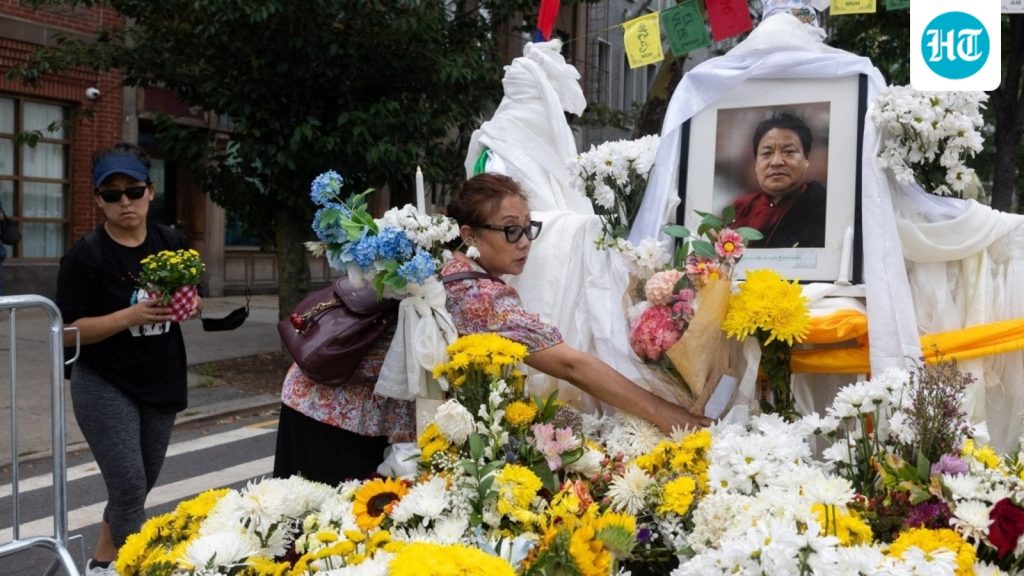
Spontaneous demonstrations erupted in multiple countries including Canada, France, Australia, and India. A floral memorial appeared outside the U.N. building, drawing visitors from around the world. Actor and longtime Tibetan supporter Richard Gere organized an extended rally in Times Square on Saturday, with many attendees wearing T-shirts portraying Lobga as a martyr surrounded by fire.
It has definitely had a unique impact on the community because this was such a well-known personality, said Tenzin Dorjee, research director at the Tibet Action Institute.
More Than a Personal Tragedy
Tibetan Buddhists, who believe in endless cycles of reincarnation, reject the characterization of Lobga’s death as simple suicide. Jamyang Norbu, founder of the Tibetan National Congress political party, offered a different perspective.
I want you to understand that this was not a deranged person. This was someone who was making a political statement. A statement for Tibetan independence.
Since 1998, more than 170 self-immolations have occurred, with the majority happening in recent years. Tibetan organizations attribute these acts to growing desperation over Chinese policies that they believe threaten ancient cultural traditions. Historically, this phenomenon remained largely confined to Asia, particularly within China where information rarely reaches international audiences.
A Life Dedicated to the Cause
The Wall Street Journal conducted extensive interviews with Lobga’s family, friends, and fellow activists, examining social media posts and written materials to piece together his final days. His cousin, Lobsang Samdup, reflected on his relative’s motivations.
What he did was not for himself. His life was all about Tibet.
Lobga was born in Kardze county, located in Sichuan province on the eastern boundary of the Tibetan plateau. Family members revealed that three of his uncles perished during a significant Chinese crackdown in 1959, the same year the young Dalai Lama fled to India. Other relatives faced imprisonment during this turbulent period.
In 1992, as a teenager, Lobga joined thousands of Tibetans undertaking the perilous month-long journey across the Himalayas to reach India. Following traditional patterns, he became a monk and spent twelve years at a monastery in southern India. By 2006, he had settled in New York, though the exact circumstances of his arrival remained unclear to those who knew him. American legal records list him as Lobsang Palden, while Rangzen translates to independence in the Tibetan language.
Political Context and International Response
Tibet maintains substantial international sympathy, largely due to its spiritual leader, the Dalai Lama, who received the Nobel Peace Prize in 1989. However, as the Dalai Lama recently celebrated his ninety-first birthday, his nonviolent Middle Way strategy has struggled to counter Beijing’s increasing political and religious dominance over the region. This has created divisions within the overseas Tibetan community regarding the best approach to address Chinese policies.
China’s government consistently denies criticism of its treatment of ethnic minorities and challenges Western nations for what it considers interference in internal affairs. The self-immolation of this Tibetan activist set himself on fire at the U.N. has intensified these diplomatic tensions, bringing renewed attention to the decades-old struggle for Tibetan autonomy.
Frequently Asked Questions
Who was Lobga Rangzen? Lobga Rangzen was a 52-year-old Tibetan activist born in Kardze county, Sichuan province. He spent twelve years as a monk in southern India before settling in New York in 2006.
What happened on July 2? A Tibetan activist set himself on fire outside the United Nations headquarters in Manhattan while livestreaming the event on his iPhone. He staggered for approximately ninety seconds before collapsing.
Why is this significant for Tibet? The act has united a divided Tibetan community and brought international attention to the struggle for Tibetan independence, with demonstrations occurring in multiple countries worldwide.
How many self-immolations have occurred since 1998? More than 170 self-immolations have been recorded since 1998, with the majority happening in recent years according to Tibetan organizations.