
White sheets, plainclothes cops: How Delhi Police ‘removed’ Sonam Wangchuk amid sea of protesters
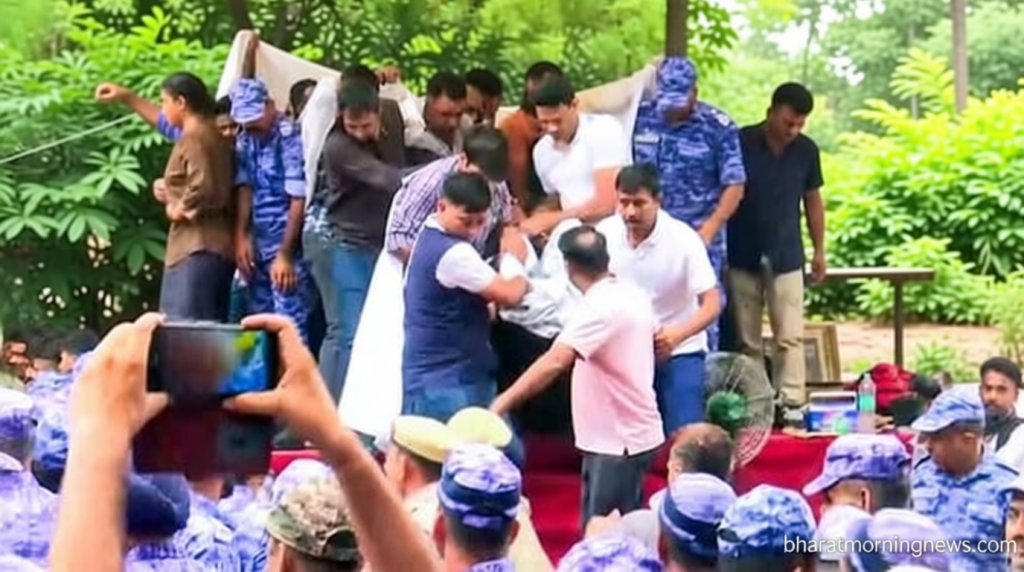
Delhi Police ‘Remove’ Sonam Wangchuk Using White Sheets and Plainclothes Cops
Bharatmorningnews.com – Delhi Police executed a covert operation on Saturday to detain Sonam Wangchuk, a prominent figure in the ongoing protests, with the aid of white sheets and plainclothes officers. The removal took place at Jantar Mantar, where a crowd of supporters surrounded him. Sources from ANI reported that the strategy involved concealing the action through strategic timing and the use of officers in civilian attire, allowing the police to act without immediate public notice.
Strategic Deployment Under New Leadership
The plan was finalized after Anurag Kumar became Delhi Police Commissioner, marking a shift in approach to protest management. Officials indicated that the operation relied on a tight-knit group of senior officers briefed on the details. The decision to act at dawn was deliberate, aiming to exploit the lowest visibility of demonstrators at the protest site. This method ensured minimal resistance and greater control over the situation.
Delhi Police’s strategy emphasized secrecy and coordination. By deploying plainclothes personnel, the force aimed to blend in with the crowd, reducing the chances of drawing attention. The use of white sheets further masked the movement, creating a visual distraction. This combination of tactics allowed the police to execute the removal without triggering a widespread response from protesters.
Execution and Crowd Control Tactics
The operation commenced with approximately 30 to 35 officers from the New Delhi district’s Special Staff and local units entering the barricaded protest area unnoticed at dawn. These officers were trained to maintain a low profile, ensuring the removal of Wangchuk was seamless. They surrounded his bed, draping it in white sheets to obscure the action from view, while the crowd remained unaware of the unfolding plan.
A three-tier security framework was implemented to manage the situation. The first layer involved plainclothes officers securing the perimeter and guiding Wangchuk out of the protest zone. The second tier, comprising CRPF and Rapid Action Force personnel, controlled the crowd beyond the barricades, preventing any immediate backlash. Senior Delhi Police officials monitored the process from a nearby control point, ensuring the operation remained disciplined and efficient.
The coordination between these layers was critical to the success of the move. By leveraging the element of surprise, the police avoided the risk of a chaotic confrontation. The use of white sheets and plainclothes officers not only facilitated the removal but also minimized the chance of public outrage, as the action was perceived as discreet and controlled.
Public Response and Legal Justifications
Following the removal, Wangchuk was placed in an ambulance and transported to Safdarjung Hospital. Traffic police cleared the path, ensuring a smooth exit. The operation concluded with minimal disruption, though it sparked immediate reactions from the public. Abhijeet Dipke, Wangchuk’s associate and founder of the Cockroach Janta Party, returned to the protest site and accused the police of detaining him without prior notice, vowing to continue the movement through a hunger strike.
“As per orders of the Hon’ble High Court and on expert medical advice due to the deteriorating health condition of Sh. Sonam Wangchuk, he has been shifted to the hospital for essential medical care. While complying with the orders of the Hon’ble High Court, the protestors tried to create obstruction, in which slight commotion ensued, however police took maximum restraint and undertook the exercise safely.”
Delhi Police defended the action, stating it was conducted peacefully and in accordance with legal directives. The Deputy Commissioner of Police (New Delhi) highlighted that the decision was made to ensure Wangchuk received timely medical attention, emphasizing the balance between security and public safety. The incident has since fueled debates about the use of covert tactics in protest management and the transparency of law enforcement actions.
Media Coverage and Public Perception
The incident received immediate attention from the media, with Hindustan Times News Desk providing real-time updates on the unfolding developments. The team of experienced journalists ensured that the story was contextualized, offering insights into the broader implications of the operation. The report underscored the role of white sheets and plainclothes cops in facilitating the removal, drawing comparisons to similar tactics used in previous protests.
Public reaction varied, with some supporters criticizing the police for the sudden action, while others viewed it as a necessary step to protect Wangchuk’s health. Social media platforms saw a surge in discussions, with hashtags like #WhiteSheetsDelhi and #PlainclothesCops trending. The incident has become a focal point for debates on the legitimacy of such methods in maintaining order during large-scale demonstrations.
As the situation continues to evolve, the focus remains on the effectiveness of the police’s strategy and the public’s acceptance of it. The use of white sheets and plainclothes officers has been central to the operation, and their role in ensuring the smooth removal of Wangchuk has been widely analyzed. This event exemplifies the complexities of managing protests in a densely populated urban environment.