
Tim Cook’s final WWDC keynote sets Apple on a new AI course
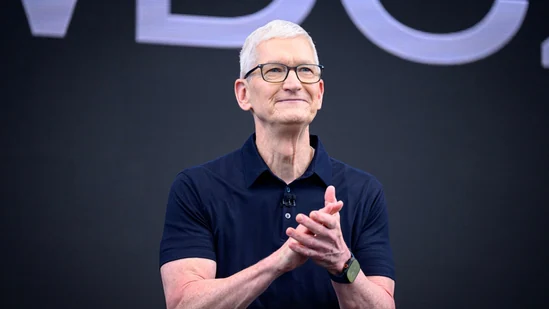
Tim Cook’s Final WWDC Keynote Introduces Apple’s New AI Direction
Bharatmorningnews.com – In his last keynote as Apple’s CEO, Tim Cook highlighted a redefined approach to artificial intelligence during the Worldwide Developer Conference (WWDC). The tech company emphasized long-term advancements in AI, alongside updates to the operating systems of its flagship products. These enhancements are designed to refine individual user experiences and strengthen the interconnectedness of Apple’s ecosystem, spanning iPhone, iPad, Mac, Apple Watch, and Apple TV.
Keynote Highlights and Developer Engagement
“I’m deeply grateful to have been on this journey with you,” Cook expressed, acknowledging the developers and Apple’s broader community. He noted the surge in app development, underscoring the growing momentum behind user-centric experiences. Developers now submit over 1,000 new apps to the App Store every hour.
Apple’s focus for the upcoming updates centers on platform optimization, safety measures, and advancements in Siri’s capabilities. Craig Federighi, the company’s senior vice president of Software Engineering, described Siri’s evolution as a major milestone. The macOS Golden Gate, for example, prioritizes meticulous attention to detail in its design.
Design Refinements and Interface Improvements
Following the 2024 rollout of the transparent Liquid Glass interface, Apple is introducing further refinements. These include better content diffusion for improved readability and a depth-enhancing effect. A new transparency slider allows users to adjust tint settings, while interface adjustments span across apps, enhancing controls and text rendering.
The company has also overhauled core system components to boost responsiveness. This change enables iPhone and iPad apps to load up to 30% faster, with quicker content processing and streamlined data transfer between devices. The revised CPU scheduler on iPhones now optimizes compute allocation, offering performance upgrades even for models as old as the iPhone 11.
Child Safety Features and Parental Controls
A key addition is a comprehensive suite of child safety tools. Once a child account is created on an Apple device, parents can manage visibility, communication, and content consumption. They can unlock apps or restrict downloads from the App Store, as well as control access to websites via Safari on iPhone, iPad, or Mac.
Parents will still need approval for certain downloads or new contacts, but the system offers tailored recommendations for daily app usage based on categories. These updates are paired with an array of developer resources to support implementation.
Apple’s AI Strategy and Partnerships
Apple’s AI initiatives have been in development for some time, with the smarter Siri expected to rival leading chatbots. The AI companion’s capabilities now benefit from Google’s Gemini models, which serve as the foundation for Apple’s own Foundation Models. This collaboration marks a pivotal step in expanding Siri’s functionality beyond basic interactions.
Federighi remarked on the current AI landscape, stating, “Some seem to be racing forward, seemingly pursuing AI for the sake of AI, without clear regard to the people.” He stressed Apple’s commitment to integrating AI with utility, including a new system orchestrator that enhances contextual awareness. Features like Spotlight search and a semantic index will prioritize user intent, delivering relevant results and real-time web insights.
Apple’s partnership with Google, announced earlier this year, aims to bolster its AI capabilities. With the upcoming iOS 27 release, users will gain access to a powerful AI assistant, potentially reducing reliance on external services like OpenAI’s ChatGPT or Anthropic’s Claude.