
The lone survivor of AI-171 crash: ‘What came after was harder to bear’
The Lone Survivor of AI-171 Crash: ‘What Came After Was Harder to Bear’
Bharatmorningnews.com – On June 12, 2025, the tragic crash of Air India flight AI-171 near Ahmedabad, India, left 260 passengers and crew members in a fatal accident. Among those affected, Vishwas Kumar Ramesh, a British national, stood as the sole survivor of the Boeing 787-8 Dreamliner. His harrowing experience has become a focal point for discussions about the emotional toll of such disasters. As the one-year anniversary of the crash approaches, Ramesh continues to navigate the challenges that have followed, offering a poignant perspective on the aftermath of surviving one of India’s most devastating aviation incidents.
The Survivor’s Journey Through Grief and Recovery
One year after the crash, Vishwas Kumar Ramesh reflects on the psychological scars that linger long after the physical injuries have healed. While the media and public initially focused on his survival, he now emphasizes that the emotional burden has been more enduring. “What I’ve faced since then has been far more difficult than I can put into words,” he shared, highlighting the deep grief of losing his brother, Ajay Kumar Ramesh, who was also on board the flight. The sudden loss of his sibling has shaped his daily life, with moments of panic and sorrow still striking him without warning.
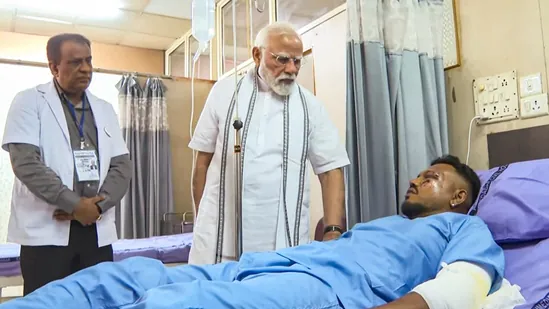
Surviving the crash required immediate action. Ramesh described the moment of impact as both abrupt and surreal, with bodies scattered around him and confusion setting in. “When I got up, there were bodies all around me. I was scared. I stood up and ran,” he recounted in a hospital bed shortly after the incident. Despite the adrenaline of survival, the reality of the loss and the uncertainty of what came next haunted him. The emotional toll of being the only one left alive has proven to be as challenging as the crash itself.
The Crash and Its Immediate Consequences
The AI-171 disaster occurred just 32 seconds after takeoff, as the London-bound aircraft collided with the BJ Medical College campus. The collision resulted in a catastrophic loss of life, with 241 passengers and crew members perishing in the skies and 19 people on the ground also losing their lives. Ramesh’s survival, while miraculous, came at the cost of his family’s future plans. Earlier reports indicated that the two brothers had invested their savings into a fishing business in India, a dream that now lies in ruins following the tragedy.
Ramesh’s brother, Ajay, was not only a companion on the flight but also a key part of their shared aspirations. The loss of Ajay has left Ramesh grappling with questions of purpose and identity. “The pain of losing Ajay is the deepest wound left by this disaster,” he said, underscoring how the accident has upended not just his life but the family’s financial and emotional stability. The crash has forced him to confront the reality of being the only one who remains, a role that continues to weigh heavily on his shoulders.
As the investigation into the crash unfolds, new insights are emerging about the flight’s final moments. Preliminary findings from last year suggested that the fuel control switches for both engines shifted from the RUN position to CUTOFF shortly after departure, leading to a loss of power. A cockpit conversation revealed confusion over the sudden fuel cutoff, with one pilot questioning the other about the incident. These details have raised questions about the cause of the crash, though the full picture remains elusive.
Despite the progress in the probe, the crash’s origin remains a mystery. Investigators are still analyzing the black box data and the wreckage, but the lack of clear answers has added to the survivor’s burden. Ramesh, who has become a symbol of resilience in the wake of the disaster, continues to bear the emotional weight of the event. His story highlights the enduring impact of such tragedies, not just on the victims but on those who survive to face the aftermath alone.
The AI-171 crash has sparked a broader conversation about aviation safety and the psychological effects of surviving a disaster. Ramesh’s experience is a testament to the strength required to endure loss, trauma, and uncertainty. As India commemorates the one-year anniversary of the incident, his journey serves as a reminder of the human cost behind the headlines, with the focus remaining on the lone survivor who has become a voice for those affected by the crash.
Ramesh’s reflections on the crash and its aftermath reveal a deeper emotional struggle that goes beyond the immediate trauma. “People see that I’ve survived, but they don’t always see the challenges that continue behind closed doors,” he said, describing how sleepless nights and anxiety have become part of his new normal. The incident’s legacy is not just in the loss of life but in the lasting impact on the survivors, who must rebuild their lives while carrying the weight of what they’ve endured. The journey of recovery for Vishwas Kumar Ramesh and his family continues, underscoring the enduring challenges of being the lone survivor of AI-171.