
The curious case of Fendi’s ₹9.59 lakh mirror-work bag
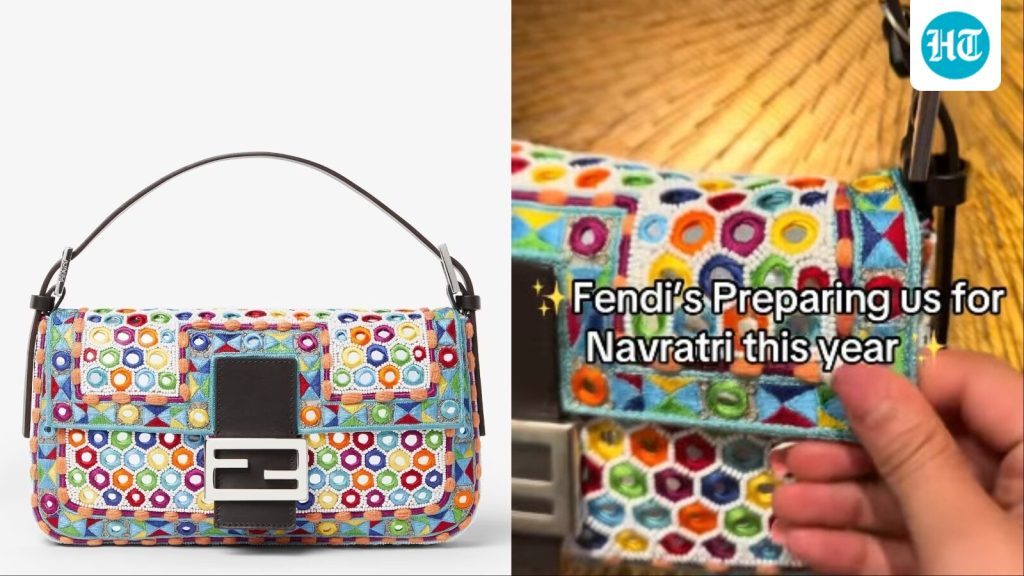
Fendi’s mirror-embellished Baguette has ignited a wider conversation about credit, craft and cultural visibility
Bharatmorningnews.com – A Fendi handbag priced at $10,000, or roughly ₹9.59 lakh, has become the focus of a lively online debate in India over the use of traditional craft techniques by international luxury labels. Its colourful embroidery, beadwork and mirror details have drawn comparisons with textile traditions strongly associated with Gujarat and Rajasthan, leading many social-media users to call it the “Navratri bag”.
The design is listed by Fendi as the Baguette 26424 Multicolour Re-Edition. Produced in Italy, the bag features 39,500 beads and 475 mirrors, with more than 138 hours said to have gone into its creation. Those intricate numbers have prompted admiration for the labour involved, but they have also sharpened questions about whose creative heritage is being represented in the finished product.
A familiar visual language
Mirror work, vivid thread embroidery and decorative beading are immediately recognisable elements within several Indian craft traditions. In festive clothing and accessories, these techniques can create a rich interplay of colour, texture and reflected light. For many viewers, the Fendi bag’s visual vocabulary felt close enough to those traditions to raise concerns over whether Indian makers and cultural influences had been acknowledged prominently enough.
The conversation has reached prominent voices, including industrialist Harsh Goenka and philanthropist Kiran Mazumdar Shaw. Their participation has helped turn what might have remained a fashion-industry discussion into a broader public question: when a global brand incorporates a craft language associated with a particular community or region, what does meaningful recognition look like?
Questions over attribution
Fashion watchdog Diet Paratha highlighted the issue in an Instagram post, stating that Indian artisans at Mumbai’s Chanakya School of Craft created both the mirrored bags from the 1995 version and the current design. The claim placed renewed attention on the gap that can arise between the people who execute highly skilled handwork and the way a finished luxury product is presented to customers.
If Indian craftsmanship is an integral part of the product’s story, shouldn’t Fendi be telling that story more visibly… Proper attribution needs to come directly from global luxury houses,
one user wrote in response to the post. The sentiment captures the central concern voiced online: not simply whether a designer can work with artisans across borders, but whether that collaboration is made visible in a way that reflects its importance.
Other reactions were more sceptical about the timing and intent behind such launches.
Brands these days are purposely launching rage bait designs.
Another comment expressed frustration more directly:
Everyone has to steal something from India but hesitate when it comes to giving credit.
Why the distinction matters
The dispute is part of a continuing discussion around cultural appropriation in fashion. Luxury houses often present handcrafted techniques as evidence of rarity, care and exclusivity. Yet when techniques have deep links to living artisan communities, credit can matter alongside aesthetics. Naming collaborators, explaining the origin of a technique and recognising the workers behind a product can give consumers a fuller picture of what they are buying.
This is especially relevant for hand-intensive pieces. The 138 hours cited for Fendi’s bag points to the degree of manual effort involved, while the bead and mirror count underscores the precision required to complete it. For buyers, transparency about the craft process can add context beyond a product’s price tag or label.
At the same time, the debate does not diminish the skill of artisans or the appeal of cross-cultural design partnerships. The issue raised by critics is whether the final narrative gives sufficient space to the people, techniques and traditions that help shape a luxury object. A collaboration can be celebrated while still being described clearly and fairly.
Awaiting clarity from the craft school
Chanakya School of Craft had not responded by the time of publication. Its perspective could help clarify the nature of the artisans’ involvement in the earlier and current mirrored-bag designs, as well as the terms under which the work was undertaken.
For now, the bag remains an example of how quickly fashion can move beyond the runway or product page into a public examination of authorship. The “Navratri bag” label may have begun as a social-media shorthand, but the debate it triggered concerns a serious question for luxury fashion: craftsmanship should be treated not only as decoration, but as a story with identifiable makers and cultural roots.
Related Reading
Frequently Asked Questions
What is The curious case of Fendi s 9?
The curious case of Fendi s 9 is the main topic of this guide. The article explains the context, practical details, and next steps readers should understand.
Why does The curious case of Fendi s 9 matter?
The curious case of Fendi s 9 matters because readers are looking for a useful answer, not just a short summary. Good content should match search intent and help them decide what to do next.