
SC acts after courtroom chaos, tightens rules for litigants-in-person
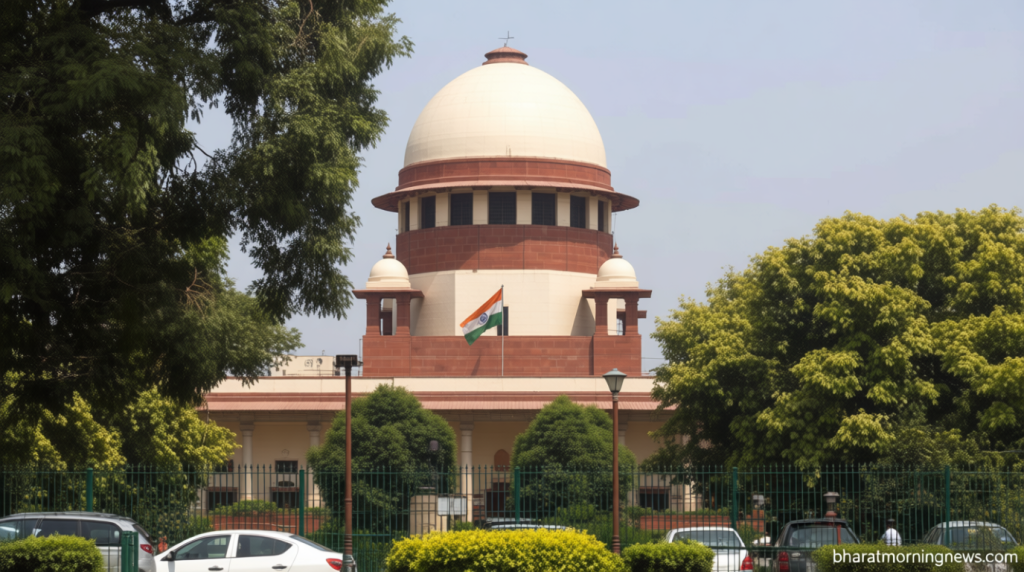
SC Introduces Virtual Appearances for Litigants-in-Person Amid Courtroom Disruptions
Bharatmorningnews.com – Following a recent uproar in a Supreme Court courtroom, where a litigant-in-person physically disrupted proceedings with paper-throwing and verbal outbursts, the apex court has introduced new protocols to encourage virtual participation. Under the revised guidelines, parties appearing in person will typically be required to use online platforms, unless they opt for physical presence, in which case live-streaming and video recording will be suspended.
The directive was issued during a comprehensive meeting of all Supreme Court judges and formally announced on Thursday. This marks the first formal response to the July 10 incident, which resulted in the detention of two law students after one allegedly assaulted security personnel during removal from the chamber.
“The court is prioritizing courtroom decorum while ensuring litigants retain access to judicial processes,” the statement emphasized.
Prabal Pratap, the petitioner-in-person involved in the July 10 disruption, hurled abuses, flung documents, and resisted security officers before being escorted out of Court No. 13. Despite the chaos, the bench led by Justice KV Viswanathan opted against contempt charges, citing the petitioner’s state of mind at the time.
This latest policy follows a similar security incident in October 2025, where a 71-year-old lawyer attempted to throw a shoe at then Chief Justice Bhushan R Gavai. In that case, a bench chaired by Justice Surya Kant emphasized the need for preventive measures over punitive actions to avoid recurring disturbances.
Efforts to Streamline Judicial Proceedings
To address backlog, the full court agreed to prioritize around 100 “bunch matters” for expedited resolution. Disposal of these cases is expected to close approximately 9,177 pending cases. These matters will be assigned to appropriate benches for out-of-turn hearings.
The initiative aligns with Chief Justice Surya Kant’s recent restructuring of the court’s roster, which established four dedicated division benches to handle the oldest civil and criminal cases on Tuesdays, Wednesdays, and Thursdays. Once these matters are resolved, the court will proceed to hear the oldest pending cases on the same days weekly.
Additionally, the Chief Justice introduced a structured docket-management system earlier this week. Around 800 of the most aged civil and criminal cases have already been identified for focused hearings under the new arrangement.
The court also resolved to standardize daily cause lists and ensure consistent case numbering. A judicial committee will review these procedures and propose improvements.
Administrative Reforms for Efficiency
Counsel in final hearings will continue submitting advance timelines for oral arguments, streamlining case management and optimizing court time. Separately, all Supreme Court judges will take part in the ongoing Samadhan Samaroh, culminating in a special lok adalat scheduled for August 21-23, 2026, as part of the court’s broader goal to foster consensus and resolve disputes amicably.
Also Read: “Everybody does naare-baazi”: SC on plea to revive protest case against Bhagwant Mann