
Rahul Gandhi vs Pinarayi Vijayan: Is the INDIA bloc cracking after LoP’s ‘hug’ remark?
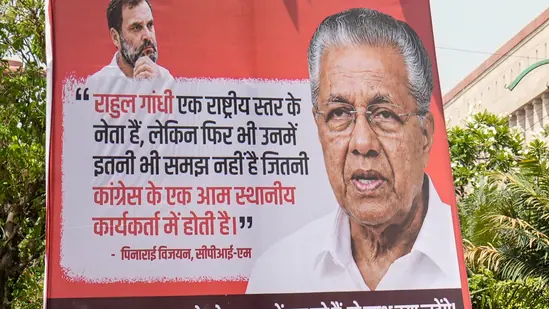
Rahul Gandhi vs Pinarayi Vijayan: INDIA Bloc’s Hug Remark Sparks Political Tensions
Fractures in the Opposition Alliance
Bharatmorningnews.com – The INDIA bloc, a coalition of opposition parties aiming to challenge the ruling BJP, is facing internal divisions as tensions rise between its key leaders. Rahul Gandhi, the Leader of the Opposition in the Lok Sabha, and Pinarayi Vijayan, the CPI(M) leader and former Kerala Chief Minister, have emerged as central figures in this rift. Their recent exchange over Gandhi’s comment on not hugging Vijayan due to their rivalry has drawn significant attention, highlighting a growing lack of unity within the alliance. This moment of discord underscores the fragility of the bloc’s fragile coalition and raises concerns about its ability to present a united front against the government.
Preceding Signs of Strain
Before the latest clash, there were already indications of friction among the bloc’s members. During the June 8 Delhi meeting, the DMK and AAP chose to skip the event, citing Congress’s alliance with the Tamilaga Vettri Kazhagam (TVK) as a point of contention. This absence signaled a lack of solidarity, prompting questions about the bloc’s cohesion. While the gathering was intended to address critical political developments, the absence of key allies cast doubt on its effectiveness, especially as the INDIA bloc seeks to maintain its relevance in the face of BJP’s dominance.
Public Remarks Fuel Debate
The disagreement intensified after Vijayan criticized Gandhi during a public event. He argued that Gandhi’s emphasis on regional rivalries was weakening the alliance’s overall strategy. In response to a media query about Gandhi’s statement that he would not hug Vijayan due to their political rivalry, Vijayan dismissed the issue, saying, “I don’t care who hugs whom.” However, his comments were seen as a veiled attack on Gandhi, suggesting that the leader’s remarks were more about messaging than mere personal dislike. This exchange has become a focal point in discussions about the bloc’s unity.
“But we all saw the photo of Rahul Gandhi hugging Narendra Modi. My objection is not to hugging Modi itself. It’s his remarks that convey a specific political message, reflecting his view of the INDIA alliance,” Vijayan remarked in a statement that further fueled the debate.
Accusations of Faulty Strategy
Congress general secretary KC Venugopal countered Vijayan’s criticism, accusing the CPI(M) of shifting blame onto Gandhi for its own electoral setbacks. In a Facebook post, Venugopal described the Marxist party’s attacks as evidence of “political insecurity,” arguing that the CPI(M) should focus on analyzing its poor performance in Kerala rather than targeting Gandhi. This back-and-forth has exposed deeper tensions within the bloc, with each party accusing the other of undermining the collective effort to challenge the ruling party.
“Instead of examining the causes of their poor performance in Kerala, the CPI(M) is targeting Rahul Gandhi. If this trend continues, even greater defeats are likely,” Venugopal stated, emphasizing the need for a more strategic approach.
Rahul Gandhi’s Call for Unified Front
At the June 8 meeting, Gandhi urged alliance partners to adopt a more dynamic strategy, criticizing the Trinamool Congress, RJD, and SP for sticking to outdated methods. He highlighted states like Gujarat, Madhya Pradesh, and Maharashtra as examples where the BJP’s systemic advantages had shaped electoral outcomes. Gandhi’s message was clear: the opposition must move beyond traditional tactics and embrace a broader, mass mobilization approach to counter the ruling party’s dominance. His insistence on strategic adaptation reflects his vision for the bloc’s future.
Broader Implications for the Opposition
The ongoing dispute between Gandhi and Vijayan has broader implications for the INDIA bloc’s ability to function as a cohesive political force. With the Lok Sabha elections approaching, unity is crucial to present a united front against the BJP. The current tensions, however, risk splintering the alliance and weakening its collective strength. Analysts suggest that the bloc’s success hinges on its capacity to reconcile differences and focus on common goals, such as opposing economic policies and addressing public grievances. Without this, the INDIA bloc may struggle to maintain its momentum in the upcoming political landscape.