
Radhika Apte revisits Shah Rukh Khan’s older films, questions how stalking was shown as romance
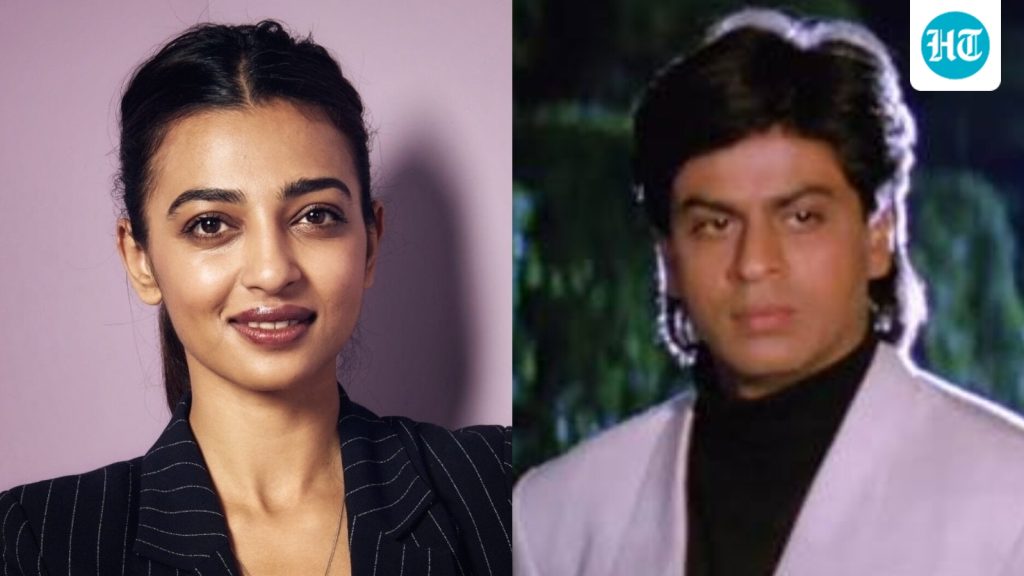
Radhika Apte Revisits Shah Rukh Khan’s Older Films
Bharatmorningnews.com – Radhika Apte revisits Shah Rukh Khan’s older films with affection as well as discomfort, reflecting on how stalking and persistence were often presented as romance in Hindi cinema. A longtime fan of the actor, Apte said rewatching films she enjoyed while growing up made her question the messages audiences absorbed about love, refusal and consent.
Her comments focus on a familiar film trope: a male character continuing to pursue a woman after she has said no. In many older stories, that behaviour was framed as proof of devotion, while a woman’s refusal was treated as something the hero was expected to overcome.
Why older romantic scenes feel different today
Apte said revisiting films from her teenage years was unsettling because certain images once accepted as normal now appear troubling. She recalled that scenes involving women being restrained or sexually objectified could shape fantasies among young viewers without encouraging them to question the underlying dynamics.
“Being tied and our pallu being taken off were the dreams we used to get as teenagers. How scary is that,” she said.
Radhika Apte revisits Shah Rukh Khan’s work without dismissing her admiration for him. Instead, she described her reaction as part of a broader reassessment of popular films and the way they handled women’s choices. For Apte, the key issue is that a clear refusal was too often not treated as a final answer.
“No offence… I’m a huge Shah Rukh fan, but when I revisited some of the old films I used to like, I was really taken aback. Because when a woman says no, it’s never taken as no. Chasing a woman was romance. That’s what we wanted at that time, and it was really shocking”.
Her observation speaks to the influence of mainstream cinema in India, where songs, dialogue and celebrated scenes often become part of everyday culture. When relentless pursuit is repeatedly rewarded on screen, it can blur the distinction between mutual affection and behaviour that ignores another person’s boundaries.
Consent, desire and the male gaze in Hindi cinema
The discussion also moved beyond romantic pursuit to the portrayal of female desire. Shakun Batra, who has directed a segment in Lust Stories 3, referred to Raj Kapoor films including Mera Naam Joker and Ram Teri Ganga Maili while discussing how desire was explored in earlier Hindi cinema.
Batra noted that Raj Kapoor was willing to engage with desire in his films, but Apte argued that these stories were still largely shaped by a male gaze. The presence of sexuality, she suggested, does not automatically mean women are being represented with agency or complexity.
“But even at that time, the gaze was always male. And the women were sexualized,” she argued. “You’re putting that element down and making jokes at its expense anyway. That’s the problem — the sexualisation of women, and then by saying, ‘Don’t sexualize them’, and then calling them devi, and putting them on some pedestal of morality that you approve of. I find that problematic”.
Apte’s point is that women can be sexualised by a narrative and then judged according to restrictive ideas of morality. Describing women as “devi” may sound respectful, but it can also place them on an unrealistic pedestal rather than allowing them the freedom, desire and imperfections often granted to male characters.
Radhika Apte revisits Shah Rukh Khan’s older films at a time when audiences are increasingly re-examining beloved stories through the lens of consent and representation. The conversation is not only about individual films or stars, but about how popular culture has shaped expectations around romance for generations.
FAQ: Understanding the debate around older Hindi films
Why are viewers reassessing older Bollywood romances?
Changing conversations about consent have encouraged viewers to question scenes where a woman’s refusal is ignored, mocked or treated as an invitation for further pursuit. What was once widely presented as romantic can now be viewed as a disregard for personal boundaries.
Is Apte criticising Shah Rukh Khan personally?
No. Apte made clear that she remains a major Shah Rukh Khan fan. Her comments address the storytelling conventions and social attitudes reflected in some older films rather than diminishing her admiration for the actor.
What does “male gaze” mean in this context?
In discussions of cinema, the male gaze refers to portraying women mainly through a male perspective, often making them objects of desire instead of fully developed characters with independent choices, experiences and agency.