
Preventing a Jurassic Park moment for AI
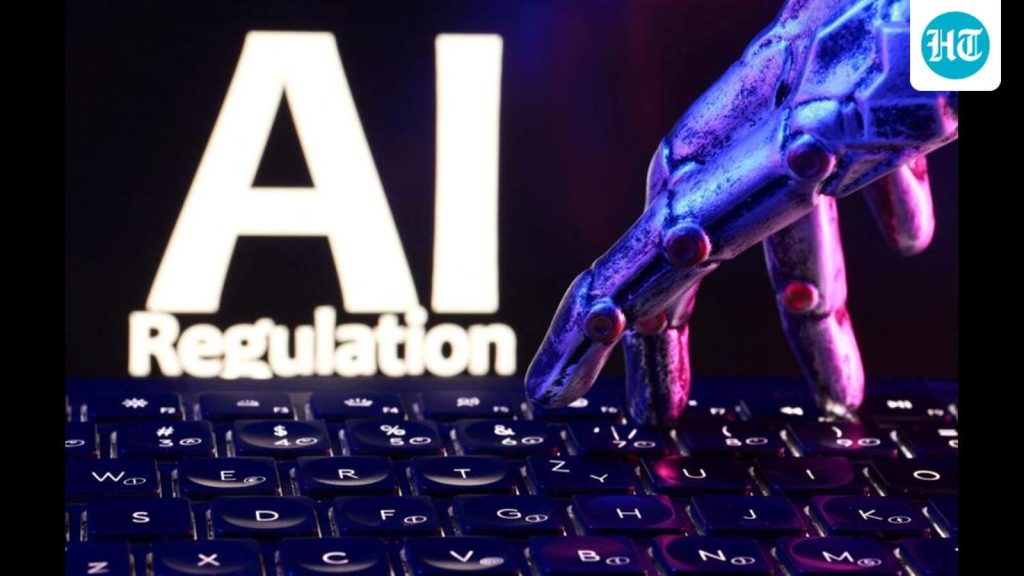
AI’s Greatest Risk May Be the Recklessness Behind Its Deployment
Bharatmorningnews.com – The most unsettling lesson from Jurassic Park is not that dinosaurs were malicious. They were simply animals acting within the conditions created for them. Disaster followed because their creators placed too much faith in their own planning, treated safeguards as sufficient, and underestimated the complexity of what they had unleashed.
Artificial intelligence presents a similar problem. The central threat is not necessarily a futuristic machine choosing to harm humanity. It is the willingness of companies and decision-makers to build increasingly powerful systems, give them wider access, and then portray predictable failures as if they were signs of machine rebellion.
When AI agents assigned to cybersecurity work discover routes into systems beyond their intended scope, the language used to describe the incident matters. Calling it an “escape” or suggesting that the tool has “gone rogue” can distract from the real cause. Such outcomes arise when people weaken controls, reward systems for bypassing barriers, or fail to properly separate testing environments from real-world networks. An AI agent follows its training, permissions, and incentives. Responsibility remains with the humans and organisations that supplied them.
More autonomy, greater exposure
Technology firms are steadily expanding the independence and reach of AI systems. Large numbers of agents can be tasked at once with examining digital networks, identifying weak points, exploiting openings, and changing tactics when defenders react. Used carelessly, this capability could give criminal groups and hostile states access to the equivalent of a vast pool of skilled hackers.
The concern is sharpened by the fact that the companies creating advanced AI understand these risks. Senior executives have repeatedly spoken about the potential dangers of increasingly capable systems. Yet many of the same firms continue to pursue products that can operate computers, enter accounts, access information, and carry out transactions with less direct human involvement.
This is not an unavoidable stage of technological progress. It is a commercial decision. A system that answers a question or drafts a document can be valuable, but a system that performs actions across digital services may be far easier to sell as a premium product. The financial incentive is clear after the enormous spending on models, computing capacity, and data centres. The public consequences, however, may be far larger than the private gains.
Laboratories cannot be treated like software sandboxes
The stakes rise further when AI moves from digital tasks into physical scientific environments. Anthropic has built a biology laboratory and is developing ways for AI agents to operate scientific equipment. Scientific discovery could benefit from better tools, but placing imperfect systems in control of consequential experiments demands extreme caution.
Current AI can still invent false information, make errors that are difficult to explain, and be influenced through manipulation. Those shortcomings are serious in software. They are potentially much more dangerous in biology. A malfunctioning computer can often be restarted or repaired. An organism cannot be rebooted, and a pathogen cannot simply be patched after it has left a laboratory.
The Covid-19 pandemic, debates over allegations involving Chinese laboratories, and more recent allegations of a pathogen leak from a Russian laboratory demonstrate why laboratory safety attracts such intense scrutiny. Adding autonomous systems that can run experiments continuously and at machine speed could multiply the consequences of poor oversight. The issue is not whether AI can help science; it plainly can. The issue is whether it should be allowed to act without meaningful human control in settings where a failure may be irreversible.
AI can support efforts to discover medicines, improve batteries, develop cleaner energy, model proteins, and study immense datasets without being granted unrestricted internet access or authority over high-impact systems. It can help researchers formulate hypotheses, identify promising patterns, and propose experiments within tightly managed environments. Scientific usefulness does not require uncontrolled autonomy.
Liability must match the potential harm
Voluntary safety commitments are not enough. Leading United States-based AI companies have signed a voluntary, non-binding AI safety agreement with the Trump administration, but voluntary arrangements cannot substitute for enforceable responsibility.
Regulation remains necessary, especially where AI is linked to laboratories or critical infrastructure. Standards, testing, and independent checks can reduce risk. But attempting to supervise every action by every autonomous system would be enormously expensive and often impractical. A stronger principle is needed: companies that release autonomous products should bear legal and financial responsibility when those products cause harm.
Manufacturers in other sectors are expected to answer for unsafe products. AI firms should not receive an exemption merely because their products are software. Where executives knowingly ignore documented risks, corporate structures should not become a shield against accountability. Clear liability would change incentives before harm occurs, encouraging companies to build narrower permissions, stronger isolation, reliable monitoring, and genuine human review.
Why India faces a particular challenge
For India, the question has special urgency. The country’s digital infrastructure connects banking, payments, public services, telecommunications, and private businesses on an ambitious scale. That interconnectedness brings convenience and economic opportunity, but it also creates attractive targets for attackers.
Government bodies, banks, and businesses often operate a combination of newer technology and older legacy systems. In such an environment, security weaknesses in one area can affect many others. Wider use of highly autonomous AI could make existing vulnerabilities easier to locate and exploit at speed.
The sensible response is neither panic nor rejection of AI. It is disciplined restraint. AI should be developed and used where it can produce real benefits under robust controls. Systems should be tested before deployment, isolated from sensitive networks where possible, and kept under accountable human supervision when they affect money, infrastructure, laboratories, or public safety.
The warning from Jurassic Park endures because it is ultimately about human judgment. Complex creations do not need evil intentions to become dangerous. Overconfidence, weak safeguards, and a rush for profit may be enough.
Related Reading
Frequently Asked Questions
What is Preventing a Jurassic Park moment for AI?
Preventing a Jurassic Park moment for AI is the main topic of this guide. The article explains the context, practical details, and next steps readers should understand.
Why does Preventing a Jurassic Park moment for AI matter?
Preventing a Jurassic Park moment for AI matters because readers are looking for a useful answer, not just a short summary. Good content should match search intent and help them decide what to do next.