
PM Modi back with a selfie video, hails passage of stricter anti-paper leak bill
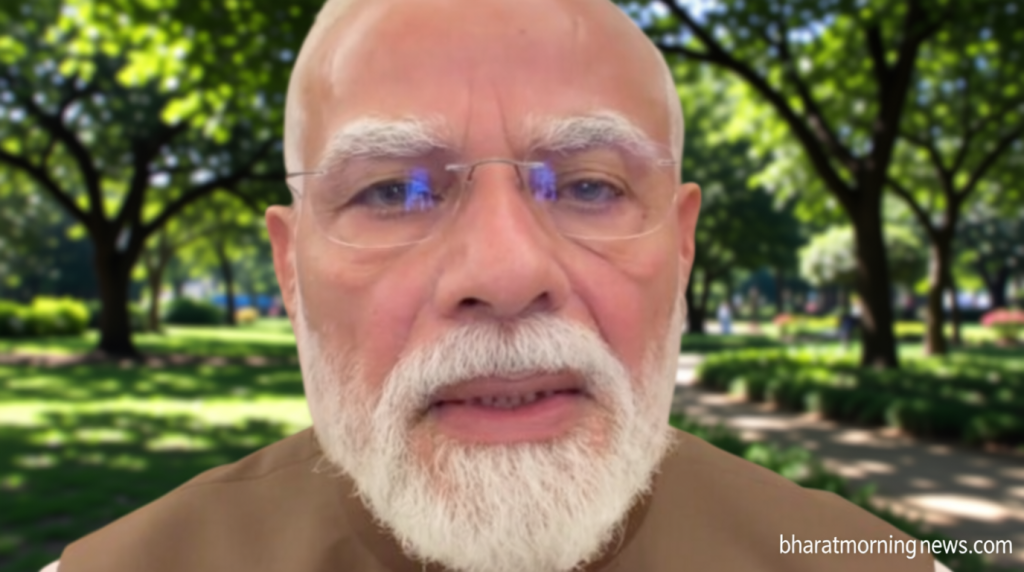
Modi Shares Selfie Video Following Parliament’s Approval of Tougher Paper Leak Legislation
Bharatmorningnews.com – Prime Minister Narendra Modi took to social media on Thursday evening to share a selfie-style video, expressing his satisfaction over Parliament’s approval of enhanced anti-paper leak measures. Speaking to citizens late into the night, the PM highlighted how decades of question paper leaks had troubled administrations across both central and state levels, posing serious risks to student futures.
Modi emphasized that the government was implementing consecutive initiatives to fortify the examination framework. He pledged that individuals connected with paper leak operations would encounter severe consequences.
“Saathiyo, we are continuously taking one step after another to build a reliable examination system. Whether it is the creation of passports, the creation of fast-track mechanisms, or taking into account the suggestions of the states,”
Following the Bill’s approval by both parliamentary chambers, the Prime Minister noted that educational and examination reforms had emerged as critical priorities nationwide. He pointed out that technology integration was becoming increasingly vital in this endeavor.
“Keeping all this in mind, it has become essential to reform the education system across all the states as well as at the Centre. Extensive use of technology has also become necessary,”
The PM issued a clear warning regarding those participating in paper leak syndicates, stating they would not evade accountability.
“And at the same time, any paper mafia, any gang involved in paper leaks, any gang that plays with the future of the country’s children, will not be spared.”
Modi recalled his earlier commitment regarding the legislation, noting that parliamentary members had engaged in thorough deliberations over the preceding two days before granting approval.
“Strict laws are also necessary. We had taken a Bill to Parliament, and as I had promised you, over the last two days, both Houses of Parliament, the respected Members of Parliament, discussed it in detail.”
He further elaborated that the legislative approval marked a significant milestone for India’s international examination framework.
“And as I promised you, two days ago, both the MPs of the Parliament, the most respected MPs, discussed it in detail. And today, both the MPs have passed this bill with strict laws. Now, an important task has been completed in the direction of the international test system.”
Concluding his address, the Prime Minister affirmed that efforts would persist to prevent recurrence of such incidents. He called upon citizens to collaborate in realizing the vision of a developed nation.
“The work will continue. We will not allow such a situation to continue for a long time. With this belief, friends, let us all come together to fulfill the dreams of a developed India.”
Key Features of the Amendment Bill
The Public Examinations (Prevention of Unfair Means) Amendment Bill, 2026 represents a comprehensive strengthening of India’s existing anti-paper leak framework. Building upon the Public Examinations (Prevention of Unfair Means) Act, 2024—which was introduced following the NEET-UG 2024 examination scandal—the amendments respond to renewed allegations and widespread student demonstrations calling for more robust enforcement.
This marks the fourth direct social media communication from PM Modi concerning the paper leak crisis. While his earlier videos utilized the greeting “Fraands,” Thursday’s address commenced with the Hindi salutation “Saathiyo.”
Enhanced Punishments and Mechanisms
The legislation introduces several significant modifications to existing provisions:
Increased Jail Terms: Convicted individuals utilizing unfair methods may now receive imprisonment ranging from five to ten years, elevated from the previous three to five year range established under the 2024 legislation.
Higher Financial Penalties: Maximum fines for individuals have been escalated from ₹10 lakh to ₹50 lakh.
Service Provider Accountability: Agencies and service providers implicated in examination fraud face potential fines reaching ₹5 crore, up from ₹1 crore, alongside an eight-year prohibition on conducting examinations, compared to the earlier four-year restriction.
Organized Crime Provisions: Participants in structured examination fraud encounter minimum imprisonment of seven years with fines extending up to ₹10 crore.
Accelerated Investigation Timeline: Investigations must conclude within two months following referral by the Central government.
Fast-Track Judicial Process: States and Union Territories must establish specialized courts to finalize trials within three months of chargesheet submission.
Preserved Protections: Existing safeguards remain intact, with offenses continuing to be classified as cognisable and non-bailable.