
Is your paneer real or analogue? Why Maharashtra banned analogue paneer and what consumers should know
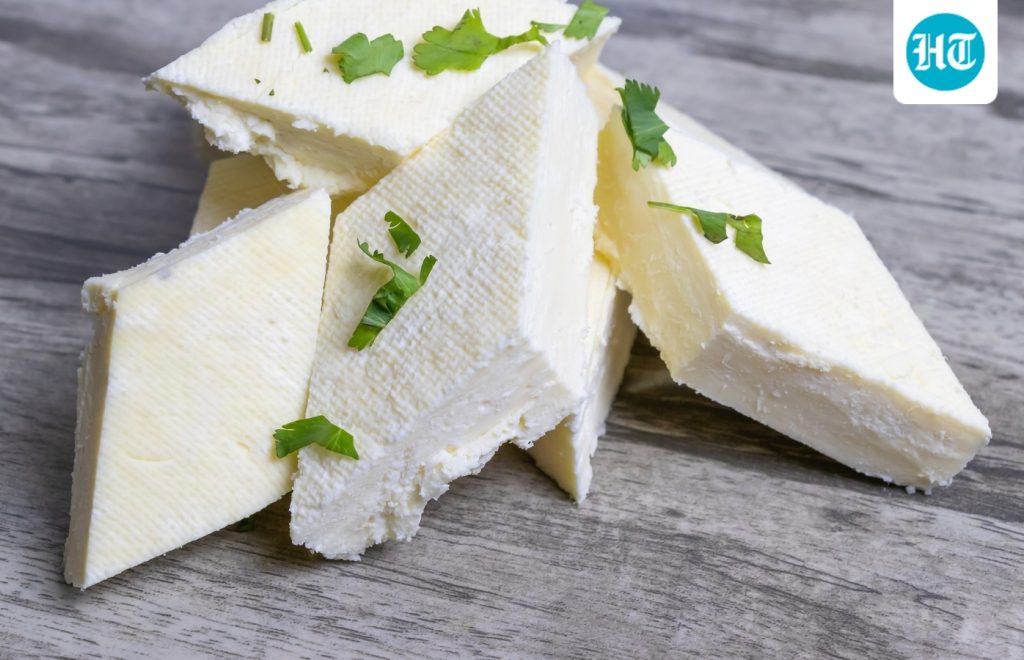
Understanding Maharashtra’s Analogue Paneer Ban: What Consumers Need to Know
Bharatmorningnews.com – Consumers across Maharashtra are now questioning whether the paneer they consume is genuine or an alternative version. This concern has intensified following the state’s Food and Drug Administration announcement on July 30, which imposed a twelve-month prohibition on manufacturing, distributing, and utilizing non-dairy or analogue paneer due to health-related considerations.
The directive additionally instructed cloud kitchens, catering services, hotels, and restaurants to discontinue usage of these substitute products. Maharashtra became the second Indian state to implement this restriction, following Chhattisgarh’s earlier action, while Gujarat enacted similar measures on Wednesday.
Regulatory Differences Between State and National Authorities
The Maharashtra government’s approach contrasts with the strategy employed by the Food Safety and Standards Authority of India (FSSAI). At the national level, analogue paneer remains permissible for commercial sale provided it carries accurate labeling and avoids being presented as traditional dairy paneer.
In an advisory released during April 2026, the FSSAI clarified that presenting cheese analogues under the designation “paneer” or featuring analogue-based dishes on menus as paneer constitutes a violation of the Food Safety and Standards Act enacted in 2006.
Enforcement Drive Results and Findings
The prohibition stems from an extensive surveillance and enforcement campaign spanning from April 2025 through March 2026. According to the FDA, persistent inspections, product sampling, and public awareness initiatives proved inadequate in reducing analogue paneer circulation.
Analysis revealed that 35.4 percent of tested samples failed to meet established standards. Furthermore, investigators identified 79 sub-standard specimens and classified 30 as unsafe, demonstrating that current labeling protocols and enforcement mechanisms offered insufficient consumer protection. Laboratory examinations of extracted fat components uncovered iodine measurements exceeding acceptable ranges for milk fat across several non-compliant samples, pointing toward vegetable fat incorporation or substitution.
Expert Perspectives on Analogue Paneer
The FSSAI characterizes analogue products as items where non-milk components partially or completely replace milk constituents while maintaining similar organoleptic and functional properties to dairy products.
Analogue paneer is typically made using vegetable oils, starches, plant proteins, emulsifiers, and food additives instead of milk.
— Dr Piyush Vishwakarma, Consultant-Gastroenterology, Hepatology & Liver Transplant, RG Hospitals, Delhi
While adulteration or misrepresentation is a form of food fraud, an analogue product is legal when appropriately manufactured and clearly labelled.
— Dr Kshitiz Sharan, Consultant – Gastroenterology, Sarvodaya Hospital, Greater Noida West
Economic Factors and Market Impact
The prohibition is anticipated to affect smaller establishments and unorganized food enterprises most significantly. Pranav Rungta, Vice President of the National Restaurants Association of India, highlighted that dairy paneer economics complicate affordable pricing for authentic products.
To make dairy paneer, you need 5 litres of milk to get 1kg of paneer. But the amount of paneer that is sold in the market, there’s not that much milk produced in the country. That’s why vendors and restaurants turn to artificial sources. And if any restaurant sells the paneer for less than ₹200, you’re buying analogue paneer.
— Pranav Rungta, Vice President, National Restaurants Association of India
Rungta noted that since the FSSAI allows analogue paneer when properly labeled, it remains readily available commercially. Larger restaurant chains face minimal disruption, as they predominantly utilize dairy variants due to distinct taste characteristics.
Bigger restaurants and chains would never use analogue paneer because there’s a difference in the taste profile.
— Pranav Rungta
However, Rungta emphasized that the prohibition increases verification responsibilities for food establishments. He explained that restaurants cannot easily differentiate between analogue and dairy paneer without testing, and even testing may yield false positives.
According to Rungta, analogue paneer primarily originates from small-scale factories located in industrial zones and reaches consumers through regional distribution channels, complicating traceability once products enter the marketplace.
Health Implications for Consumers
Pratiksha Kadam, Chief Dietitian at Kokilaben Dhirubhai Ambani Hospital in Navi Mumbai, stated that analogue paneer manufactured according to approved standards using permitted ingredients does not present immediate health hazards.
Considering its manufacturing complies with the approved food safety standards with use of only permissible ingredients, analogue paneer doesn’t pose an immediate health risk.
— Pratiksha Kadam, Chief Dietitian, Kokilaben Dhirubhai Ambani Hospital, Navi Mumbai
Dr. Piyush Vishwakarma identified the central issue: when analogue paneer is deceptively marketed as conventional dairy paneer, consumers inadvertently ingest products with substantially different nutritional compositions.
The primary concern arises when analogue paneer is fraudulently sold as traditional dairy paneer, as consumers may unknowingly consume a product with a very different nutritional profile.
— Dr Piyush Vishwakarma
Related Reading
Frequently Asked Questions
What is Is your paneer real or analogue?
Is your paneer real or analogue is the main topic of this guide. The article explains the context, practical details, and next steps readers should understand.
Why does Is your paneer real or analogue matter?
Is your paneer real or analogue matters because readers are looking for a useful answer, not just a short summary. Good content should match search intent and help them decide what to do next.