
How long does the Buck Moon last? Here’s what to know about July’s Full Moon before it disappears
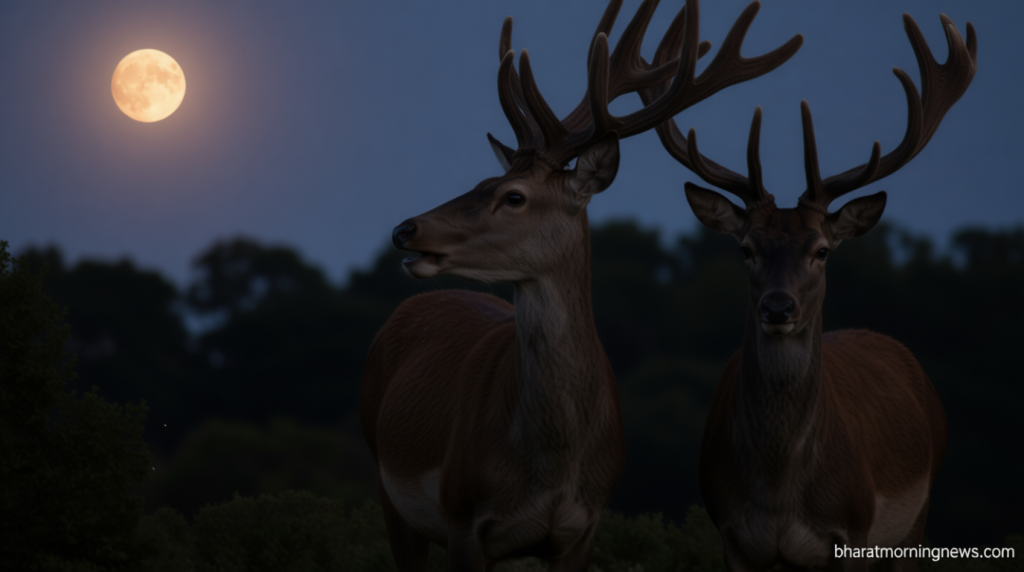
How Long Does the Buck Moon Last? July’s Full Moon Guide
Bharatmorningnews.com – How long does the Buck Moon remain visible to skywatchers? While the Buck Moon reached its peak brightness on Wednesday morning at 10:36 a.m. EDT, observers across North America still have ample opportunity to witness this celestial phenomenon. The lunar maximum occurred on July 29, 2026, but the Moon maintains its nearly complete appearance for approximately twenty-four hours surrounding that exact moment. This extended visibility window means that people who missed the official peak time can still enjoy what appears to be a perfectly round Moon during the evening following the peak.
What Makes the Buck Moon Special
The Buck Moon stands as one of the most widely recognized lunar names throughout North American culture, with roots deeply embedded in seasonal transitions and traditional calendar systems. This particular designation does not signify any extraordinary type of Moon or rare astronomical event. Instead, it simply marks the monthly Full Moon phase when Earth-based observers can see the entire lunar surface fully illuminated by sunlight.
Even though the precise moment of complete lunar illumination happens at one specific instant, human eyes typically perceive the Moon as completely lit for about two to three consecutive nights. This generous viewing period gives everyone a chance to appreciate the lunar beauty without having to time their observation perfectly.
The Story Behind the Name
The Buck Moon gets its name from the seasonal time when male deer, commonly called bucks, begin growing a new set of antlers. Throughout July, these antlers remain covered in soft velvet tissue and experience rapid growth before eventually hardening as the season progresses.
The Old Farmer’s Almanac provides detailed information about this traditional naming system, explaining that it reflects observations documented by Native American communities, European settlers, and colonial populations over centuries. Each Full Moon historically served as an important seasonal marker within these various cultural traditions and agricultural practices.
Best Times for Observation
According to Time and Date, the July 2026 lunar peak happened during daytime hours for many parts of North America, which means numerous observers enjoyed their best viewing experience after sunset on July 29. The Moon continues to display a nearly complete appearance on July 30 as well, giving people another excellent opportunity to observe it.
Following July 30, the lunar body will gradually move into its waning phase, with the bright portion becoming smaller each night. As long as weather conditions cooperate, observers should direct their attention toward the eastern sky after sunset to get the clearest possible view of this beautiful celestial event.
Additional Viewing Information
The Buck Moon’s extended visibility period makes it particularly accessible for casual observers and photography enthusiasts alike. Whether you are setting up a camera for astrophotography or simply enjoying a quiet evening outdoors, the Moon’s prolonged full appearance provides flexibility in planning your observation. Cloud cover, light pollution, and atmospheric conditions can all affect visibility, so checking local weather forecasts before heading outside is always recommended.
For those interested in tracking lunar phases throughout the year, understanding the timing of each Full Moon helps create a complete picture of celestial movements. The Buck Moon’s position in the summer calendar makes it especially meaningful for communities that follow traditional seasonal markers for agricultural and cultural activities.
About the Author
Soumi Pyne works as a Senior Content Producer at Hindustan Times, where she brings four years of dedicated professional experience to her editorial role. She launched her journalism career with HT after completing her master’s degree in media and communication from NSHM Kolkata. Her editorial focus encompasses astrology, manifesting practices, and tarot readings, complemented by interviews with professional astrologers who share their unique insights and perspectives.
In 2022, Pyne conducted an interview with a young indigo pilot who successfully rescued Indian students from Ukraine during challenging circumstances. Her journalistic portfolio also includes coverage of the Dhoomimal Art Gallery and numerous lifestyle topics. Prior to focusing exclusively on astrology content, she coordinated and published think tank material for the HT insight section. Furthermore, she created newsletters for both Live Mint and HT publications, during which period she published articles written by HT’s editor-in-chief, Sukumar Ranganathan.
In her personal time, Pyne maintains wellness through yoga practice, journaling, meditation, running, and preparing nutritious gluten-free meals. She enjoys watching documentaries with particular enthusiasm for BBC and Discovery channels, showing strong interest in ancient history, space exploration, art appreciation, and cultural subjects worldwide.