
Fact check: Did Slavko Vinčić go missing? Bizarre claim about FIFA World Cup Final referee viral
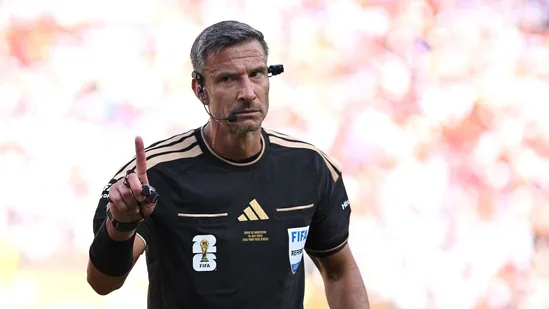
Fact Check: Slavko Vinčić Didn’t Go Missing – Viral Claim About FIFA World Cup Final Referee Debunked
Bharatmorningnews.com – Fact check: The viral claim that Slovenian referee Slavko Vinčić went missing after the FIFA World Cup Final has been debunked. The rumor, which spread rapidly across social media platforms, suggested the official was absent from his duties following the high-stakes match between Spain and Argentina. However, investigations by reputable news sources have confirmed that Vinčić remained in New Jersey, where he has been stationed for the tournament, and was not missing as the claim suggested.
The Viral Claim’s Origins
The narrative began with a parody news page on Instagram, WKM News, which first circulated the story. Describing itself as the “most untrusted news source,” the account specializes in creating humorous and satirical content. It alleged that FIFA had confirmed Vinčić’s disappearance, sparking widespread confusion. The claim was amplified by online users, some of whom cited the story as a legitimate report, leading to a surge in traffic and engagement on social media.
Slavko Vinčić, known for his controversial decisions in past matches, became a focal point of public scrutiny. His involvement in the World Cup Final, where Argentina’s Leandro Paredes and Spain’s Nahuel Molina clashed after the game, added to the narrative. Fans and analysts on platforms like Twitter and Facebook quickly shared the claim, using hashtags like #SlavkoMissing and #FIFAHoax to fuel the conversation. The rumor gained traction despite lacking concrete evidence, highlighting the power of social media in shaping narratives.
FIFA’s Response and Verification
Hindustan Times conducted a thorough fact-check to trace the origins of the claim and verify its accuracy. Their investigation revealed that the story originated from WKM News, a parody account that leveraged the referee’s contentious reputation to create a sensational tale. The outlet added fabricated details, such as an “official statement” from FIFA, to make the claim seem credible. After cross-referencing with FIFA’s records and confirming Vinčić’s presence in New Jersey, the report concluded that the rumor was a deliberate misinformation campaign.
FIFA, meanwhile, remained focused on its disciplinary process following the match. The organization confirmed that Vinčić was on-site during the final and that his absence was not reported. Officials cited the post-match altercation as a source of confusion, though no formal accusation was linked to the referee. The incident involving Paredes and Molina, which occurred during Spain’s celebrations, was under review by FIFA, but the referee’s disappearance was ruled as a hoax. This clarification helped to dispel the myth and restore confidence in FIFA’s integrity.
Additionally, the viral claim sparked debates about the role of social media in amplifying misinformation. Many users questioned the reliability of online sources, especially those with a history of publishing satirical content. The story also drew attention to how public perception can be influenced by emotional reactions to sports events, such as Argentina’s loss in the final. Despite the confusion, the facts remain clear: Slavko Vinčić did not go missing, and his presence was confirmed by multiple independent sources.
“Will take time for wound to heal” – Lionel Messi
“Sad to see him do that” – Wayne Rooney
As the dust settled, the focus shifted back to the real issues at hand. FIFA reiterated its commitment to transparency, emphasizing that the referee’s absence was a viral fabrication rather than a factual event. The organization also highlighted the importance of verifying information before sharing it widely, especially in the context of high-profile tournaments. With the claim debunked, the narrative about Vinčić’s disappearance served as a reminder of the need for critical thinking in the age of digital misinformation.