
Excerpt: All in a Flash; News photography in India by Binoo John
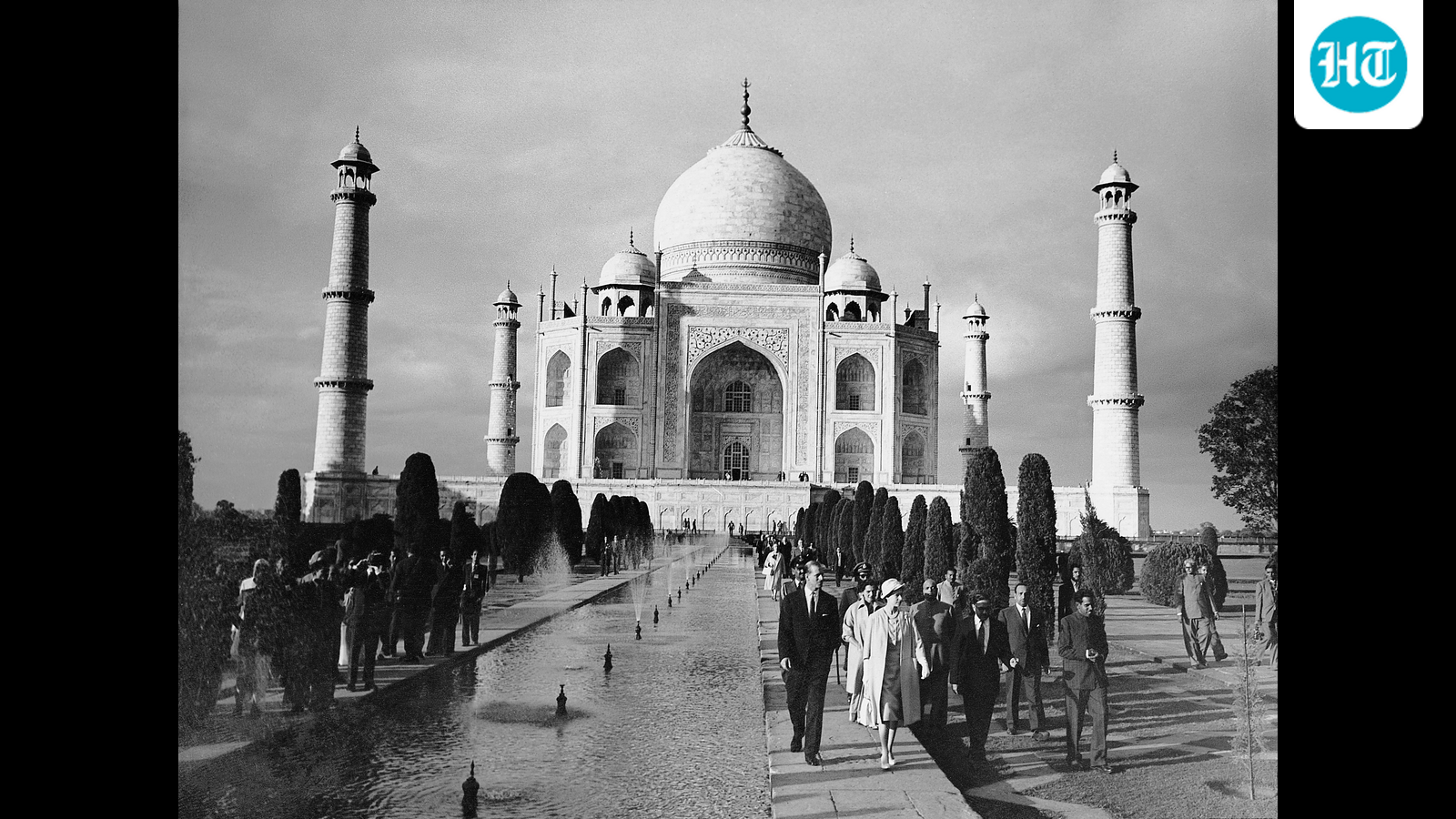
Through the Lens: The Taj Mahal’s Journey Through Photography and Time
From Mughal Monument to Global Icon
Bharatmorningnews.com – Beyond its aesthetic splendor, the Taj Mahal evolved into something more—a subject of news and public fascination. While popular narrative credits it as a testament to love, crafted by a husband for one of his numerous spouses, scholarly perspectives offer deeper layers. Some experts view it primarily as an expression of Islamic architectural mastery, something Emperor Shah Jahan fully comprehended. Yet the truth encompasses both: the structure served simultaneously as an emblem of romantic devotion and a declaration of Mughal authority through architectural achievement.
Writing during the 1630s, Muhammad Amin Qazwini, an early chronicler of Shah Jahan’s reign, captured the monument’s significance:
“And a dome of high foundation and a building of great magnificence was founded — a similar and equal to it the eye of the Age has not seen under these nine vaults of the enamel-blue sky, and of anything resembling it the ear of Time has not heard in any of the past ages… it will be the masterpiece of the days to come, and that which adds to the astonishment of humanity at large.”
Modern Visitors and the Camera’s Eye
Over centuries, this marble masterpiece secured its place worldwide as a destination demanding to be witnessed and photographed. Virtually every prominent visitor has made time to see it, even during hurried diplomatic or commercial journeys. In February 2020, Donald Trump arrived at the site, where Reuters photographer Al Drago documented numerous striking images. One particularly memorable shot showed pigeons creating a fluttering backdrop around the president, seemingly indifferent to his stature, his mannerisms, and his historical significance.
The arrival of influential figures with substantial resources only enhanced the Taj’s mystique. Amazon founder Jeff Bezos visited accompanied by his partner, adding another layer to the monument’s celebrity associations.
A Musical Exception: The Yanni Concert
Perhaps the most unusual event occurred in 1996 when the Indian government organized a musical performance by Greek pianist Yanni. The artist had built his reputation by staging concerts within or adjacent to ancient monuments such as the Pantheon. This was unprecedented, as the Archaeological Survey of India typically grants no permissions for such gatherings. While India often denies requests for minor reasons, the Yanni performance generated considerable discussion, despite western classical music not being particularly popular among Indian audiences. The Taj’s presence elevated the concert, bestowing upon it a grandeur it would never have achieved in a conventional auditorium. This remained both the inaugural and final musical event at the site. The monument required tranquility—no disturbances allowed.
Colonial Photographers and Architectural Documentation
Completed in 1653, the Taj Mahal might have fallen into obscurity from the early nineteenth century onward, had not colonial photographers undertaken the mission of recording Indian architecture alongside social and tribal customs. Lord Curzon, who served as viceroy from 1899 to 1905, characterized the structure as “a vision of eternal beauty” and initiated comprehensive restoration efforts after years of deterioration. He criticized local craftsmen as inadequate for the task and personally “supervised it with a single minded devotion to detail.”
Architectural photography became increasingly intertwined with documentation of the Taj Mahal during the latter nineteenth century. Key figures included Samuel Bourne, John Murray, Captain Linnaeus Tripe of the 12th Madras Native Infantry, and Felice Beato. Their contributions proved essential in bringing Indian architecture to wider attention beyond mere picturesque appeal.
In 1854, Thomas Biggs from the Bombay Artillery received photographic assignments in India, followed by William Pigou of the Bombay Medical Service in 1855. Both photographers pioneered work in architectural photography, with particular emphasis on temple structures across western India.
By 1866, their efforts had been compiled and released as two volumes: Architecture of Dharwar and Mysore and Architecture at Beejapur. Photography historian John Falconer noted that Biggs himself indicated responsibility for first informing the East India Company about photography’s potential advantages.
Falconer further observed that Biggs and Pigou’s work carried inherent bias, stemming from their positions as representatives of a foreign ruling class whose Judeo-Christian principles stood in opposition to much of their subject matter. Biggs specifically viewed the “indecent” Hindu sculptures he discovered in the Badami district as evidence that “the early date at which the morals of India assumed such a headlong and downward tendency and anyone who has the opportunity of comparing the ancient and modern sculptures cannot fail to see the gradual but remarkable flight of steps d
Related Reading
Frequently Asked Questions
What is Excerpt?
Excerpt is the main topic of this guide. The article explains the context, practical details, and next steps readers should understand.
Why does Excerpt matter?
Excerpt matters because readers are looking for a useful answer, not just a short summary. Good content should match search intent and help them decide what to do next.