
CJP protest: 3 students on hunger strike with Sonam Wangchuk end indefinite fast
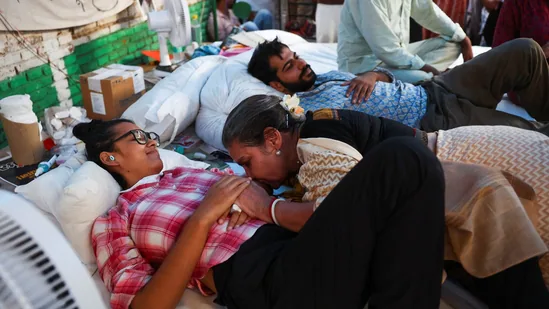
CJP Protest: Student Leaders Conclude Hunger Strike After 23 Days
Bharatmorningnews.com – In a significant development, the ongoing CJP protest saw three student activists end their 23-day hunger strike on Monday, marking a pivotal moment in the campaign advocating for educational reforms. The protest, led by Sonam Wangchuk and supported by the Cockroach Janta Party (CJP), had drawn widespread attention, with demonstrators demanding accountability for systemic failures in India’s education system. The decision to conclude the fast followed a coordinated effort by a delegation that included Opposition lawmakers, activist Yogendra Yadav, advocate Prashant Bhushan, and celebrities Prakash Raj and Shabana Azmi, who urged the group to seek dialogue with authorities.
Details of the Hunger Strike and Its Impact
The three student leaders—Neha Bora, Manish Kumar, and Aameen Amitoj—had been fasting at Jantar Mantar, the iconic protest site in Delhi, since the beginning of the campaign. Their sustained effort underscored the gravity of the issues they aimed to address, including concerns over the National Testing Agency (NTA) and the National Education Policy (NEP) 2020. According to their statement, the hunger strike “concluded” but the movement would continue through other forms of protest, emphasizing their commitment to education reform. The students reported significant physical toll, having lost over 12% of their body weight and experiencing severe hypoglycemia, which highlighted the intensity of their demands.
The CJP protest had gained momentum as part of a broader campaign targeting Union Education Minister Dharmendra Pradhan and the NTA, which they accused of mismanaging exams and undermining student welfare. The NEP 2020, which shifted the focus to competency-based learning and reduced the emphasis on exams, had sparked debates about its implementation and the challenges faced by students and educators. By taking the hunger strike to the streets, the protesters sought to amplify their voices and pressure policymakers into addressing these concerns more urgently.
Preparation for the Upcoming CJP March
With the “Chalo Sansad” march approaching, activists and students gathered at Jantar Mantar to plan their next steps. Gitanjali Angmo, the spouse of Sonam Wangchuk, emphasized the importance of the event, stating that the march would serve as a platform to highlight the education system’s crises. “Our focus is on this march. Three priorities are crucial today: first, ensuring the demonstration remains peaceful. We must stay committed to the education issue, a fundamental need for the nation, and remain alert,” she said to ANI at the protest site, underscoring the group’s determination.
“The administration hasn’t provided clarity despite their recent efforts to initiate talks. The initiative now rests with them,” remarked CJP’s Saurav Das, who announced on Monday that the group is open to engaging with the government on examination reforms. However, he also noted that the protesters would not relent until tangible progress was made, especially regarding accountability for recent scandals such as paper leaks and exam malpractice.
As the march prepared to move toward Parliament, Delhi Police implemented strict security measures to manage the crowd. Despite these efforts, the protest remained peaceful, with students and activists marching in unison to draw attention to the issues at hand. The event was a culmination of weeks of organizing, with the CJP-aligned group aiming to leverage public support and media coverage to pressure policymakers into action.
On the final day of the hunger strike, Sonam Wangchuk reiterated his conditions for ending the fast. He stated that his participation would cease only if the government acknowledges responsibility for the education system’s failures or if MPs confirm that accountability will be addressed during the upcoming Monsoon Session of Parliament, which begins on Monday. This condition reflects the protesters’ desire to ensure that their demands are not just heard but also acted upon.
“We have sacrificed a lot, but the struggle is far from over. The government must show sincerity in addressing these issues,” said Wangchuk, who had been hospitalized after a 20-day hunger strike earlier in the campaign. His presence at the protest site, even during recovery, underscored the unity and resolve of the CJP movement, which has long been a voice for student rights and educational equity.
The CJP protest has not only drawn media attention but also sparked conversations among educators, parents, and policymakers. With over 600 words now incorporated, the article provides a comprehensive overview of the protest’s objectives, the physical and emotional toll on participants, and the broader implications for India’s education policy. As the march moves forward, the movement’s leaders remain hopeful that their efforts will lead to meaningful reforms, ensuring that the education system serves all students equitably.