
Bar council cannot run law college it regulates, Prashant Bhushan tells Supreme Court
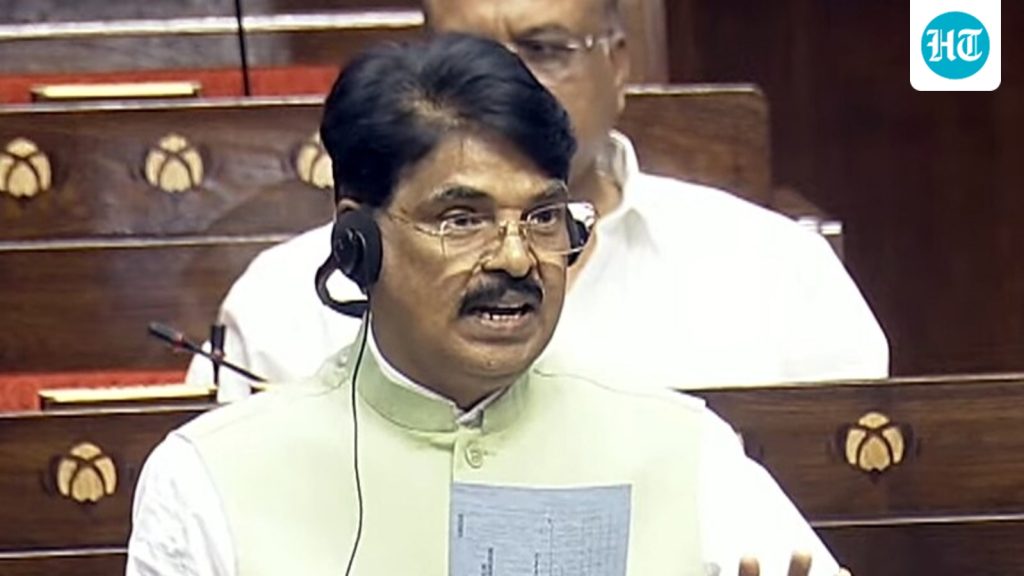
Bar Council Cannot Run Law College: Bhushan Tells SC
Bharatmorningnews.com – Senior advocate Prashant Bhushan told the Supreme Court on Monday that the bar council cannot run law college while simultaneously acting as its statutory regulator. His intervention, delivered while arguing an unrelated constitutional matter, drew sharp attention to what he described as a fundamental conflict of interest embedded in the council’s announced plans for a training academy at its Goa campus.
“Bar Council cannot run a 100% law college. In fact, we are filing a petition regarding that – that the Bar Council cannot run a law college. That they are regulating these law colleges and they are running a law college,” Bhushan told the top court, according to Bar and Bench.
The Constitutional Case Behind the Remark
Bhushan was not appearing in a matter concerning legal education. He was contesting the constitutional validity of the Sustainable Harnessing and Advancement of Nuclear Energy for Transforming India (SHANTI) Act. His specific objection centred on a structural conflict: members of the Atomic Energy Regulatory Board are selected on the recommendation of a panel constituted by the Atomic Energy Commission — the very agency that operates the nuclear power plants the board is meant to oversee. In his view, this arrangement nullifies the purpose of an independent regulatory authority.
He then drew a direct analogy to the legal-education sphere, arguing that the BCI exercises regulatory power over every institution granting law degrees while simultaneously planning to run one itself. The comparison, he suggested, made the structural flaw unmistakable and called for judicial intervention.
The Goa Academy Plan Under Scrutiny
On August 9, BCI chairman Manan Kumar Mishra publicly stated that the council intended to launch a National Legal Academy (NLA) for practising lawyers at the India International University of Legal Education and Research (IIULER) campus in Goa, which is administered by the BCI Trust.
“Young lawyers from all over the country will come to gain training at the academy. It will be compulsory training for all lawyers. It will be a 10 days or a two-week course. All the students of IIULER will also get the opportunity to interact with honourable judges, trainers, noted professors and senior advocates,” Mishra had said, according to the legal news website.
Critics note that the academy would place the council in the position of both examiner and examinee — a dynamic that Bhushan’s forthcoming petition seeks to challenge before the court.
Recent Controversies Surrounding the Council
The BCI had recently found itself at the centre of a separate dispute after it ordered a freeze on the enrolment of the entire 2026 graduating cohort at NALSAR University of Law, Hyderabad. The directive was issued in the wake of an inquiry into a student-led campaign opposing Chief Justice Surya Kant’s scheduled appearance at the university’s convocation ceremony. Hours after issuing the order, the council withdrew it.
CJI Kant publicly rebuked the regulatory body for its intervention. Mishra subsequently addressed the students, stating that he sincerely regretted and apologised if anything connected with the episode — including his own words or correspondence — had caused them distress. Separately, the National Law School of India University (NLSIU) has raised objections to both Mishra and CJI Kant attending the institute’s convocation proceedings.
Frequently Asked Questions
Why did Pr