
Untrained, overworked, underpaid: Why wet-lease drivers are behind most recent bus accidents
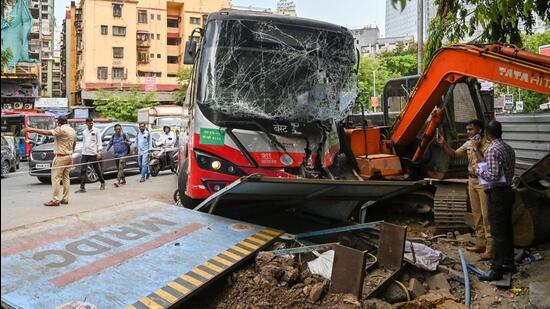
Untrained, Overworked, Underpaid: Mumbai Bus Accidents Tied to Wet Lease Operators
Bharatmorningnews.com – Mumbai’s recent surge in bus accidents has drawn attention to a critical issue: the role of untrained, overworked, and underpaid wet-lease drivers. Over the past ten months, 907 accidents involving BEST buses were reported, with 887 attributed to operators under the wet-lease model. This stark statistic highlights a systemic problem where third-party drivers, often operating without the same level of training or support, contribute disproportionately to safety incidents. Only 20 accidents involved BEST-owned buses, and of the 23 fatal incidents between August 2025 and May 2026, 22 were linked to wet-lease operators, according to official BEST records.
Workload and Compensation Disparity
The disparity in compensation between wet-lease drivers and their counterparts in the company’s payroll has exacerbated the issue. While BEST drivers earn a monthly salary of ₹15,000 to ₹17,000, those working under wet-lease contracts are paid as little as ₹900 to ₹1,400 per day, depending on the number of trips and duration of service. This wage gap creates a cycle of underpayment and overwork, with drivers often completing 3-4 trips daily for 8-9 hours without adequate rest or training.
“BEST ensures comprehensive training and rigorous checks for its own drivers, but wet-lease operators prioritize availability over qualifications,” remarked Nitin Nandgaonkar, a member of the BEST Committee. This lack of standardized training means drivers may not be prepared for the complexities of Mumbai’s traffic conditions, emergency protocols, or vehicle maintenance procedures. The result is a higher risk of errors that can lead to collisions, lane violations, or breakdowns.
Staffing and Route Coverage
BEST employs 6,349 drivers directly, while 7,069 are contracted through third-party operators. Wet-lease drivers handle 25,783 of the 28,445 daily trips, yet only 51 routes are managed by BEST-owned buses. Meanwhile, 349 routes rely on wet-lease operators, who often lack the same level of oversight. This fragmentation of responsibility allows for inconsistencies in driver performance, as the BMC has cited the high accident rate as a reason for withholding ₹1,000 crore in financial aid to BEST.
Conductors also face a similar imbalance, with BEST’s fleet supported by 6,432 staff compared to just 2,165 in the wet-lease system. The smaller number of conductors in the third-party network means fewer eyes on the road, increasing the likelihood of unnoticed hazards. Additionally, the reliance on multiple shifts for wet-lease operators creates pressure to maintain constant productivity, further contributing to fatigue and lapses in concentration.
Training and Hiring Practices
According to BEST sources, hiring standards for wet-lease drivers are less stringent than for company-employed personnel. While BEST ensures that its drivers undergo rigorous training and regular assessments, third-party operators often recruit individuals with minimal qualifications, including those who previously drove tourist buses, trucks, or taxis. This practice, confirmed by officials, has led to a situation where drivers may not be fully equipped to handle the demands of urban bus operations.
“Many BEST employees working as conductors at stops are also recruited as drivers by wet-lease operators,” said Shashank Sharad Rao, president of the BEST Workers’ Union. This dual role can lead to conflicts of interest, as drivers may prioritize speed over safety to meet performance targets. The lack of dedicated training programs for wet-lease drivers highlights a critical gap in Mumbai’s public transport safety framework, with officials calling for stricter regulations and more consistent oversight.
The BMC’s decision to withhold financial aid underscores the urgency of addressing these issues. With only 51 routes under direct BEST control and 349 managed by wet-lease operators, the city’s bus network remains vulnerable to systemic failures. The focus on cost-cutting through outsourcing has led to a neglect of driver welfare and training, creating a perfect storm of untrained, overworked, and underpaid personnel. This has not only increased accident rates but also eroded public trust in the reliability of Mumbai’s mass transit system.