
Traffic eases in Delhi as one Ring Road lane reopens after Ashram repairs
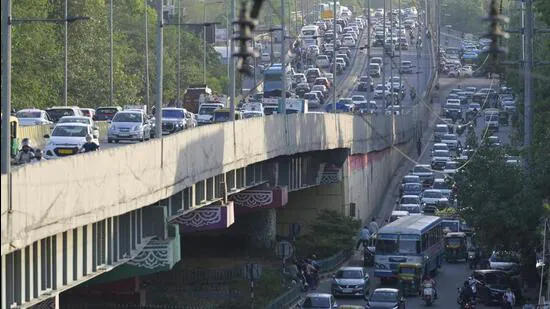
Traffic eases in Delhi as one Ring Road lane reopens after Ashram repairs
Bharatmorningnews.com – Traffic eases in Delhi as one Ring Road lane reopens after repairs at Ashram, offering relief to commuters in the city’s southeast region. The long-awaited partial restoration of the lane, which had been closed since Monday night, marked a significant step in easing the heavy congestion that plagued the area during the previous days. The closure was necessitated by urgent maintenance work on a critical 1,200-mm sewage pipeline managed by the Delhi Jal Board (DJB), which had developed a leakage issue requiring immediate attention. With the reopening, traffic flow has begun to stabilize, though challenges remain in fully restoring the area’s usual movement.
Commuter Disruptions and Road Conditions
The closure of the Ring Road segment between Maharani Bagh and Ashram Chowk disrupted daily commutes for thousands of residents, particularly those traveling between Sarai Kale Khan and the Delhi-Noida-Direct (DND) corridor. The disrupted routes caused bottlenecks on Mahatma Gandhi Road, Mathura Road, and Eastern Avenue, where vehicles were forced to navigate through narrow lanes or alternate pathways. The affected commuters, many of whom rely on the Ring Road for time-sensitive travel, expressed frustration over the extended delays and lack of clear communication from traffic authorities. The partial reopening of one lane has provided some relief, but full normalcy is yet to be achieved.
“We have opened one lane of the Maharani Bagh-Ashram Chowk carriageway of the Ring Road for traffic. Traffic personnel have been deployed to manage the flow and minimize disruption to drivers. They are also ensuring the repair work on the DJB pipeline continues uninterrupted,” said Additional Commissioner of Police (Traffic) Dinesh Kumar Gupta.
The reopened lane, though a temporary solution, has helped reduce the strain on alternative routes such as the Ashram and Barapullah flyovers. These overpasses, which became the primary conduits for traffic, faced increased congestion, prompting officials to adjust their strategies for managing the flow. Despite these efforts, peak hours still saw lingering delays, highlighting the ongoing challenges of balancing infrastructure repairs with urban mobility needs.
Repair Process and Infrastructure Priorities
The repair work on the sewage pipeline, which runs from the Red Fort to Okhla STP, was prioritized to prevent further damage and potential road collapse. The leakage, attributed to drilling activities or prior maintenance, had posed a risk to the structural integrity of the road, necessitating a temporary closure. Officials emphasized that the three-day repair window, initially set for June 15, remains flexible depending on the progress of the work. This approach underscores the importance of maintaining the Ring Road’s functionality as a vital artery for Delhi’s transportation network.
“Monsoon season is approaching, so we couldn’t leave the damaged pipeline unrepaired,” said a DJB official who requested anonymity. “The leakage was caused by drilling or repair activities, and we’ve now fixed the issue.”
With the completion of the repairs, authorities are now monitoring the situation closely using real-time data from patrols, navigation maps, and social media platforms. This proactive strategy aims to detect and address emerging bottlenecks before they escalate. The reopening of the lane also serves as a precursor to further improvements, with officials hinting at the possibility of restoring full traffic capacity in the coming days.
Public Feedback and Coordination Challenges
Public feedback on the situation has been mixed, with some commuters praising the quick response to reopen the lane while others criticize the lack of coordination among traffic management agencies. The partial resumption of the Ring Road has been seen as a positive development, but many argue that more sustained efforts are needed to ensure smooth traffic flow. “The one lane we’ve reopened is a start, but it’s still not enough to handle the volume of vehicles,” said a local driver, highlighting the persistent congestion in the area.
“Keeping in view Tuesday’s massive traffic congestion and the problems caused to motorists, we have opened one lane for vehicles. The majority of traffic is still being rerouted via the Ashram and Barapullah flyovers,” said a traffic police inspector.
The incident has also sparked discussions about the need for better coordination between the Delhi Traffic Police and the DJB. Commuters have pointed out that delays in communication regarding the closure and its duration contributed to the chaos. As the city prepares for the monsoon season, the focus remains on minimizing disruptions and ensuring that critical infrastructure is maintained to support seamless urban mobility.
Broader Implications for Delhi’s Transport Network
The partial reopening of the Ring Road is a testament to the city’s commitment to addressing infrastructure challenges, even in the face of complex logistical hurdles. While the repair of the sewage pipeline is a primary concern, the incident has also brought attention to the delicate balance between urban development and daily commuting needs. The one lane that has now reopened represents a temporary solution, but it underscores the importance of timely maintenance and adaptive traffic management strategies in a metropolis like Delhi.
Delhi’s transport network, which serves as the backbone of the city’s economy, has been tested by such disruptions. The Ring Road, a key route for both local and long-distance traffic, has been a focal point for improvement efforts. The reopening of the lane is expected to ease pressure on other sections of the road, though officials warn that full recovery may take several days. The situation also highlights the need for advanced planning to mitigate the impact of such closures on the city’s overall traffic dynamics.
Conclusion and Future Outlook
As the one Ring Road lane reopens, Delhi’s traffic situation is showing signs of improvement, but the road to full normalcy is still ahead. The successful completion of the Ashram repairs marks a turning point for commuters in the southeast, yet the broader implications of the incident remain a topic of discussion. Officials are hopeful that the gradual restoration of the Ring Road’s capacity will not only ease current congestion but also set a precedent for future infrastructure projects. With continued vigilance and coordinated efforts, Delhi’s transportation network can adapt to the challenges posed by aging infrastructure and seasonal weather conditions.