
First arrest in Moshi tragedy: Project head held by police
First Arrest in Moshi Tragedy: Project Head Held by Police
Bharatmorningnews.com – The first arrest in the Moshi tragedy has been made, with Ashok Kumar Gupta, the project head of Antony Lara Renewable Energy Pvt. Ltd., taken into police custody following a fatal collapse at the PCMC Waste-to-Energy plant. This marks a pivotal moment in the ongoing investigation into the incident that claimed the lives of nine workers. The event occurred on July 8, when heavy rainfall triggered a structural failure, leading to the tragic disaster. Authorities have now begun to focus on holding individuals accountable for the lapses that contributed to the tragedy.
Incident Breakdown and FIR Filing
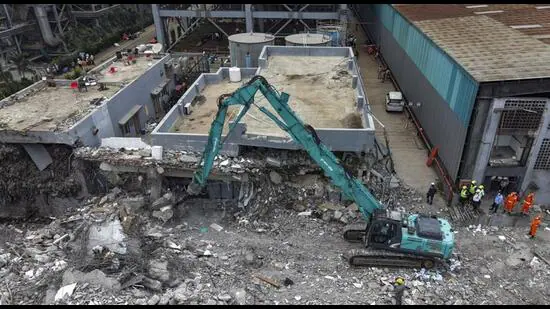
The Moshi tragedy unfolded in the early afternoon of July 8, when a towering heap of garbage and waste material at the PCMC Waste-to-Energy project in Moshi collapsed, crushing the administrative building and trapping several workers inside. The incident has been described as a devastating industrial accident, with rescue teams working tirelessly to recover the victims. An FIR was filed late Monday night at the MIDC Bhosari police station, which led to the immediate arrest of Gupta hours later. The police have confirmed that the accused was detained in Pimpri Chinchwad as part of the investigation into the first arrest in the Moshi tragedy.
“We registered the FIR based on the complaint from a civic official, which detailed the sequence of events leading to the collapse. The first arrest in the Moshi tragedy has been made, and we are now focusing on locating the company’s safety officer, Vijay Ramrao Sapkal, who is also under investigation,” stated Maruti Jagtap, DCP of Zone III, during a press briefing.
Key Details and Legal Charges
Ashok Kumar Gupta, 59, is a native of Ghaziabad, Uttar Pradesh, and has been based in Moshi for several years. He was injured during the collapse but is currently in police custody for questioning. The police have alleged that the project management team, including Gupta, ignored safety protocols and failed to address the risks associated with the site’s construction. Investigators are now examining whether the first arrest in the Moshi tragedy is a significant step toward accountability or just the beginning of a broader probe.
The charges against Gupta include Sections 105, 125(a), 125(b), and 3(5) of the Bharatiya Nyaya Sanhita (BNS), which cover culpable homicide not amounting to murder, endangering human life, and other related offenses. These charges suggest that the incident may be classified as a result of negligence, with the legal proceedings likely to intensify as more evidence is gathered. The court has ordered Gupta’s continued detention until July 17, ensuring he remains available for further interrogations in the case of the first arrest in the Moshi tragedy.
Background of the Project and Its Risks
The PCMC Waste-to-Energy project in Moshi was designed to convert municipal waste into electricity, a key initiative in the region’s efforts to manage waste sustainably. However, the incident on July 8 has raised serious concerns about the project’s safety measures. Heavy rainfall, which had been a known factor, created ideal conditions for the pile to shift and collapse. Local officials have stated that the site was frequently monitored for signs of instability, but the management reportedly did not take adequate precautions.
Experts have highlighted that the first arrest in the Moshi tragedy underscores the need for stricter enforcement of safety standards in industrial projects. The collapse has prompted calls for an independent review of the project’s design and maintenance procedures. Meanwhile, the company’s safety officer, Vijay Ramrao Sapkal, remains at large, with authorities working to track him down as part of the investigation into the first arrest in the Moshi tragedy.
Community Response and Ongoing Probes
The Moshi tragedy has sent shockwaves through the local community, with families of the victims demanding justice and transparency. Residents have expressed concern about the safety of other industrial sites in the area, particularly those handling hazardous materials. The first arrest in the Moshi tragedy has been met with both relief and skepticism, as many believe it is only the first step in a long process.
As the investigation into the first arrest in the Moshi tragedy progresses, officials are also reviewing the broader implications of the incident. The police are collaborating with technical experts to determine whether structural weaknesses or improper handling of waste material played a role. This case has become a focal point for discussions on industrial safety, with the potential to influence future regulations and practices in similar projects across the region.
Next Steps in the Investigation
The police are expected to intensify their efforts in the coming days to gather more evidence against Gupta and Sapkal. Forensic teams will examine the site to identify any contributing factors, such as poor construction quality or inadequate drainage systems. The first arrest in the Moshi tragedy has also prompted the government to consider revising safety guidelines for waste-to-energy plants. Legal experts predict that the case may lead to stricter penalties for negligence in industrial operations.