
‘I like men too’: When Laura Loomer brazenly claimed ‘Lindsey Graham is gay’
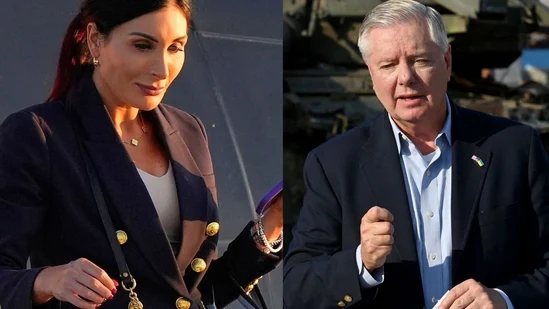
I Like Men Too: Laura Loomer’s Bold Claim That Lindsey Graham Is Gay
Bharatmorningnews.com – “I like men too,” Laura Loomer declared during a pivotal moment in a legal dispute, asserting that South Carolina Senator Lindsey Graham is gay. The statement, made under oath during a deposition, sparked widespread discussion and drew attention to the tension between personal expression and political alignment. While Graham has remained steadfast in his heterosexual identity, Loomer’s claim highlights the intersection of public discourse, personal beliefs, and the role of social media in shaping political narratives. Her use of the phrase, which she later rephrased on the X platform, became a focal point in the debate over LGBTQ+ representation and the fluidity of identity in public life.
Background of the Legal Context
Loomer’s assertion about Graham emerged as part of a broader legal battle she was waging against HBO host Bill Maher. The dispute began when Maher joked on his show that Loomer could be “f—ing” Donald Trump, a remark she claimed jeopardized her chances of securing a position in the White House staff. In her court filing, she emphasized how the joke contributed to her public image as a potential political ally of Trump, yet she also took the opportunity to highlight Graham’s sexuality. This dual focus underscores how personal and political statements can intertwine in high-profile legal cases.
“Several of President Trump’s staff have told me in confidence that Lindsey Graham is gay,” Loomer stated, adding, “I wish to avoid committing perjury by asserting this truth.”
Her statement, however, was not confined to the courtroom. On social media, she amplified the claim, saying, “When is Lindsey coming out of the closet? We all know you’re gay, Lindsey… and that’s ok.” This blend of legal argument and public commentary reflects Loomer’s strategic use of rhetoric to challenge Graham’s image and advocate for greater openness about LGBTQ+ identities in politics.
Lindsey Graham’s Political Record on LGBTQ+ Issues
While Laura Loomer’s claim about Lindsey Graham’s sexuality made headlines, the senator has long maintained that he is not gay. His political career has been marked by consistent opposition to LGBTQ+ rights, particularly in his support for conservative legislation. In 1996, during his tenure in the House of Representatives, Graham backed the Defense of Marriage Act, which defined marriage as a union between one man and one woman. This position later extended to his advocacy for a constitutional amendment that would further restrict same-sex marriage, emphasizing the role of judges in upholding traditional definitions.
Graham’s legislative efforts also included backing the Stop Online Predators Act (SOPA) and the Protecting Children from Sexual Predators Act (PSPA), which targeted online sex work to combat child exploitation. More recently, he supported the EARN IT Act, a bill aimed at reforming digital privacy laws to enhance law enforcement access to online platforms. These actions have positioned him as a vocal critic of LGBTQ+ rights, even as he has occasionally praised the inclusion of LGBTQ+ individuals in public service.
Public Reactions and Broader Implications
The claim that Lindsey Graham is gay generated mixed reactions from the public and political commentators. Some viewed Loomer’s assertion as a pointed critique of Graham’s conservative stance, suggesting that his reluctance to openly embrace LGBTQ+ rights might be rooted in personal prejudice. Others dismissed it as a tactical move to gain media attention or align with a specific ideological narrative. Regardless of interpretation, the statement underscored the polarizing nature of Graham’s policies and the power of personal claims to influence public perception.
Loomer’s use of the phrase “I like men too” was intentional, serving to juxtapose her own openness with Graham’s perceived secrecy. By framing her claim as a personal statement, she sought to challenge the idea that LGBTQ+ identities are secondary to political agendas. This rhetorical strategy not only highlighted her own views but also framed Graham’s position as hypocritical in a context where he has long advocated for traditional family values. The phrase became a rallying point for those critical of Graham’s reluctance to embrace full LGBTQ+ inclusion in public life.
Historical Context of Graham’s LGBTQ+ Opposition
Lindsey Graham’s opposition to LGBTQ+ rights is not a recent development but a longstanding component of his political ideology. In 2010, he was a key figure in the fight to preserve the “Don’t Ask, Don’t Tell” policy, which required service members to conceal their sexual orientation. This stance contrasted with his later support for the repeal of the law, yet it revealed a persistent tension between his personal beliefs and his public advocacy for LGBTQ+ visibility. Graham’s ability to shift positions on the issue while maintaining a consistent narrative on conservative values has kept him in the spotlight for debates over identity and policy.
Even after the landmark Obergefell v. Hodges decision in 2015, which legalized same-sex marriage nationwide, Graham continued to express skepticism about the ruling. He argued that the decision was a judicial overreach and that the federal government should retain the right to define marriage. His resistance to LGBTQ+ equality has carried into recent years, as seen in his opposition to the Respect for Marriage Act, which sought to codify federal recognition of same-sex and interracial unions. These positions highlight how his personal identity claims have become part of a larger ideological framework.
Reflections on Identity and Political Narratives
The incident raises questions about how personal identity is used to frame political debates. Laura Loomer’s claim about Lindsey Graham is not just a statement of fact but a tool to challenge the senator’s consistency in advocating for traditional values. By emphasizing “I like men too,” she positioned herself as a relatable figure within the conservative movement, suggesting that Graham’s reluctance to acknowledge his sexuality is a contradiction in his public persona. This dynamic illustrates how identity politics can be leveraged to sway public opinion and create narrative tension around even the most personal of claims.
Ultimately, the claim that Lindsey Graham is gay has become a symbol of the broader conflict between personal truth and political rhetoric. While the senator has denied the allegations, the statement has prompted discussions about the role of public figures in shaping and being shaped by societal attitudes toward sexuality. Whether or not Graham is gay, the episode underscores the power of individual statements to spark debate and highlight the evolving landscape of LGBTQ+ acceptance in American politics.