
Trust, distrust converge in Ayodhya amid Ram Mandir donation theft case
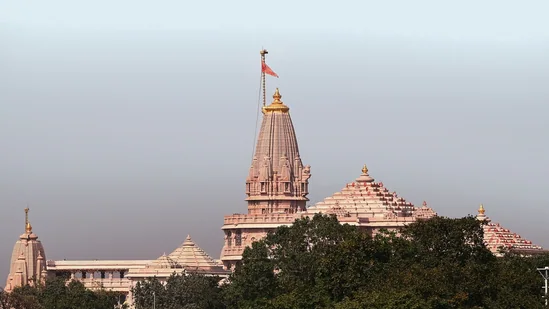
Trust, Distrust Converge in Ayodhya Amid Ram Mandir Donation Theft Case
Bharatmorningnews.com – Golden beams of early summer light fall on Sushila Devi’s face as she races up the quiet, barricade-strewn path to the Ram Temple. Her family of five had arrived from Basti earlier that day, but the delay at their guest house—costing ₹1,400 per night—left her children grime-covered and in need of a quick rinse before entering the sacred space.
Their first visit to the hallowed site is marked by anticipation. The list of temples to seek blessings from is extensive, yet the darshan itself remains free. Devi’s faith is unshaken, but the journey is not without hurdles. As she weaves through half-shuttered shops, triangular stacks of sweets catching the light, she pauses for a breathless moment. “How many people get the chance to see Bhagwan Ram’s birthplace?” she murmurs, dodging a series of inspections—shoe checks, phone scans, document verifications—before finally reaching the temple’s grand entrance.
“Maybe we’ll give it at the entrance donation counters. I saw they issue certificates there. Here, who knows what’s happening?”
Devi’s hesitation mirrors the growing unease in Ayodhya. The city, home to over 100,000 residents, has been shaken by accusations of flawed donation practices and a probe led by a special investigation team. Eight individuals have been arrested, and two top trustees have resigned, casting doubt on the temple’s governance. Over the course of a week, HT interviewed more than 20 key figures—trust officials, priests, seers, and former leaders—to uncover a pattern of informal rules, unstructured meetings, and deep divides within the broader temple movement.
Ram Mandir Trust’s Structure and Controversies
The trust, formed in 2020 by Prime Minister Narendra Modi, took ownership of the 67.7-acre site acquired under the 1993 Ayodhya Act. A deed issued by HT confirmed the government would no longer manage the property, entrusting it to the body. Registered at K Parasaran’s Delhi residence, the trust was intended to have a permanent office, though this never materialized. Four of its 15 members were ex-officio appointments, with the rest representing diverse groups: Haridwar and Pune seers, a Hindu representative, and a member of the Nirmohi Akhara, one of the original parties in the land dispute.
Bylaws outlined strict procedures for trustee removal, requiring a two-thirds majority and mandating that no ex-officio member influence the succession of voting members. Financial accountability was also emphasized, with annual audits presented at trust meetings. However, the system allowed for indemnification, shielding trustees from liability for errors by others.
Champat Rai, the trust’s general secretary, has long operated in the shadows. Now 79, he served as an associate to Ashok Singhal, the former head of the VHP. Rai’s journey into the RSS began in school, shaping his path as a chemistry lecturer before his role in the Ram Temple’s management. The trust’s leadership, including Mahant Nritya Gopal Das, was finalized during its first Delhi meeting on February 19, setting the stage for a new chapter in India’s temple governance debate.
Legacy of Power and Faith
The trust has become a focal point for Hindutva politics, symbolizing the shift toward private temple control. Yet its recent controversies have tested the faith of everyday devotees like Devi, who now question whether their contributions are being used as intended. The case has reignited discussions about transparency and accountability in religious institutions, revealing a complex web of influence and authority within the temple movement.