
‘Leadership is not arrogance’: Another AIADMK MLA quits, takes a swipe at EPS
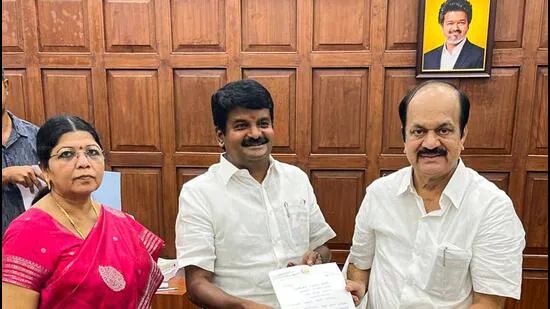
Leadership is Not Arrogance: AIADMK MLA Resigns Fifth Time Amid Internal Strife
Bharatmorningnews.com – C Vijayabaskar, a former AIADMK minister and Viralimalai MLA, has become the fifth member of the Tamil Nadu legislative assembly to resign from the party in recent weeks, further intensifying tensions within the ruling alliance. His decision, framed as a critique of the party’s leadership, underscores his belief that “leadership is not arrogance.” The resignation comes just days after the AIADMK’s leadership, led by Edappadi K Palaniswami, faced scrutiny for its handling of internal dissent and electoral strategies.
The Resignation and Its Political Context
Vijayabaskar’s exit was formally submitted to Assembly Speaker Prabhakar, who confirmed its validity in accordance with parliamentary procedures. The MLA’s choice to step down reflects growing discontent among his faction with Palaniswami’s authority, particularly after a significant split in May. This split, which saw 25 MLAs from the C Ve Shanmugam-S P Velumani group defect to the Tamilaga Vettri Kazhagam (TVK), created a power vacuum and forced Palaniswami to restructure the party’s leadership, including replacing Vijayabaskar in key roles.
“Leadership is neither power nor arrogance. It is an affectionate embrace filled with dedication. A leadership that cannot win the hearts of its hardworking cadres, how will it ever win the hearts of the people??”
Vijayabaskar’s declaration during his resignation speech highlights his frustration with the leadership’s perceived detachment from grassroots support. This sentiment resonates with many in the party, who feel that the central leadership prioritizes political maneuvering over empathy and unity.
Historical Backdrop and the Fifth Exit
The AIADMK’s internal conflicts have been a recurring theme since the 2021 assembly elections. Vijayabaskar’s resignation marks the fifth such exit, indicating a pattern of dissatisfaction among senior members. Analysts suggest that his alignment with TVK may be strategic, given the party’s recent electoral gains and the potential for a coalition. However, critics argue that the repeated departures signal deeper fractures in the AIADMK’s leadership structure.
Vijayabaskar, a medical professional by profession, emphasized that his decision was based on feedback from constituents and supporters. He stated that true leadership is measured not by hierarchical dominance but by the ability to connect with the public. This perspective contrasts sharply with Palaniswami’s more centralized approach, which has drawn accusations of micromanagement and lack of consultation with rank-and-file members.
Implications for the AIADMK’s Political Strategy
The fifth resignation has forced the AIADMK to reassess its political strategy. With key roles vacated, the party faces challenges in maintaining cohesion, especially as it prepares for upcoming state-level contests. Vijayabaskar’s move to directly engage with voters in Pudukottai highlights a shift towards grassroots mobilization, which could impact the party’s voter base. Analysts warn that without addressing internal divisions, the AIADMK risks further erosion of its support.
Despite the merger of factions under Palaniswami’s leadership, the party’s unity remains fragile. Vijayabaskar’s continued independence suggests that his faction is unwilling to compromise on core issues, including the perceived arrogance of leadership. This dynamic may influence the AIADMK’s ability to present a united front in future elections, particularly as it navigates the complexities of coalition politics and regional alliances.
Public Reaction and Electoral Impact
The public response to Vijayabaskar’s resignation has been mixed. While some supporters applaud his stand for a more humble leadership style, others question his alignment with TVK, fearing a dilution of the AIADMK’s electoral base. His campaign in the April 23 polls, which he claims was driven by constituent interests, now faces scrutiny as his departure could split voter loyalties in key constituencies.
Political observers note that the AIADMK’s leadership crisis is a microcosm of broader challenges in Tamil Nadu’s political landscape. As the party grapples with internal dissent, it must balance the need for centralized control with the demands for democratic participation. Vijayabaskar’s emphasis on “leadership is not arrogance” has positioned him as a voice for reform, though his long-term impact on the party’s trajectory remains to be seen.
A Broader Movement Within the AIADMK
Vijayabaskar’s resignation is part of a larger movement within the AIADMK to challenge the dominance of Palaniswami. His faction argues that the party’s leadership has become increasingly autocratic, undermining the collaborative spirit that once defined its political ethos. This critique has gained traction among younger members and local activists, who view the current leadership as out of touch with the changing political climate.
With the AIADMK currently holding 47 seats in the assembly, the loss of five MLAs has shifted the balance of power. Analysts suggest that Palaniswami’s leadership is now more vulnerable to external pressures, including potential alliances with opposition parties. Vijayabaskar’s decision to resign and align with TVK may also serve as a test case for how the party handles internal dissent, setting a precedent for future conflicts.