
India needs China-style social discipline for progress
India Needs China-Style Social Discipline for Progress
Bharatmorningnews.com – India’s development trajectory has long been shaped by its democratic ethos, yet recent comparisons with China have sparked discussions about the necessity of adopting more stringent social discipline mechanisms. During my fourth visit to China, I observed a striking pattern: the country’s ability to maintain consistent economic growth over decades is often linked to its centralized approach to societal organization. This insight suggests that India might benefit from integrating similar strategies to accelerate its progress toward becoming a global economic powerhouse.
Economic Transformation and the Role of Social Order
China’s economic ascent from the 1970s onward demonstrates the power of structured societal frameworks. By the 2020s, its per capita income had surged to over $14,875, a threefold increase in just five years. This rapid growth has not only reshaped China’s internal landscape but also influenced global geopolitics, as seen in the measured tone of US President Donald Trump during his visits. Even in moments of diplomatic tension, China’s economic strength remains a dominant factor.
“China’s authoritarian governance has enabled seamless coordination between state and society, fostering sustained productivity,”
India, while achieving a robust average growth rate of 6.5-7% since 1991, has yet to match China’s momentum. The difference lies in how each nation manages social cohesion. China’s ability to enforce discipline through mechanisms like surveillance systems and policy compliance has created an environment conducive to long-term planning. India’s decentralized structure, though democratic, often leads to fragmented implementation of policies, slowing down progress.
Historical Foundations and Strategic Shifts
The seeds of China’s economic dominance were sown during the Cold War, when a pivotal secret agreement between US Secretary of State Henry Kissinger and Chinese Premier Zhou Enlai set the stage for mutual strategic alignment. This collaboration allowed China to focus on industrialization while the US concentrated on global influence. The 1971 Indo-Pak War further highlighted this shift, as India relied on Soviet support, whereas Pakistan became a key bridge for US-China relations.
“The balance of power during the 1971 war underscored how geopolitical alliances can shape a nation’s developmental priorities,”
India’s post-independence trajectory diverged from China’s, with a greater emphasis on democratic institutions and a more gradual approach to reforms. While this has preserved civil liberties, it has also created challenges in maintaining the kind of social order that enables rapid industrialization. The question now is whether India can balance its democratic values with the need for efficient social discipline to close the growth gap.
Modern Surveillance and Policy Enforcement
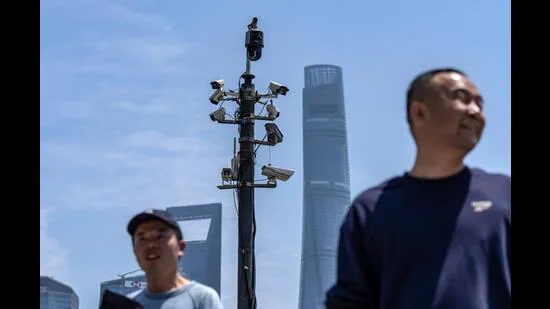
China’s modern social discipline is exemplified by its extensive surveillance infrastructure, which includes cameras, biometric systems, and data-driven monitoring networks. These tools allow the government to anticipate and address disruptions swiftly, ensuring stability even in densely populated urban centers. Such mechanisms have become critical in sustaining China’s economic model, where collective effort and state-guided planning are prioritized over individual dissent.
“India needs China style social discipline to streamline policy execution and align societal behavior with national goals,”
While India has not adopted the same level of surveillance, its governance structure could benefit from greater focus on social cohesion. The contrast is evident: China’s ability to enforce uniformity in labor practices, education, and public behavior has allowed it to scale industries rapidly. India, with its diverse population and federal system, faces unique challenges in achieving similar efficiency. However, the potential for adopting tailored versions of China’s approach remains a compelling avenue for growth.
India’s Current Challenges and Opportunities
India’s recent economic performance, despite global shocks like the pandemic and supply chain disruptions, has shown resilience. Yet, sustaining this momentum requires addressing inefficiencies in governance and social organization. The nation’s average growth rate of 6.5-7% over the past three decades is commendable, but it falls short of China’s 8-9% average, which has cemented its position as a global leader. This gap highlights the need for India to refine its approach to societal discipline without abandoning its democratic principles.
“India needs China style social discipline to ensure that economic reforms are not hindered by administrative delays or conflicting regional interests,”
Experts argue that a structured framework for social discipline could help India overcome bureaucratic hurdles and streamline resource allocation. For instance, China’s centralized planning has allowed it to prioritize infrastructure projects and technological innovation with remarkable consistency. India, on the other hand, often struggles with uneven implementation across states. A hybrid model—combining China’s efficiency with India’s democratic inclusivity—could offer a viable path forward.
Towards a Balanced Approach
As India contemplates adopting China-style social discipline, it must ensure that such measures complement rather than undermine its democratic foundations. The key lies in creating policies that enhance productivity while respecting civil liberties. For example, China’s use of technology for surveillance is not just about control but also about improving public services and urban planning. India could replicate this by integrating digital tools into governance without compromising its cultural and political identity.
“India needs China style social discipline to foster a culture of accountability and collective progress in its rapidly expanding society,”
With over 1.4 billion people and a growing middle class, India’s potential is vast. However, achieving the next level of economic transformation will require a reevaluation of how social order is maintained. By learning from China’s strategies, India can develop a model that supports innovation, reduces inequality, and ensures that its democratic systems are both inclusive and effective. The challenge is to strike the right balance, ensuring that the nation’s unique characteristics are preserved while embracing the tools needed for global competitiveness.