
Bengaluru man wonders if office cabs are worsening traffic, says firms need smarter commute plans
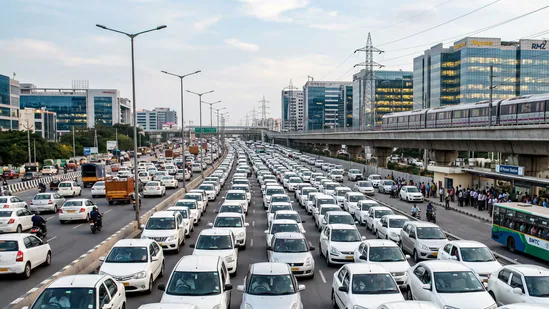
Bengaluru Man Wonders if Office Cabs Are Worsening Traffic: Firms Need Smarter Commute Plans
Bharatmorningnews.com – Bengaluru man wonders if office cabs are exacerbating the city’s traffic crisis, raising questions about the efficiency of corporate transportation. A recent social media post by a local resident has sparked a broader discussion on how traditional office cabs might be contributing to congestion instead of easing it. The user’s concern highlights a growing trend: as Bengaluru’s traffic worsens, some are questioning whether the convenience of private company vehicles is now a liability for commuters and city planners alike.
The Rising Criticism of Office Cabs
The post, titled “I feel like office cabs are becoming a Bangalore traffic problem instead of a solution,” reflects a shift in perspective. In the past, company-provided cars were seen as a perk, but today, they are increasingly viewed as a source of inefficiency. The author shared an anecdote about being stuck near Kadubeesanahalli, watching dozens of office cabs navigate slow-moving traffic with only one passenger inside. This scenario has led to calls for more flexible and sustainable commuting strategies.
“I was stuck near Kadubeesanahalli the other day, watching what felt like the 500th office cab, with just one person inside, slowly moving through the congestion. It got me thinking: are these office cabs really the best option?”
One example cited in the discussion involved a company in Whitefield that redesigned its transport plan. By introducing shared pickup points and aligning routes with the metro system, the firm reportedly increased vehicle occupancy from under 50% to around 70%. This change not only reduced the number of cars on the road but also garnered support from many users who appreciated the shift toward smarter, eco-friendly commuting solutions.
Community Voices on Commuting Solutions
Readers have echoed the user’s concerns, emphasizing that Bengaluru’s traffic has reached a critical point. Many argue that office cabs, especially during peak hours, add to the bottleneck rather than relieve it. Some have suggested extreme measures, such as mandating work-from-home days when traffic is at its worst.
“Permanent WFH because Bengaluru has defeated everyone.”
“WFH should be made mandatory for days where traffic is expected.”
Others have pointed to deeper cultural issues within workplaces, noting that trust in remote work remains a barrier for some companies. A user remarked, “Not all companies trust employees to actually work from home. Trust is the biggest problem.” Another expressed a longing for smaller cities, saying, “Give me permanent work from home and I won’t contribute to the traffic, I’ll humbly go back to my tier 2 city hometown.” These sentiments underscore the urgency for rethinking corporate transport policies in Bengaluru.
The Broader Impact on Urban Mobility
The debate around office cabs is part of a larger conversation about urban mobility in rapidly growing cities like Bengaluru. With over 10 million vehicles on the roads, the city’s traffic congestion has become a daily challenge for millions. Studies show that inefficient vehicle occupancy—often below 50% in corporate transport—leads to wasted fuel, increased emissions, and longer commute times. Experts suggest that integrating shared transport options with public infrastructure, such as the metro, could significantly reduce the strain on the city’s roads.
“If I’m already taking the metro, I’d rather spend 10 minutes on a shuttle from the station than sit in a cab on ORR, wondering if I’ll reach before lunch.”
Additionally, the rise of ride-hailing apps and the trend toward carpooling have created alternative solutions. However, the question remains: how can firms balance the need for convenience with the responsibility to optimize traffic flow? Some companies are experimenting with staggered work hours, bike-sharing programs, and even electric vehicles to curb their environmental and logistical impact.
Author’s Perspective on the Trend
Mahipal Singh Chouhan, a Senior Content Producer at Hindustan Times Digital, has nearly five years of experience in digital journalism. His work often highlights viral stories and trending topics that reflect everyday challenges, such as the struggles of urban commuters. In this piece, Mahipal focuses on the evolving narrative around workplace transportation, emphasizing how companies can adapt to changing city dynamics.
At Hindustan Times, Mahipal transforms social media-driven discussions into structured news reports. He ensures clarity and engagement by weaving together user insights with broader societal trends. His approach also incorporates data and expert opinions to validate the concerns raised by Bengaluru residents. Previously, he worked at DNA India, where he refined his skills in newsroom workflows and digital storytelling.
Outside of work, Mahipal explores history and sports, which he believes enrich his understanding of human behavior and societal shifts. This personal interest helps him contextualize issues like traffic congestion and remote work, making the content more relatable to readers. His writing style combines factual accuracy with a conversational tone, ensuring that even complex topics like corporate transportation remain accessible to a wide audience.
Disclaimer: This report is based on user-generated content from social media. HT.com has not independently verified the claims and does not endorse them.