
Taiwanese foodie shares ‘honest review’ of chef Gaggan Anand’s new Delhi restaurant Raga: 22 courses for ₹11,111
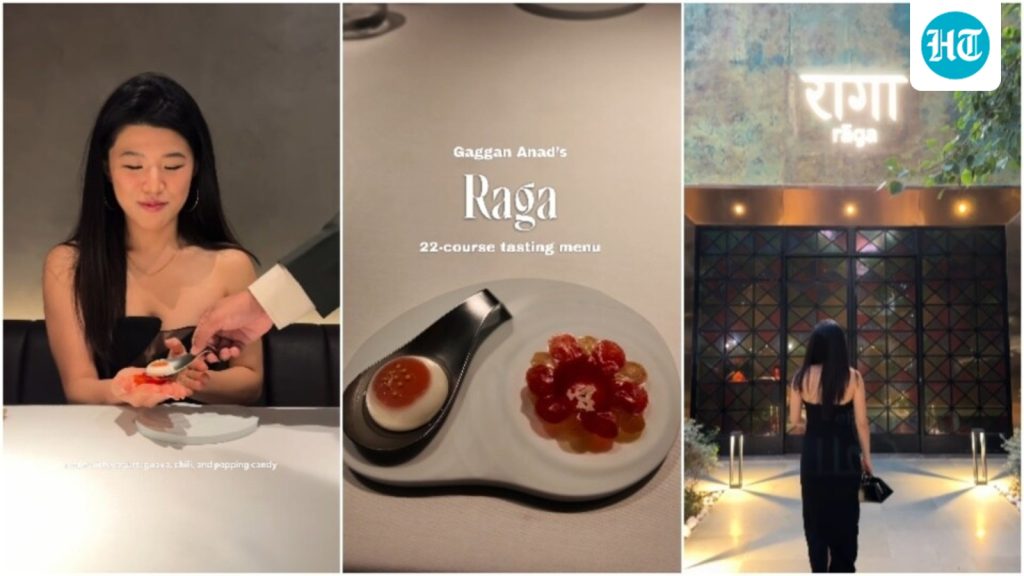
Raga’s 22-course tasting menu draws a detailed first review in Delhi
Bharatmorningnews.com – Chef Gaggan Anand’s arrival in Delhi with Raga has set expectations high from the start. The new restaurant, launched in August 2026 with chef Rydo Anton and restaurateur Zorawar Kalra, presents Indian flavours through an elaborate 22-course tasting menu priced at ₹11,111 per guest.
Anand’s Bangkok restaurant has led Asia’s 50 Best Restaurants list on five occasions, adding considerable curiosity around his first major Delhi venture. At Raga, the approach is built around familiar Indian references transformed into highly styled, experimental servings. For diners, that means the experience is as much about surprise, presentation and interaction as it is about a conventional meal.
Taiwanese creator and Delhi-based teacher Lily Shih visited on the restaurant’s second day of service and shared a candid account of the evening in a September 12 Instagram video. Her final score was an enthusiastic 9.2 out of 10, though she also pointed to several early operational and design details that she felt could be improved.
An evening of unexpected bites
Shih reached the restaurant at 7 pm and found it nearly vacant. Her tasting began with a delicate item placed over ice, which reminded her of aam panna. She described its profile as tangy, salty and reassuringly familiar despite the polished presentation.
One early course became her clear favourite: the “pink blossom,” a jelly-like combination of yoghurt, guava, chilli and popping candy. Its playful texture made a strong impression.
“It literally explodes in your mouth.”
Other small courses continued the menu’s unconventional treatment of Indian snack ideas. A chilled papad with cucumber and puffed rice prompted Shih to compare it to a vegetarian Indian take on meat jelly. A walnut-shaped jhalmuri cookie also caught her off guard in a positive way.
The visual centrepiece was a golden egg: a pani puri, or golgappa, enclosed in metallic foil and displayed on a nest. Such moments help explain why a tasting menu of this kind can appeal to guests looking for an occasion meal. The food is not merely brought to the table; it is staged, described and designed to create a sequence of reactions.
Not every reinvention landed
Shih’s review was positive overall, but it did not treat every course as a success. The aloo bonda sandwich, made using compressed powdered bread, was her least comfortable bite. She found it excessively dry and said it nearly caused her to choke.
“I really admire the effort, but…”
A chicken wing served inside a bamboo cage earned a more restrained response. Shih, who described herself as an izakaya enthusiast, called it “just okay.” A basa fish course wrapped in banana leaf was more divisive still: she found the mustard especially forceful and detected a mildly bitter finish.
Those reactions underline the risk inherent in a menu based on deconstruction. Familiar flavours may be recognisable, yet their textures, temperatures and forms can be deliberately unfamiliar. That can make the meal exciting for adventurous diners, while also meaning that individual courses will likely inspire different responses from different guests.
Lamb, spectacle and a plate meant to be licked
The main dishes leaned heavily towards lamb and arrived in tall porcelain decorated with floral motifs. One serving left Shih uncertain about precisely what she had eaten, leading her to wonder aloud whether it involved lamb brain. Even after finishing it, she said she was unable to identify the dish with confidence.
The lamb chop was much easier to embrace. Served for eating straight from the bone, it was one of the savoury highlights for her because of its tenderness and juiciness.
Dessert began with shaved ice, glass noodles and green mango. The later courses included one of Anand’s best-known theatrical dishes, “lick it up,” in which guests are expected to take the sauce directly from the plate. Shih chose a less dramatic solution, using her finger instead.
“I still don’t have the courage to literally lick the plate in a restaurant, so fingers it is.”
The final sweets included meringue, saffron-and-pistachio ice cream, and a miniature wooden chest containing confectionery. While she found the closing presentation striking, Shih felt the desserts were sweeter than she preferred.
“Indian desserts are still a little too sweet.”
Early-service concerns alongside a strong endorsement
In her reflections, Shih said the menu showed her how dramatically Indian food could be broken down and rebuilt in unfamiliar forms, even as someone who does not consider herself deeply knowledgeable about Indian cuisine.
“Even though I’m a foreigner and not deeply familiar with Indian cuisine, I was still amazed by how Indian food could be deconstructed, reassembled, and reinvented in such unexpected ways.”
She also identified several issues that may reflect the challenges of a newly opened restaurant. Her suggestions included addressing water leaking from the air-conditioning, the presence of small bugs, and the refinement of some tableware. She additionally felt that certain plates carrying Japanese- or Chinese-inspired elements did not completely suit the overall setting.
Still, the minor frustrations did not overshadow her enthusiasm for the experience. Outside Raga’s illuminated entrance, she offered a particularly notable comparison for Delhi’s fine-dining scene.
“And honestly, when my foreign friends visit Delhi next time, I might actually take them to Raga instead of Indian Accent.”
For guests considering the ₹11,111 tasting menu, the review suggests a meal built for curiosity rather than predictability. Raga’s appeal lies in its willingness to turn recognisable Indian tastes into conversation pieces, from a foil-wrapped golgappa to a sauce served with an invitation to abandon cutlery. Its opening days may have revealed a few details to refine, but the menu’s ambition and visual impact have already made a vivid impression.
Related Reading
Frequently Asked Questions
What is Taiwanese foodie shares honest review of chef?
Taiwanese foodie shares honest review of chef is the main topic of this guide. The article explains the context, practical details, and next steps readers should understand.
Why does Taiwanese foodie shares honest review of chef matter?
Taiwanese foodie shares honest review of chef matters because readers are looking for a useful answer, not just a short summary. Good content should match search intent and help them decide what to do next.