
‘No troops’ withdrawal till Hamas is disarmed’: Israel rejects Trump’s Gaza plan
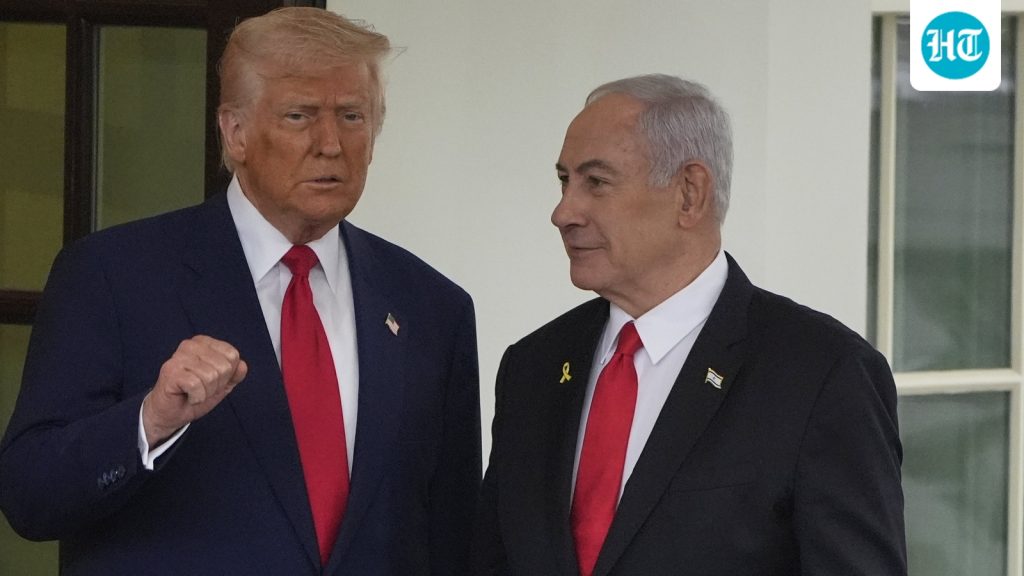
Israel Rejects Trump’s Gaza Plan: No Troops Withdrawal Till Hamas Is Disarmed
Bharatmorningnews.com – Israeli Prime Minister Benjamin Netanyahu has made his position unequivocally clear regarding the future of Israeli military presence in Gaza. According to the Associated Press, Netanyahu stated that there will be no troops withdrawal till Hamas is fully disarmed, rejecting key elements of President Donald Trump’s recently unveiled peace framework. This firm stance comes as international pressure mounts for a comprehensive resolution to the ongoing conflict.
Jerusalem’s position remains unwavering: any pullback of military forces hinges entirely on Hamas relinquishing its weapons and dismantling its military infrastructure. The Israeli government has emphasized that premature withdrawal could allow the militant group to strengthen its position once more, potentially threatening Israeli communities in the future.
Intelligence Assessment Points to Hamas Rebuilding
Doron Spielman, spokesperson for the Prime Minister’s office, provided crucial insights into Israel’s strategic calculations. He explained that Israeli intelligence indicates Hamas is prioritizing military reconstruction over genuine disarmament efforts, despite public commitments to the contrary.
“Our assessment is that if we redeploy before Hamas is truly disarmed, it will quickly expand its presence throughout Gaza, rebuild its terrorist infrastructure, once again threaten Israeli communities, and seek to carry out another Oct. 7-style attack,” Spielman stated.
Spielman acknowledged appreciation for Trump’s dedication to Israel’s security and his push for a permanent solution. However, he noted that intelligence shows Hamas continues recruiting fighters, acquiring weapons, and restoring its military facilities even as negotiations progress.
Trump’s Comprehensive Peace Framework
The American president’s twenty-point proposal outlines several key components for lasting peace in the region. These include Hamas surrendering weapons, dismantling underground tunnels, Israeli military withdrawal, forming a new Palestinian technocratic administration, deploying international security personnel, and rebuilding the devastated territory.
A verified copy of the agreement obtained by the Associated Press indicates that weapons currently held by Hamas-controlled police forces will be transferred to the US-backed National Committee for the Administration of Gaza once it begins operating within the territory. This mechanism represents a critical step in ensuring Hamas cannot rearm while maintaining security oversight.
Humanitarian Crisis Continues
Israeli airstrikes conducted through Sunday evening resulted in at least seventeen fatalities, including several children. Meanwhile, Palestinians organized a large funeral ceremony on Tuesday for over one hundred victims whose remains were recently recovered from one of the most devastating Israeli strikes since the conflict began.
These victims perished on November 22, 2023, when Israeli airstrikes demolished a residential building in Gaza City’s Sabra district. Initially, approximately forty bodies were extracted from the debris using minimal equipment and rescuers’ bare hands. Many others remained buried beneath collapsed structures, with the complete casualty count becoming apparent only days later during the chaos preceding the first ceasefire.
Last week, Gaza’s Civil Defense agency—which operates under Hamas’s Interior Ministry—recovered the remains of one hundred twelve additional victims, including forty children. The agency estimates that one hundred fifty-seven bodies are still believed to be trapped beneath the rubble.
Current Situation on the Ground
Israel currently maintains control over more than sixty percent of Gaza’s territory, although substantial portions have been destroyed and evacuated. The majority of Gaza’s nearly two million inhabitants reside in the remaining areas, with many living in damaged neighborhoods and temporary tent camps.
The Hamas-led assault on southern Israel on October 7, 2023, claimed approximately 1,200 lives and resulted in 251 individuals being taken hostage. This devastating attack remains the catalyst for the ongoing military operations and diplomatic efforts to secure a lasting peace agreement.
Frequently Asked Questions
What is the main condition for Israeli troops withdrawal from Gaza?
The primary condition established by Prime Minister Netanyahu is that there will be no troops withdrawal till Hamas is fully disarmed. This means Hamas must surrender its weapons and dismantle its military infrastructure before Israeli forces can begin their pullback from the territory.
How does Trump’s peace plan address Hamas disarmament?
Trump’s twenty-point proposal includes provisions for Hamas to surrender weapons, with arms held by Hamas-controlled police forces to be transferred to the US-backed National Committee for the Administration of Gaza. This creates a verification mechanism to ensure Hamas cannot rearm during the transition period.
What does Israeli intelligence say about Hamas’s current activities?
According to Doron Spielman, Israeli intelligence indicates that Hamas is prioritizing military reconstruction over genuine disarmament efforts. Hamas continues recruiting fighters, acquiring weapons, and restoring its military facilities despite public commitments to the ceasefire agreement.
What is the current humanitarian situation in Gaza?
The humanitarian crisis continues with ongoing casualties and recovery efforts. Gaza’s Civil Defense agency has recovered over one hundred victims from recent strikes, with approximately one hundred fifty-seven bodies still believed to be trapped beneath rubble. Most of Gaza’s nearly two million inhabitants remain in damaged areas and temporary camps.
How much of Gaza does Israel currently control?
Israel maintains control over more than sixty percent of Gaza’s territory, though substantial portions have been destroyed and evacuated. The majority of Gaza’s population resides in the remaining areas, with many living in damaged neighborhoods and temporary tent camps.