
MP CM Mohan Yadav inspects Sleemanabad tunnel, says project to transform irrigation across Vindhya region
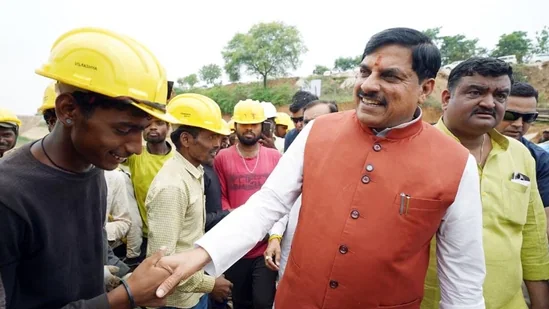
MP CM Mohan Yadav Inspects Sleemanabad Tunnel, Praises Its Role in Irrigation Transformation
Bharatmorningnews.com – On Friday, Madhya Pradesh Chief Minister Mohan Yadav conducted an inspection of the Sleemanabad tunnel project in Katni district, underscoring its importance as a key component in the state’s efforts to modernize irrigation infrastructure. The project, which has been a focal point of discussion for years, marks a significant milestone in addressing water scarcity challenges in the Vindhya region. Yadav’s visit highlights the government’s commitment to leveraging large-scale engineering initiatives to boost agricultural productivity and ensure equitable water distribution.
Technical Challenges and Construction Progress
The Sleemanabad tunnel, a 11.952-kilometer-long engineering marvel, has faced numerous technical hurdles during its development. Engineers had to navigate through hard marble and limestone formations, as well as dolomite layers and underground cavities, which made excavation particularly complex. Additionally, heavy water seepage posed a continuous threat to the stability of the structure. Despite these challenges, the project has advanced steadily, with over 96% of the total work completed and the main tunnel fully operational.
Yadav emphasized during his inspection that the Sleemanabad tunnel would serve as a lifeline for the Vindhya region, enabling the diversion of Narmada River water to areas connected with the Son River basin. This gravity-driven system aims to address longstanding irrigation shortages, particularly in districts like Jabalpur, Katni, and Rewa, where water availability has historically been inconsistent.
Projected Benefits and Agricultural Impact
The completion of the tunnel is expected to provide permanent irrigation to approximately 2.45 lakh hectares of farmland, benefiting nearly 1,450 villages across Katni, Maihar, Satna, Rewa, and Panna districts. Officials noted that the project will support additional irrigation schemes under the Water Resources Department, ensuring that agricultural zones receive a reliable water supply. Yadav highlighted that the initiative will not only enhance agricultural output but also contribute to the region’s overall economic development by stabilizing crop cycles and reducing dependency on monsoons.
With the main tunnel and a 12.135-km open canal now fully functional, the project is set to deliver water to critical agricultural areas. Farmers in these regions are anticipated to begin reaping the benefits of improved irrigation in stages over the coming months and years. The state government has also stressed that the tunnel’s integration into existing water management systems will create a more resilient infrastructure for future agricultural needs.
Timeline and Financial Investment
Initiated in 2008 by a Hyderabad-based consortium, the Sleemanabad tunnel project saw its budget increase from ₹799 crore due to the complexities of the geological terrain and the need for advanced construction techniques. The project’s timeline was accelerated after the deployment of modern machinery from the upstream end in 2016, which helped overcome challenges such as unstable soil and equipment failures. This phase of development has been pivotal in bringing the project to its current stage of completion, showcasing the state’s ability to adapt and execute large-scale infrastructure projects efficiently.
MP CM Mohan Yadav inspects the tunnel as part of his ongoing efforts to assess progress on key infrastructure projects. His focus on the Sleemanabad tunnel reflects a broader strategy to prioritize water resources in the Vindhya-Mahakaushal region. By addressing irrigation gaps, the project is expected to contribute to long-term food security and rural development, aligning with the state’s vision for sustainable growth.
Yadav also reiterated the importance of sustained investments in water infrastructure, stating that such projects are essential for transforming agricultural landscapes in water-stressed areas. The success of the Sleemanabad tunnel is seen as a model for future initiatives, including the development of additional irrigation channels and reservoirs. As the region moves closer to realizing these benefits, the focus remains on ensuring that the project’s long-term goals are met through coordinated planning and execution.