
5.1 magnitude quake strikes Peru after Venezuela: 5 killed, 32 injured so far
5.1 Magnitude Quake Strikes Peru Following Venezuela’s Tremor: 5 Dead, 32 Injured
Bharatmorningnews.com – A 5.1 magnitude quake strikes Peru, shaking the central Junín region late Saturday and causing immediate disruption. The tremor, which occurred just after 9:20 pm local time, was centered in the Andean province of Chupaca, sending ripples through nearby communities. Local officials confirmed five fatalities and 32 injuries, with over 200 residents affected by the event. Emergency services are still assessing the full extent of the damage, though initial reports suggest the quake triggered a series of aftershocks that compounded the crisis.
Immediate Impact and Rescue Operations
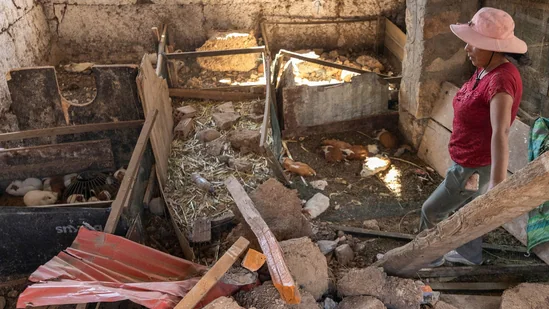
The 5.1 magnitude quake strikes Peru with intensity that varied across the region, with some areas reporting light tremors while others experienced stronger shaking. The earthquake’s epicenter, located in Chupaca, caused structural damage to several buildings, including the Regional Maternal and Children’s Hospital El Carmen. Officials have reported that cracks in the hospital’s walls raised concerns about the safety of patients and staff. In response, over 250 police officers and 50 volunteer firefighters were deployed to search for survivors and provide aid to impacted families. Military units were also called in to assist with logistics and infrastructure assessments.
Rescue teams faced challenges in accessing remote areas due to disrupted roads and downed power lines. The Energy and Mines Ministry noted that more than 400 electricity customers in Junín remained without power after the quake, with automatic disconnections affecting multiple feeders in Huancayo and neighboring districts. Crews are working to restore services, though the full recovery is expected to take several days. Meanwhile, the Health Ministry has prioritized triaging injured individuals and preparing medical facilities for potential additional casualties.
Seismic Activity and Regional Context
This earthquake comes amid a period of increased seismic activity in South America. Just weeks prior, Venezuela had been hit by a devastating 5.0 magnitude quake that left thousands injured and displaced. The two events, though distinct in their locations, highlight the region’s vulnerability to tremors. The current 5.1 magnitude quake strikes Peru as part of a broader pattern of tectonic shifts affecting the Andean region. Geologists have noted that the area is situated near fault lines, making it prone to frequent seismic events.
Comparisons to past quakes in the region reveal that while the current incident is less severe, it underscores the need for improved preparedness. For instance, the 7.4 magnitude quake that struck Mexico’s Chiapas state last week caused structural damage but no major casualties, demonstrating how location and depth can influence the impact. Peru’s history of earthquakes, such as the 7.5 magnitude quake in 2007 that killed over 500 people, has led to stronger building codes and emergency protocols. However, the recent event serves as a reminder that even smaller quakes can have significant consequences, particularly in densely populated areas.
Community Response and Recovery Efforts
Residents in Junín have expressed shock and concern over the quake’s aftermath. Local businesses reported damage to storefronts and inventory, while schools and homes in Chupaca were inspected for safety. Community leaders are coordinating with government agencies to distribute emergency supplies and support affected families. Social media has become a key tool for sharing updates, with many residents posting photos of damaged structures and calling for aid.
President-elect Keiko Fujimori extended her condolences to the victims, vowing to deploy all available resources to address the situation. In a statement shared on X, she emphasized the importance of resilient infrastructure and rapid response mechanisms. Meanwhile, international organizations such as the Red Cross have pledged assistance, highlighting the interconnected nature of disaster relief in the region. As the situation stabilizes, officials are working to ensure that recovery efforts are both timely and comprehensive, aiming to prevent further disruptions to daily life.
Expert Analysis and Future Risks
Seismologists have analyzed the quake’s characteristics, noting that its moderate magnitude and depth of 10 kilometers contributed to its localized impact. However, the proximity to populated areas increased the risk of damage to poorly constructed buildings. Experts warn that while the 5.1 magnitude quake strikes Peru were not catastrophic, they serve as a warning sign for potential larger events. The region’s history of quakes, including the 2007 disaster, has prompted ongoing discussions about improving early warning systems and public awareness campaigns.
Residents in Junín and Chupaca are now focused on rebuilding and recovering. Local authorities have established temporary shelters for displaced families and are working with national agencies to assess long-term needs. The event has also sparked conversations about the importance of community preparedness, with some schools initiating disaster drills. As the aftermath continues, the focus remains on minimizing further loss and ensuring that infrastructure can withstand future tremors. The 5.1 magnitude quake strikes Peru has already reshaped the region’s approach to emergency management, reinforcing the need for sustained vigilance and investment in resilience measures.