
‘No need for storm’: PM Modi in big message ahead of Parliament Monsoon Session
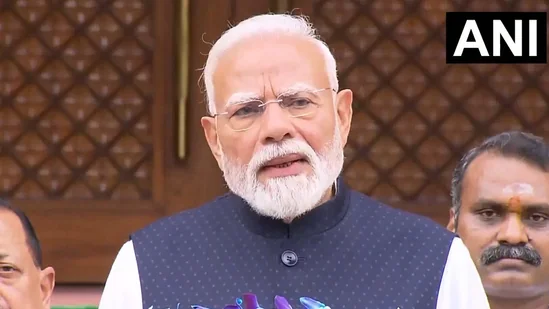
PM Modi’s ‘No Need for Storm’ Message at Parliament Monsoon Session
Bharatmorningnews.com – Prime Minister Narendra Modi delivered a speech at the Lok Sabha on Monday, underlining the necessity of a focused and fact-driven Monsoon Session of Parliament. His remarks, which included the phrase “No need for storm,” served as a clarion call for lawmakers to prioritize substantive debates over disruptive tactics. The Prime Minister emphasized that the session should reflect the nation’s progress, urging members to channel their energy into meaningful legislative discussions rather than political theatrics.
Monsoon Session and National Progress
Modi likened the monsoon season to parliamentary sessions, highlighting the importance of timely and effective action. “Whether it’s the monsoon or the session, a proactive mindset leads to measurable outcomes,” he stated, drawing attention to India’s growing capabilities in various sectors. The Prime Minister underscored that the success of the session would directly impact the welfare of citizens, calling for unity and discipline in the legislative process.
“May the spirit of that growth fuel our Parliament session. Where there is a strong argument and strong facts, there is no need for a storm (toofan). May every voice find space,” Modi remarked, reinforcing his message of constructive dialogue.
His speech also touched on the nation’s achievements in science and technology, particularly in the space sector. Modi praised the advancements made by private entities like Skyroot Aerospace, while subtly critiquing the opposition’s approach. By referencing Rahul Gandhi’s age as “56-year-old youth,” he contrasted the energy of young entrepreneurs with the perceived complacency of senior political leaders.
Legislative Focus and Key Proposals
The upcoming Monsoon Session, scheduled from Monday to August 13, will see the government push forward a range of significant bills. Among these are the Foreign Contribution (Regulation) Amendment Bill, 2026, which aims to streamline rules on foreign funding, and the Viksit Bharat Shiksha Adhishthan Bill, 2025, designed to revamp higher education systems. These proposals have been carefully crafted to address critical national issues and reflect the government’s vision for India’s development.
“We are not just here to debate, but to deliver results. A productive session will lay the groundwork for a stronger economy and better governance,” Modi stated, setting the tone for the legislative agenda.
Additional priorities include the Income-tax (Amendment) Bill, 2026, which seeks to replace an ordinance offering tax incentives to foreign investors. The goal is to attract more capital and stabilize the country’s debt market. Modi also highlighted the Supreme Court Amendment Bill, 2026, which proposes expanding the number of judges to reduce case backlogs, and the Micro, Small and Medium Enterprises Development (Amendment) Bill, 2026, aimed at fostering growth in the SME sector.
Public and Political Reactions
Modi’s speech has sparked varied reactions from political stakeholders. Supporters praised his emphasis on efficiency and national pride, while critics argued that the reference to Rahul Gandhi’s age was a veiled attack on the opposition’s performance. Despite the debate, the Prime Minister’s message resonated with many, particularly as the session coincides with major policy announcements and economic challenges.
“The nation deserves clarity and direction, not chaos. A focused session will ensure we move forward as a united front,” Modi asserted, reinforcing his vision for a streamlined legislative process.
Analysts note that Modi’s call for “No need for storm” aligns with his broader strategy to maintain stability in governance. By steering the session toward practical outcomes, he aims to counter the opposition’s tendency to prioritize disruption over reform. This approach is expected to bolster public confidence in the government’s ability to address pressing issues like inflation, employment, and infrastructure development.
Monsoon Session’s Strategic Importance
As the monsoon season typically brings a surge in agricultural activity and economic planning, the timing of the Parliament session underscores its strategic relevance. Modi pointed to the alignment between the natural rhythms of the season and the need for proactive legislative action, ensuring that the session is well-positioned to tackle challenges that arise during this period. This synchronization reflects the government’s commitment to aligning policy with the nation’s cycles of growth and renewal.
“The monsoon is a season of renewal, and so must be our Parliament session. It is a chance to reflect, reform, and rejuvenate our nation’s trajectory,” Modi said, drawing a parallel between the natural and political cycles.
With the session spanning multiple weeks, the government has outlined a detailed roadmap to ensure all bills are debated and passed efficiently. Modi’s focus on “No need for storm” signals a determination to maintain order, allowing the nation to capitalize on opportunities presented by the monsoon season. The emphasis on fact-based debates is seen as a way to foster transparency and accountability in the legislative process.