
Delhi HC refuses Wangchuk’s wife Angmo’s immediate request to shift him out of govt hospital, seeks status report
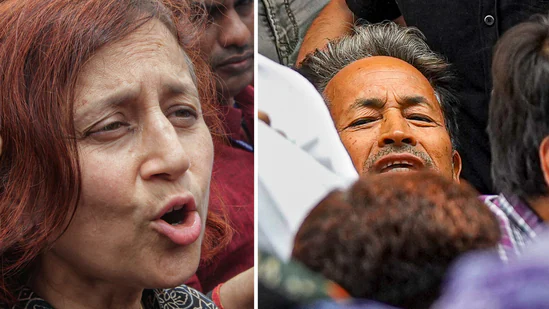
Delhi HC Refuses Wangchuk’s Wife Angmo’s Immediate Request to Shift Him Out of Govt Hospital
Bharatmorningnews.com – The Delhi High Court has rejected the immediate request of Gitanjali Angmo, the wife of activist Sonam Wangchuk, to transfer her husband from Safdarjung Hospital to a private facility. In a recent hearing, the court emphasized that the decision to keep Wangchuk in the government hospital would not be finalized without a thorough status report. Angmo, who had filed a petition seeking the move, argued that the family’s concerns regarding the medical care were not being adequately addressed. However, the court granted a three-day extension to the hospital authorities to provide a detailed health assessment of Wangchuk, ensuring that all evidence is reviewed before any final action is taken.
Context of the Hunger Strike and Legal Petition
Wangchuk, a prominent figure in the Cockroach Janta Party (CJP), has been fasting since June 28 as part of a protest demanding the resignation of Education Minister Dharmendra Pradhan. The activist’s hunger strike has drawn widespread attention, with his wife, Gitanjali Angmo, playing a key role in advocating for his health and well-being. The Delhi HC’s decision to delay the transfer reflects the ongoing legal debate surrounding Wangchuk’s condition and the government’s authority to detain him in a public hospital. Angmo’s petition highlights the family’s belief that the hospital’s treatment plan is suboptimal, despite the court’s acknowledgment of the government’s medical justification.
Wife’s Arguments and Family’s Frustration
Gitanjali Angmo’s legal team, led by senior advocate Kapil Sibal, has consistently raised concerns about the restricted access to Wangchuk’s medical care. They argue that the family’s ability to make decisions for the activist has been undermined by the presence of Delhi Police personnel in the hospital. “The court should recognize the urgency of our request, as Sonam Wangchuk’s health is deteriorating,” Angmo stated, emphasizing the emotional and physical strain on her husband. The wife’s repeated appeals to the Delhi HC underscore her determination to ensure that her husband receives the best possible care, even as the court seeks more information before taking a definitive stance.
“The government has been slow in addressing our family’s concerns, even though Wangchuk is not in custody,” Angmo remarked, expressing her frustration with the system. “We want the right to choose the best hospital for our loved one, not be forced into a bureaucratic delay.”
Government’s Defense and Medical Justification
The Delhi government has defended its decision to keep Wangchuk in Safdarjung Hospital, citing the need for continuous medical monitoring. Additional Solicitor General Chetan Sharma explained that the activist’s health had been a primary concern, with doctors reporting potential complications from his prolonged fast. “Wangchuk’s condition is critical, and the government hospital is equipped to handle such cases,” Sharma asserted, adding that the court’s earlier order to monitor his health was a necessary step. The government also highlighted that the hospital had provided oral fluids and supplements, and efforts were made to persuade Wangchuk for intravenous treatment, which he had initially refused.
“Wangchuk’s stay in the government hospital is not an act of detention but a medical necessity,” the court noted, while acknowledging the family’s right to challenge the arrangement. “We will review the status report and decide whether a transfer is warranted.”
Legal Proceedings and Pending Decisions
As the Delhi HC awaits the status report, the legal proceedings surrounding Wangchuk’s case remain in flux. The court has been closely examining the evidence presented by both the government and the family, weighing the activist’s health against the administrative rationale for his continued stay. The case has sparked discussions about the balance between judicial oversight and the government’s authority to manage public health facilities. Legal experts suggest that the outcome will depend on the clarity of the medical data and the court’s interpretation of the activist’s condition. Meanwhile, Angmo continues to push for a swift resolution, believing that the government’s delay is a strategic move to keep Wangchuk in the hospital longer.
Public Reaction and Broader Implications
The Delhi HC’s decision has drawn mixed reactions from the public and legal community. Supporters of Wangchuk argue that the court’s delay is an opportunity for the government to address the family’s concerns more thoroughly. On the other hand, critics claim that the prolonged stay in the hospital is an attempt to exert pressure on the activist. The case also raises questions about the treatment of political prisoners and the role of medical facilities in detaining individuals. With the status report still pending, the court’s final decision on whether to transfer Wangchuk will have significant implications for both the activist and the broader movement he represents.