
‘We should trust country’s youth’: Vikram-1 achieves India’s first private orbital launch
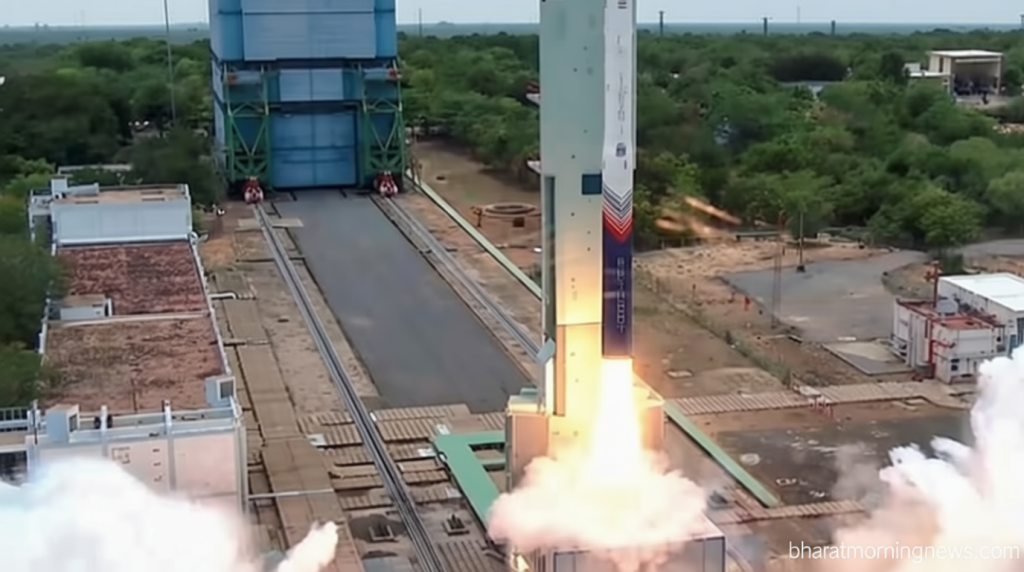
India’s Youth Prove Their Worth: Vikram-1’s First Private Orbital Launch
Bharatmorningnews.com – India’s youth are proving their mettle with every innovation, and the recent success of Skyroot Aerospace’s Vikram-1 rocket marks a defining moment for the nation’s space ambitions. The mission, which achieved India’s first private orbital launch, underscores the trust we should place in the country’s young engineers and entrepreneurs. Launched from the Satish Dhawan Space Centre in Sriharikota, Vikram-1 successfully placed four experimental payloads into a 450-kilometer orbit, showcasing the capabilities of a homegrown team determined to make their mark in the global space race.
A Breakthrough in Domestic Aerospace Innovation
The Vikram-1 rocket, a seven-story multi-stage vehicle, represents a major leap in India’s aerospace industry. Developed by a 400-member team under the Mission Aagaman initiative, the launch at 12:05 PM demonstrated the rocket’s ability to carry satellites weighing up to 350kg into low-Earth orbit. The design incorporates an all-carbon composite structure and domestically manufactured propulsion systems, including 3D-printed engines and high-thrust solid-fuel boosters. This achievement not only highlights technical prowess but also reaffirms the importance of investing in young talent, as the average age of the team is just 28 years.
Minutes before the launch, a minor issue in the automated sequence caused a brief pause, shifting the countdown from 11:30 AM to 12:05 PM. However, the team quickly resolved the problem, ensuring the mission proceeded without complications. “Vikram-1 met every mission milestone, validating its propulsion, avionics, and guidance systems under real-world conditions,” said co-founder and COO Naga Bharath Daka. This resilience during the launch process further exemplifies the spirit of innovation we should trust in the country’s youth.
Prime Minister Narendra Modi, who had included a handwritten “Vande Mataram” postcard in the payload, hailed the launch as a testament to the potential of India’s younger generation. “Many said this couldn’t happen… But I moved forward, and now because of you, my decision is proven right,” he remarked. The PM’s endorsement reinforces the belief that the country’s youth are capable of driving transformative advancements, particularly in the space sector. “My team will now trust the youth of the country to accomplish such feats—you’ve done it,” he added, emphasizing the role of young engineers in shaping India’s future in aerospace.
Expanding India’s Space Ecosystem
The success of Vikram-1 has significant implications for the $600 billion global space industry, where India’s $8 billion share is expected to grow to $44 billion by 2032. Since the 2020 sector reforms, over 400 space start-ups have emerged, creating a dynamic environment for innovation. Skyroot Aerospace, which reached unicorn status in May with a $1.1 billion valuation, is now a key player in this rapidly evolving landscape. The mission not only boosts India’s position in the space market but also inspires countless youngsters to pursue careers in aerospace, proving that the country’s youth are ready to lead.
Chandana, the CEO and co-founder of Skyroot, emphasized the 100% Indian design and manufacturing of Vikram-1, highlighting the collaboration of hundreds of systems working in harmony. “Rocket science is the most challenging endeavor in engineering,” he noted, “which is why it’s called rocket science.” The rocket’s development, from concept to launch, reflects the dedication and creativity of India’s young workforce. As the nation continues to expand its space capabilities, the focus keyword “we should trust country’s youth” becomes increasingly relevant, demonstrating how youthful innovation is redefining India’s role in the global space arena.
With this milestone, India has joined the ranks of the United States and China as a third nation with private orbital launch capabilities, a feat that highlights the growing confidence in domestic aerospace solutions. The mission’s success is a clear signal that the country’s youth, through their ingenuity and perseverance, are capable of achieving what was once considered improbable. As the space sector continues to evolve, the trust in India’s young professionals will be crucial for sustaining this momentum and fostering future breakthroughs.